Protocol for combined N-of-1 trials to assess cerebellar neurostimulation for movement disorders in children and young adults with dyskinetic cerebral palsy
Marta San Luciano, Carina R Oehrn, Sarah S Wang, John S Tolmie, Allisun Wiltshire, Rebecca E Graff, Jennifer Zhu, Philip A Starr

TL;DR
This study tests deep brain stimulation of the cerebellum to improve movement and quality of life in children and young adults with dyskinetic cerebral palsy.
Contribution
The study introduces a novel protocol using N-of-1 trials to evaluate cerebellar DBS for dyskinetic cerebral palsy, combining clinical and neurophysiological assessments.
Findings
Cerebellar DBS may improve movement disorders and quality of life in DCP patients.
Abnormal cerebellar oscillatory activity will be characterized using local field potentials and wearable monitors.
Imaging markers will be identified to predict baseline severity and response to DBS.
Abstract
Movement and tone disorders in children and young adults with cerebral palsy are a great source of disability. Deep brain stimulation (DBS) of basal ganglia targets has a major role in the treatment of isolated dystonias, but its efficacy in dyskinetic cerebral palsy (DCP) is lower, due to structural basal ganglia and thalamic damage and lack of improvement of comorbid choreoathetosis and spasticity. The cerebellum is an attractive target for DBS in DCP since it is frequently spared from hypoxic ischemic damage, it has a significant role in dystonia network models, and small studies have shown promise of dentate stimulation in improving CP-related movement and tone disorders. Ten children and young adults with DCP and disabling movement disorders with or without spasticity will undergo bilateral DBS in the dorsal dentate nucleus, with the most distal contact ending in the superior…
Genes, proteins, chemicals, diseases, species, mutations and cell lines named across the full text — each resolved to its canonical identifier and authoritative record.
Click any figure to enlarge with its caption.
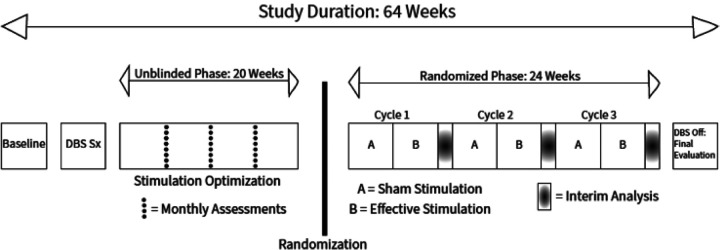 Figure 1
Peer Reviews
No public reviews on file for this paper yet. If you reviewed it on a platform where reviews are public (OpenReview, ICLR, NeurIPS, ICML), you can paste yours below so the community can read it here.
Videos
No videos yet. Explain this paper in a talk, walkthrough, or lecture? Add one.
Taxonomy
TopicsCerebral Palsy and Movement Disorders · Neurological disorders and treatments · Botulinum Toxin and Related Neurological Disorders