Pituitary adenylate cyclase-activating polypeptide (PACAP) in the paraventricular nucleus of the thalamus: Influence on binge-type eating in male and female mice
Genevieve R. Curtis, Brody A. Carpenter, Breanne E. Pirino, Annie Hawks, George Li, Jessica R. Barson

TL;DR
The study explores how a brain chemical called PACAP in a specific brain region affects binge eating behavior differently in male and female mice.
Contribution
The study reveals a sex-dependent role of PACAP in the PVT in regulating binge-type eating behavior in mice.
Findings
Female mice showed higher baseline PACAP levels in the PVT compared to males.
Activation of PACAP+ cells in the PVT reduced binge eating in male but not female mice.
Males showed decreased PACAP levels before binge eating and increased levels after a history of binge eating.
Abstract
Binge eating disorder, characterized by the overconsumption of food in a discrete time period, is the most common eating disorder in the United States, but its neurological basis is not fully understood. The paraventricular nucleus of the thalamus (PVT) is a limbic brain region implicated in eating, and the anorexigenic neuropeptide, pituitary adenylate cyclase-activating polypeptide (PACAP), is densely expressed in the PVT. This study sought to examine the possible involvement of PACAP in the PVT in binge-type eating. First, a model of binge-type eating was established in mice. Male and female C57BL/6J mice were given limited access to Milk Chocolate Ensure Plus® or had access only to chow and water. Under this model, while males and females both engaged in binge-type eating with Ensure, females engaged in this behavior to a greater degree than males. Next, the role of PACAP in the PVT…
Genes, proteins, chemicals, diseases, species, mutations and cell lines named across the full text — each resolved to its canonical identifier and authoritative record.
Click any figure to enlarge with its caption.
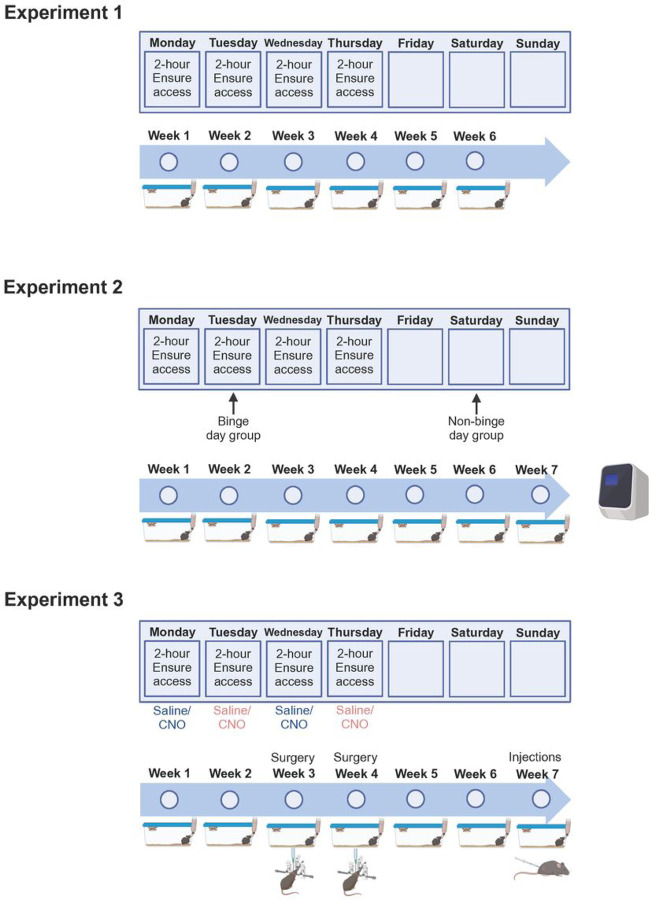 Figure 1
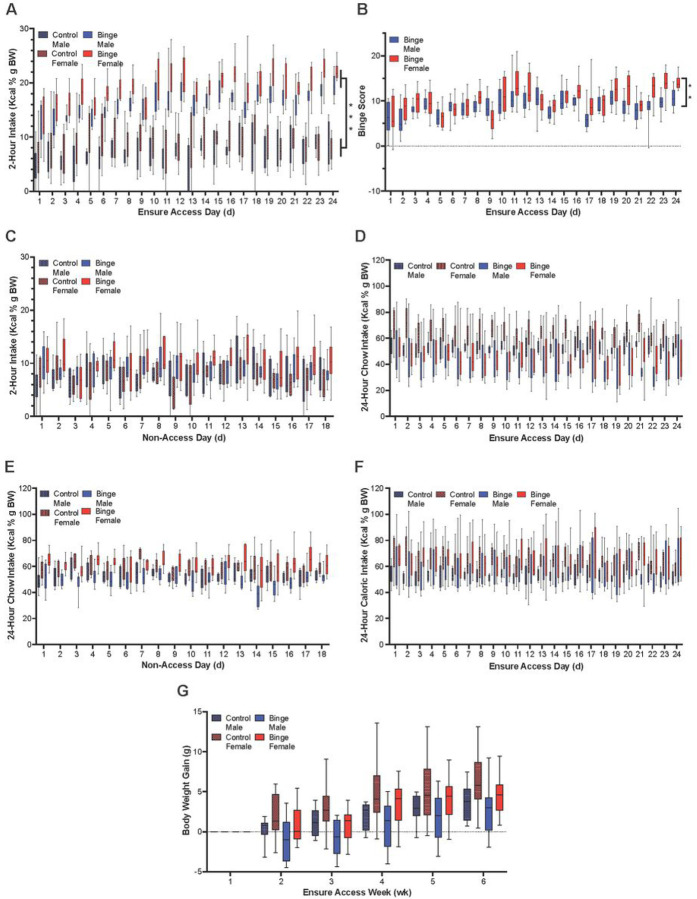 Figure 2
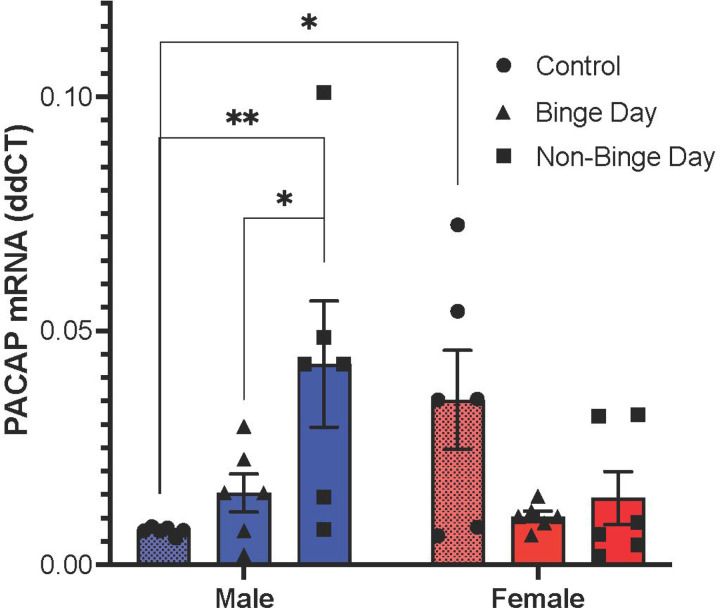 Figure 3
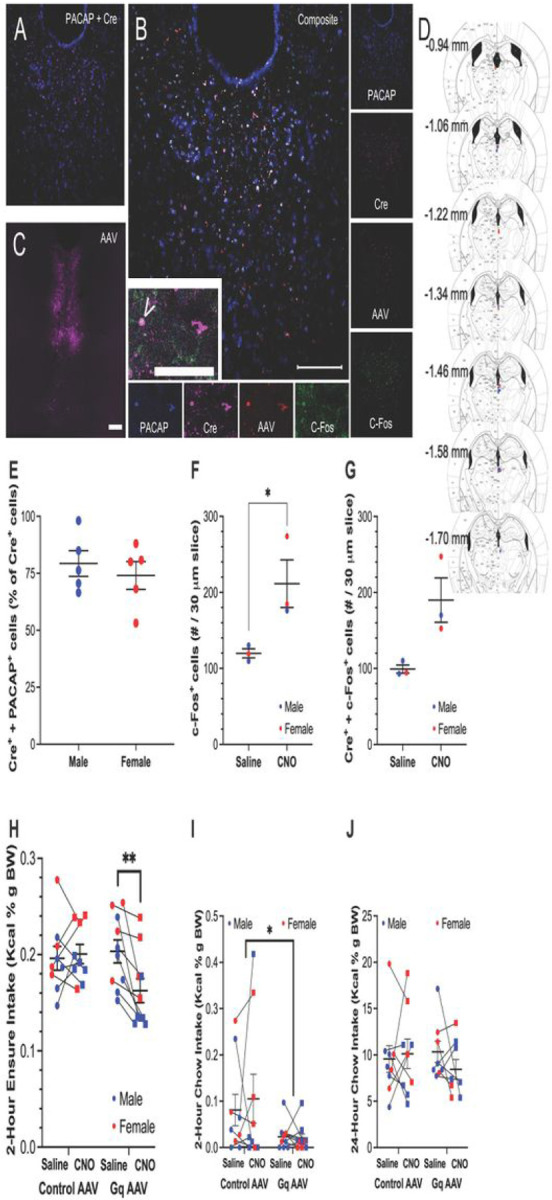 Figure 4
Peer Reviews
No public reviews on file for this paper yet. If you reviewed it on a platform where reviews are public (OpenReview, ICLR, NeurIPS, ICML), you can paste yours below so the community can read it here.
Videos
No videos yet. Explain this paper in a talk, walkthrough, or lecture? Add one.
Taxonomy
TopicsEating Disorders and Behaviors · Neuropeptides and Animal Physiology · Regulation of Appetite and Obesity