An economic evaluation of eptinezumab for the preventive treatment of migraine in the UK, with consideration for natural history and work productivity
Edward Griffin, Gawain Shirley, Xin Ying Lee, Susanne F. Awad, Alok Tyagi, Peter J. Goadsby

TL;DR
This study shows that eptinezumab is a cost-effective treatment for migraine in the UK, improving health outcomes and saving money compared to standard care.
Contribution
The study introduces a detailed economic evaluation of eptinezumab using patient simulation and real-world data from a clinical trial.
Findings
Eptinezumab resulted in 0.231 QALYs gained and saved £4,894 over 5 years compared to best supportive care.
Probabilistic analysis confirmed eptinezumab's dominance as a more effective and less costly treatment.
Net monetary benefit was most sensitive to productivity loss and monthly salary assumptions.
Abstract
Migraine is a highly prevalent neurological disease with a substantial societal burden due to lost productivity. From a societal perspective, we assessed the cost-effectiveness of eptinezumab for the preventive treatment of migraine. An individual patient simulation of discrete competing events was developed to evaluate eptinezumab cost-effectiveness compared to best supportive care for adults in the United Kingdom with ≥ 4 migraine days per month and prior failure of ≥ 3 preventive migraine treatments. Individuals with sampled baseline characteristics were created to represent this population, which comprised dedicated episodic and chronic migraine subpopulations. Clinical efficacy, utility, and work productivity inputs were based on results from the DELIVER randomised controlled trial (NCT04418765). Timing of natural history events and treatment holidays—informed by the…
Genes, proteins, chemicals, diseases, species, mutations and cell lines named across the full text — each resolved to its canonical identifier and authoritative record.
Click any figure to enlarge with its caption.
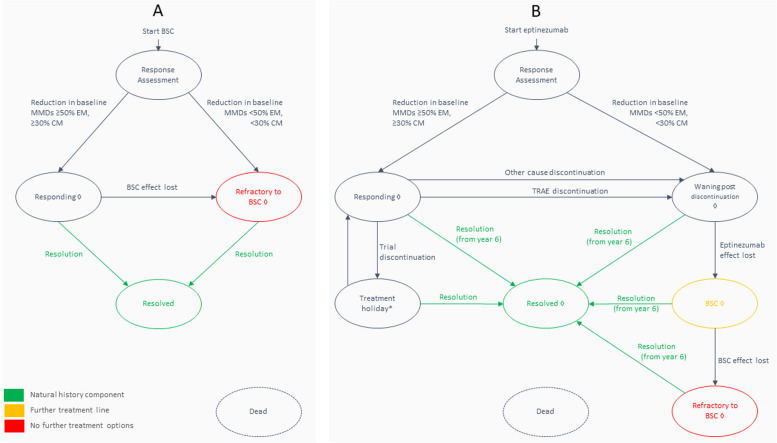 Figure 1
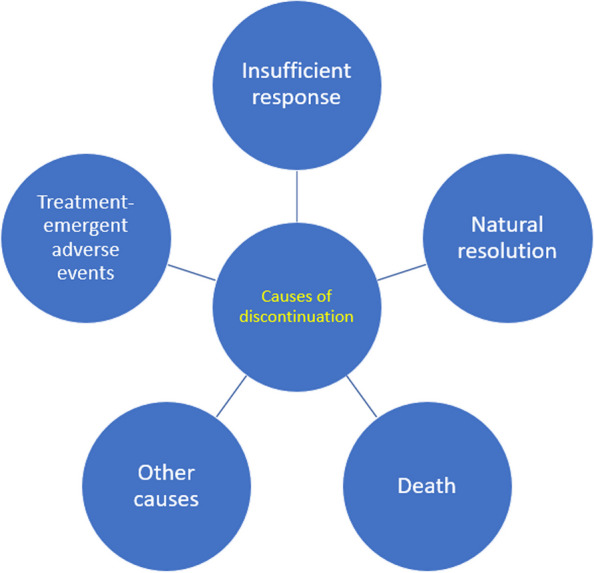 Figure 2
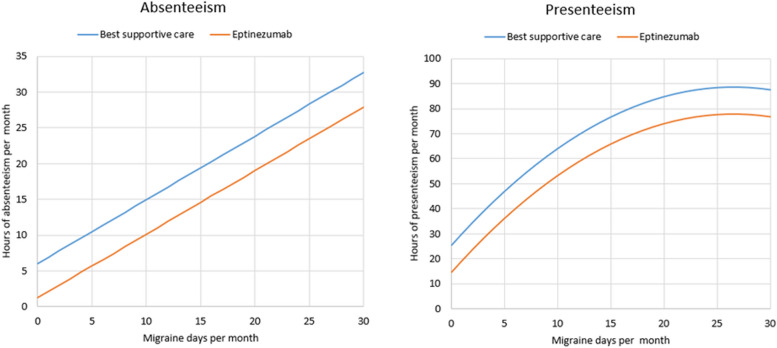 Figure 3
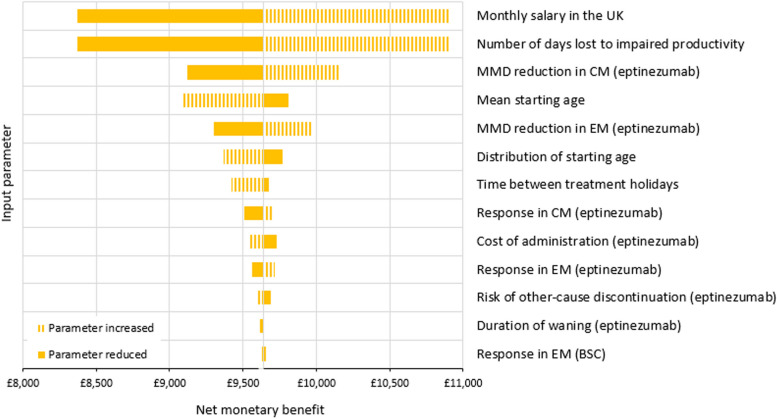 Figure 4
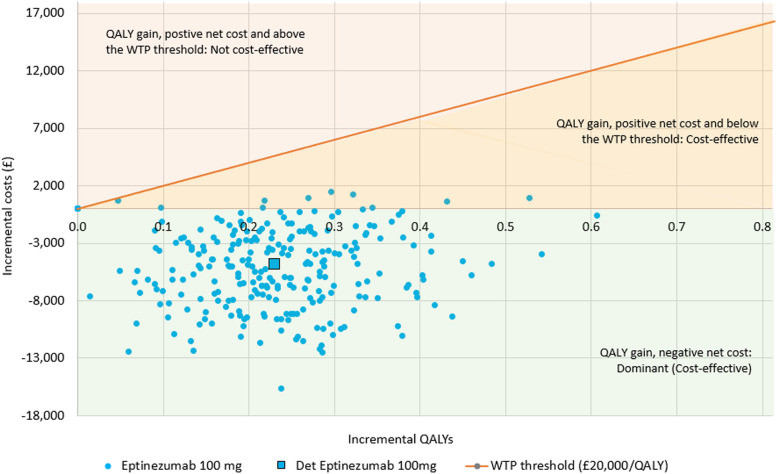 Figure 5
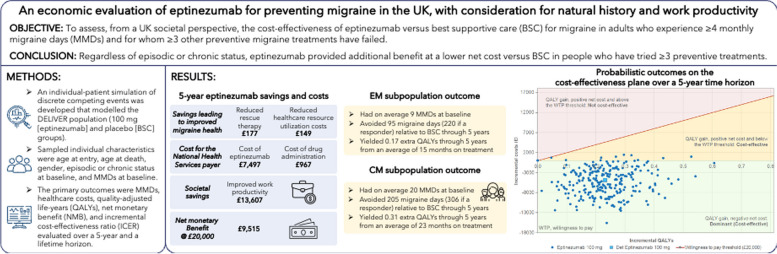 Figure 6
Peer Reviews
No public reviews on file for this paper yet. If you reviewed it on a platform where reviews are public (OpenReview, ICLR, NeurIPS, ICML), you can paste yours below so the community can read it here.
Videos
No videos yet. Explain this paper in a talk, walkthrough, or lecture? Add one.
Taxonomy
TopicsCultural, Media, and Literary Studies · Social and Cultural Studies