Genetic diagnosis of endocrine disorders in Cyprus through the Cyprus Institute of Neurology and Genetics: an ENDO-ERN Reference Center
Vassos Neocleous, Pavlos Fanis, Meropi Toumba, Nicos Skordis, Leonidas A. Phylactou

TL;DR
This paper describes a 15-year effort in Cyprus to genetically diagnose rare endocrine disorders, identifying key genes and collaborating with local and European networks.
Contribution
The study highlights the identification of novel pathogenic variants in rare endocrine disorders and the establishment of a diagnostic program for premature puberty.
Findings
Over 2000 genetic tests were performed, identifying pathogenic variants in genes like CYP21A2 and RET for rare endocrine disorders.
Rare pathogenic variants in ANOS1, WDR11, and other genes were found in patients with Congenital Hypogonadotropic Hypogonadism.
A program on premature puberty identified the role of MKRN3 gene and other biomarkers for prognosis.
Abstract
The report covers the current and past activities of the department Molecular Genetics-Function and Therapy (MGFT) at the Cyprus Institute of Neurology and Genetics (CING), an affiliated Reference Center for the European Reference Network on Rare Endocrine Conditions (Endo-ERN). The presented data is the outcome of > 15 years long standing collaboration between MGFT and endocrine specialists from the local government hospitals and the private sector. Up-to-date > 2000 genetic tests have been performed for the diagnosis of inherited rare endocrine disorders. The major clinical entities included Congenital Adrenal Hyperplasia (CAH) due to pathogenic variants in CYP21A2 gene and Multiple Endocrine Neoplasia (MEN) type 2 due to pathogenic variants in the RET proto-oncogene. Other rare and novel pathogenic variants in ANOS1, WDR11, FGFR1, RNF216, and CHD7 genes were also found in patients…
Genes, proteins, chemicals, diseases, species, mutations and cell lines named across the full text — each resolved to its canonical identifier and authoritative record.
Click any figure to enlarge with its caption.
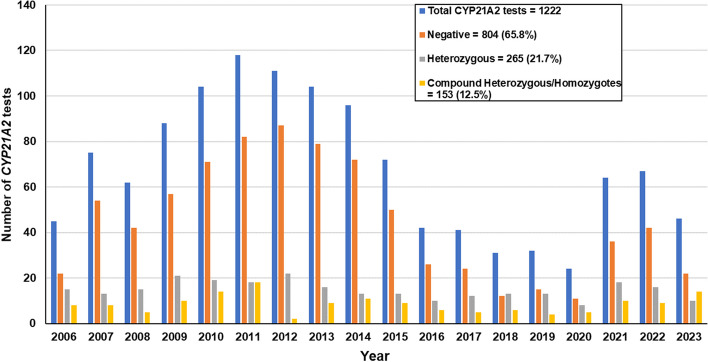 Figure 1
 Figure 2
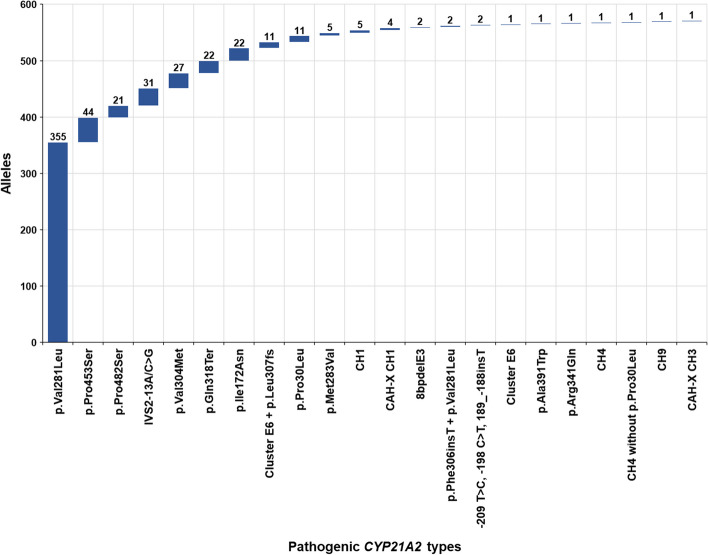 Figure 3
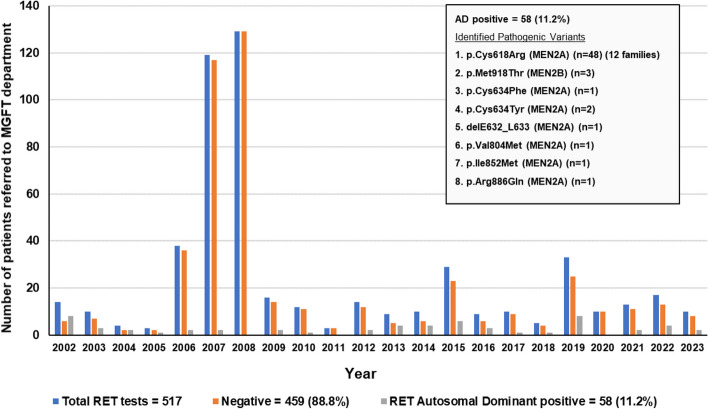 Figure 4
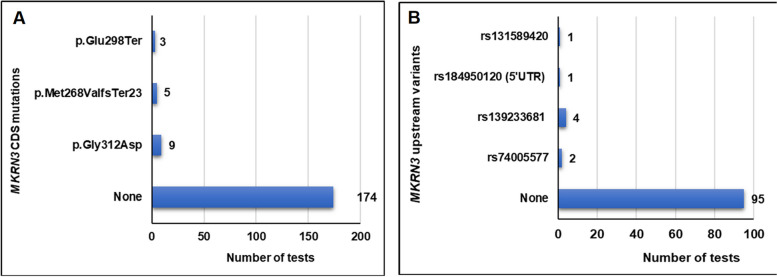 Figure 5
Peer Reviews
No public reviews on file for this paper yet. If you reviewed it on a platform where reviews are public (OpenReview, ICLR, NeurIPS, ICML), you can paste yours below so the community can read it here.
Videos
No videos yet. Explain this paper in a talk, walkthrough, or lecture? Add one.
Taxonomy
TopicsSexual Differentiation and Disorders · Growth Hormone and Insulin-like Growth Factors · Congenital heart defects research