Efficacy of Metarhizium anisopliae and (E)–2–hexenal combination using autodissemination technology for the management of the adult greenhouse whitefly, Trialeurodes vaporariorum Westwood (Hemiptera: Aleyrodidae)
Vongai M. Paradza, Fathiya M. Khamis, Abdullahi A. Yusuf, Sevgan Subramanian, Komivi S. Akutse

TL;DR
This study shows that combining a fungus and a chemical attractant using a special device can effectively control whiteflies in greenhouses.
Contribution
The study introduces a novel autodissemination method using spatial separation to combine a fungal pathogen and a volatile attractant for whitefly control.
Findings
ICIPE 18 and ICIPE 69 fungal isolates caused higher whitefly mortality than ICIPE 62.
Spatial separation of (E)–2–hexenal and the fungus reduced the volatile's inhibitory effects on fungal germination.
The autodissemination method with spatial separation improved whitefly suppression under screenhouse conditions.
Abstract
The efficiency of an autodissemination technique in controlling adult whiteflies, Trialeurodes vaporariorum Westwood (Hemiptera: Aleyrodidae) on tomato, Solunum lycopersicum was investigated with previously identified potent fungal isolates of Metarhizium anisopliae ICIPE 18, ICIPE 62 and ICIPE 69 under screenhouse or semi-field conditions. The autodissemination device was inoculated with dry conidia of the M. anisopliae isolates, while control insects were exposed to a fungus–free device. Sampling for conidia uptake, conidial viability and persistence, and insect mortality was done at 1, 2, 3, 5 and 8 days post–exposure, and collected insects were monitored for mortality over ten days. Overall, mortality was higher in insects exposed to ICIPE 18 (62.8%) and ICIPE 69 (61.8%) than in those exposed to ICIPE 62 (42.6%), with median lethal times, (LT50) ranging between 6.73–8.54 days. The…
Genes, proteins, chemicals, diseases, species, mutations and cell lines named across the full text — each resolved to its canonical identifier and authoritative record.
Click any figure to enlarge with its caption.
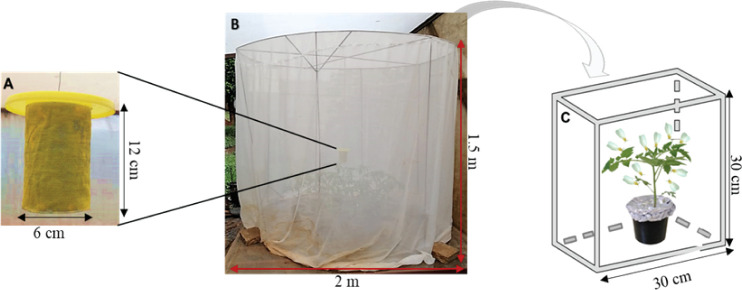 Figure 1
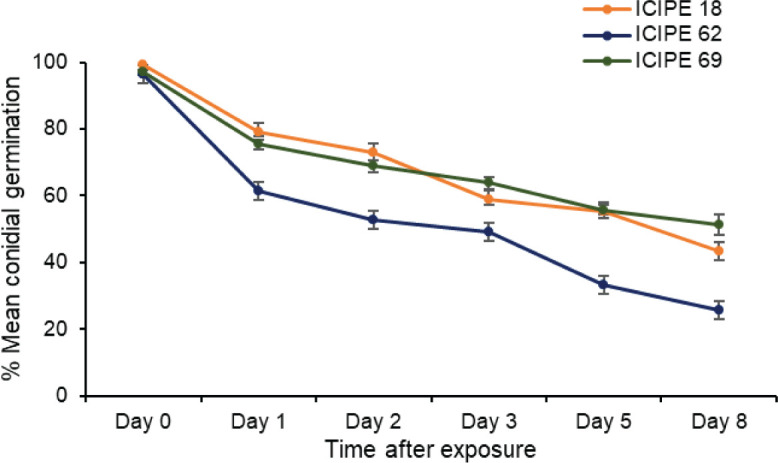 Figure 2
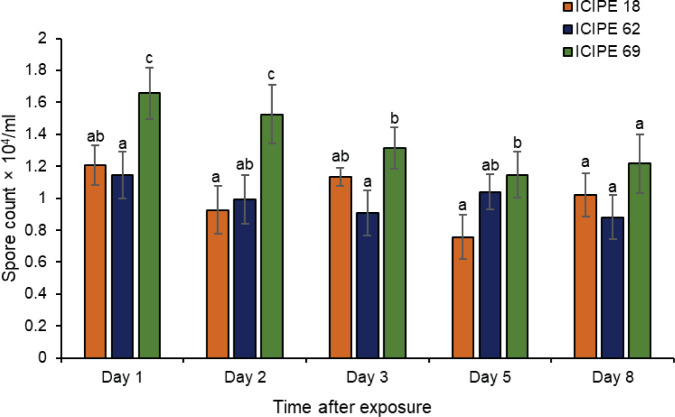 Figure 3
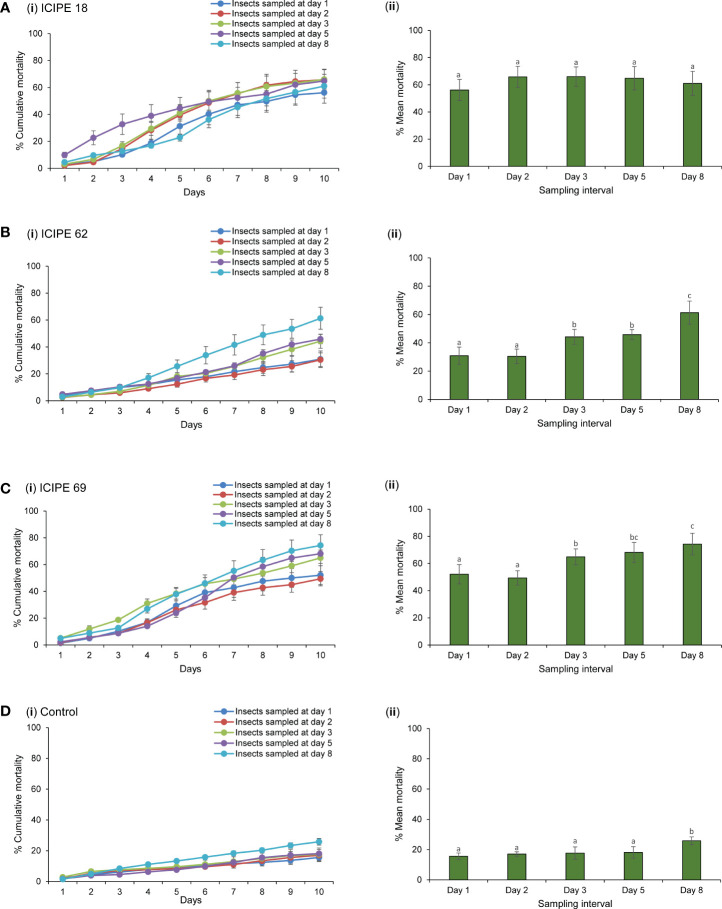 Figure 4
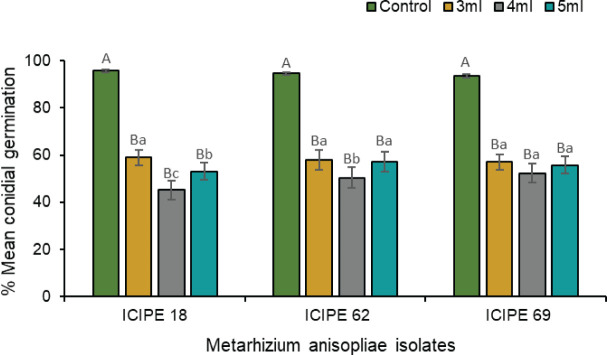 Figure 5
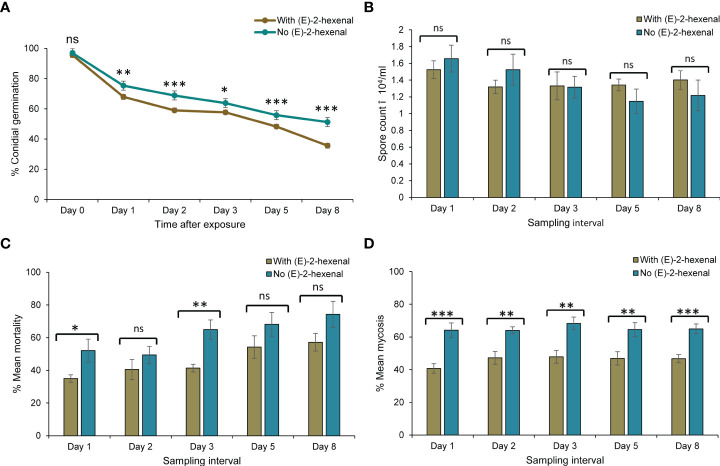 Figure 6
Peer Reviews
No public reviews on file for this paper yet. If you reviewed it on a platform where reviews are public (OpenReview, ICLR, NeurIPS, ICML), you can paste yours below so the community can read it here.
Videos
No videos yet. Explain this paper in a talk, walkthrough, or lecture? Add one.
Taxonomy
TopicsBalkan and Eastern European Studies