Frictionless Mechanics for Correction of Bimaxillary Protrusion: A Case Report
Srushti Atole, Ranjit Kamble, Sumukh Nerurkar, Japneet Kaiser

TL;DR
This case report describes a frictionless orthodontic technique to correct bimaxillary protrusion using a reverse closing loop.
Contribution
The paper introduces a frictionless mechanical protocol for correcting bimaxillary protrusion.
Findings
Bimaxillary protrusion can be effectively corrected using a frictionless approach.
A reverse closing loop was used to retract anteriors during space closure.
Frictionless mechanics may offer advantages over traditional friction-based methods.
Abstract
The condition of bimaxillary protrusion is commonly seen by orthodontic practitioners in the course of our daily clinical work. It is characterized by both jaws being forwardly placed and increased prominence of the teeth along with lips. When there is a severe bimaxillary protrusion, it can be challenging to correct it effectively with maximum anchorage. In patients with protrusions or crowding, extraction therapy is often necessary. There are two ways to retract anteriors during extraction space closure: friction or frictionless. The present case report explains the frictionless mechanic protocol for the correction of bimaxillary protrusion using a reverse closing loop.
Genes, proteins, chemicals, diseases, species, mutations and cell lines named across the full text — each resolved to its canonical identifier and authoritative record.
Click any figure to enlarge with its caption.
 Figure 1
 Figure 2
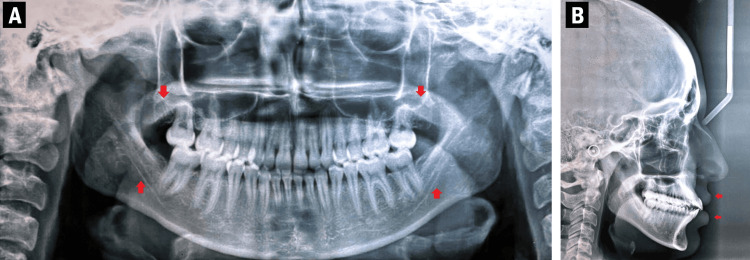 Figure 3
 Figure 4
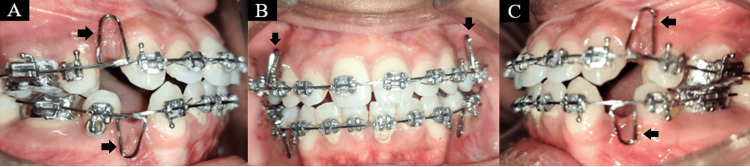 Figure 5
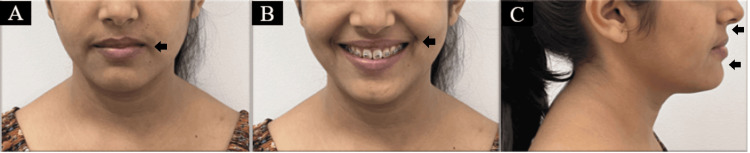 Figure 6
 Figure 7
Peer Reviews
No public reviews on file for this paper yet. If you reviewed it on a platform where reviews are public (OpenReview, ICLR, NeurIPS, ICML), you can paste yours below so the community can read it here.
Videos
No videos yet. Explain this paper in a talk, walkthrough, or lecture? Add one.
Taxonomy
TopicsOrthodontics and Dentofacial Orthopedics · Temporomandibular Joint Disorders · Dental Radiography and Imaging