An 18-year, single centre, retrospective study of long-term neurological outcomes in paediatric submersion-related cardiac arrests
Denne Scharink, Maayke Hunfeld, Marijn Albrecht, Karolijn Dulfer, Matthijs de Hoog, Annabel van Gils, Rogier de Jonge, Corinne Buysse

TL;DR
This study found that while many children who survived drowning-related cardiac arrests had good overall outcomes, they often had significant neuropsychological deficits, highlighting the need for long-term follow-up programs.
Contribution
The study provides new insights into long-term neurological outcomes in children after drowning-related cardiac arrests and advocates for standardized follow-up programs.
Findings
A high mortality rate was observed in children admitted after drowning-related cardiac arrests.
Survivors showed significant deficits in neuropsychological assessments despite favorable functional outcomes.
The study emphasizes the need for specialized long-term follow-up programs for these children.
Abstract
•In all children who were admitted after an OHCA due to drowning, a high mortality rate was observed;•Most survivors had a favorable functional outcome (PCPC) at longest available follow up;•However, significant deficits in neuropsychological assessments were found;•Our study emphasizes the importance of establishing a specialized follow-up program. In all children who were admitted after an OHCA due to drowning, a high mortality rate was observed; Most survivors had a favorable functional outcome (PCPC) at longest available follow up; However, significant deficits in neuropsychological assessments were found; Our study emphasizes the importance of establishing a specialized follow-up program. Investigate long-term outcome in paediatric submersion-related cardiac arrests (CA). Children (age one day-17 years) were included if admitted to the Erasmus MC Sophia Children’s Hospital,…
Genes, proteins, chemicals, diseases, species, mutations and cell lines named across the full text — each resolved to its canonical identifier and authoritative record.
Click any figure to enlarge with its caption.
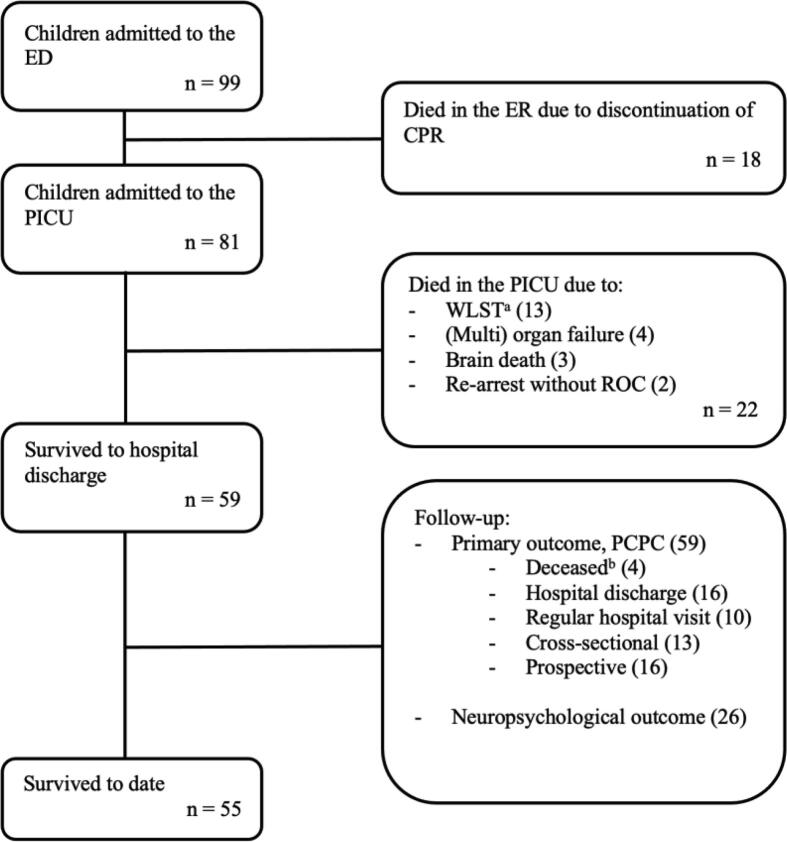 Figure 1
Peer Reviews
No public reviews on file for this paper yet. If you reviewed it on a platform where reviews are public (OpenReview, ICLR, NeurIPS, ICML), you can paste yours below so the community can read it here.
Videos
No videos yet. Explain this paper in a talk, walkthrough, or lecture? Add one.
Taxonomy
TopicsCardiac Arrest and Resuscitation · Traumatic Brain Injury Research · Injury Epidemiology and Prevention