Liver impalement with an antique African iron barbed spear. A case report
Barbara Y H Cervantes, Samuel E Gavor, Nuna E Jiagge, Duniesky M Lopez, Radisnay G Lambert, Fernando M Almaguer Acevedo

TL;DR
A fisherman suffered a rare liver injury from an antique iron spear, which was successfully removed in surgery.
Contribution
This is the first documented case of liver impalement by an antique African iron spear used as a fishing tool.
Findings
The spear was successfully removed via hepatotomy.
The patient recovered well post-surgery.
Such injuries remain undocumented in medical literature.
Abstract
Impalement injuries happen when an object penetrates a body cavity or organ and remains in situ. We present a case of a 35-year-old fisherman whose act of violence resulted in the lodging of an antique iron spear in segment V of the liver, which was then referred to our institution on the day after the accident. Despite the challenges posed by patient transfer, diagnosis, resuscitation, and, most importantly, handling in the operating room, the object was successfully removed via hepatotomy, and the patient is now in good health. Impalement by an ancient African iron spear, repurposed as a fishing tool in modern times, remains undocumented in the literature, necessitating reporting and a call for further research by the medical community into managing impalement injuries of varying severity.
Genes, proteins, chemicals, diseases, species, mutations and cell lines named across the full text — each resolved to its canonical identifier and authoritative record.
Click any figure to enlarge with its caption.
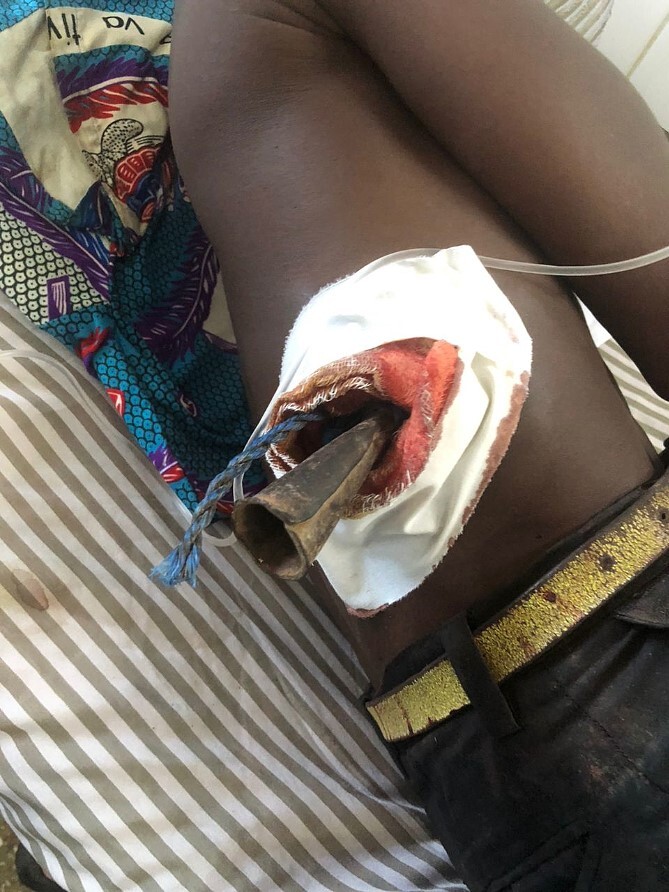 Figure 1
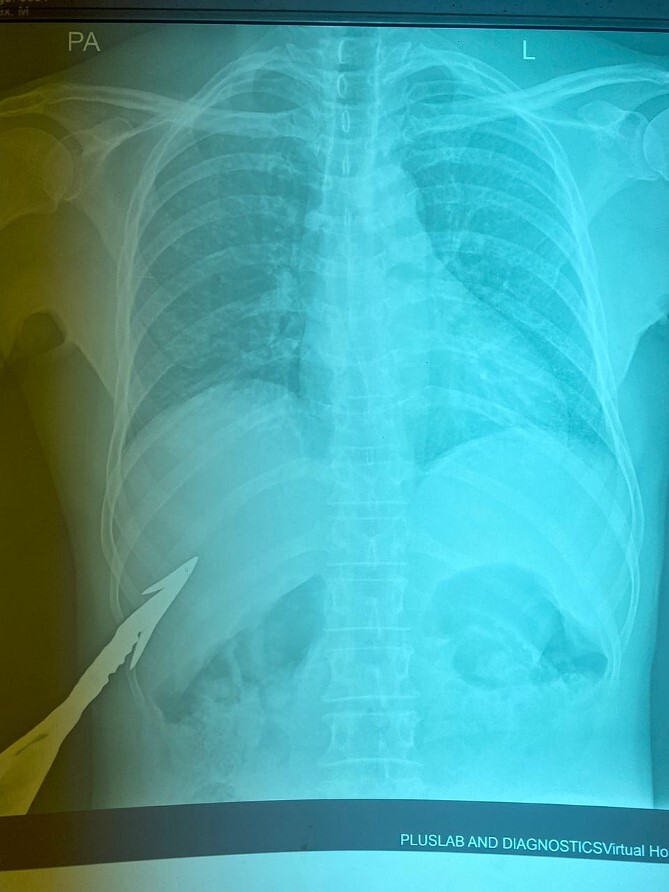 Figure 2
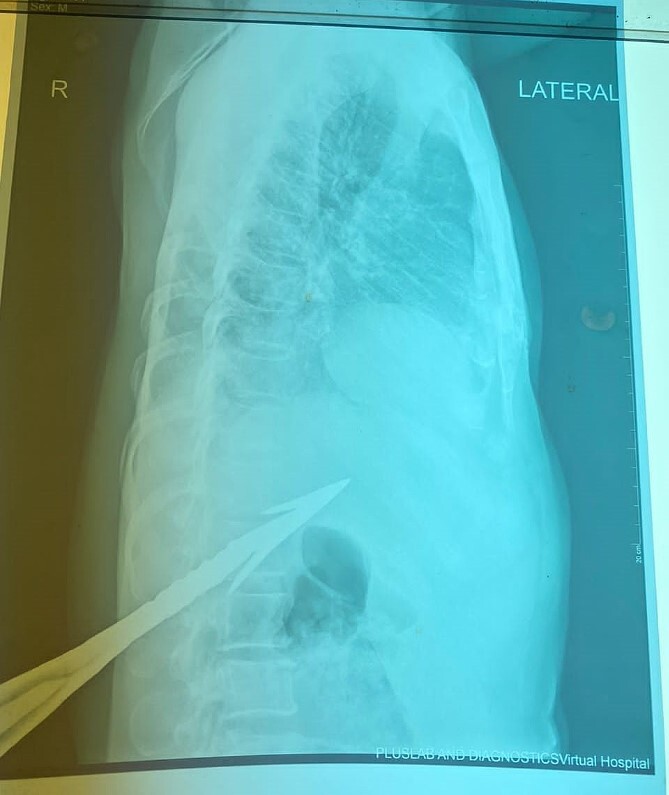 Figure 3
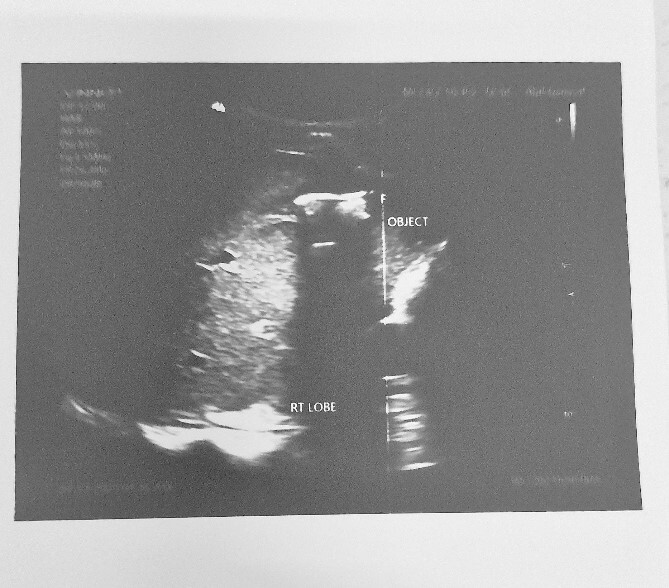 Figure 4
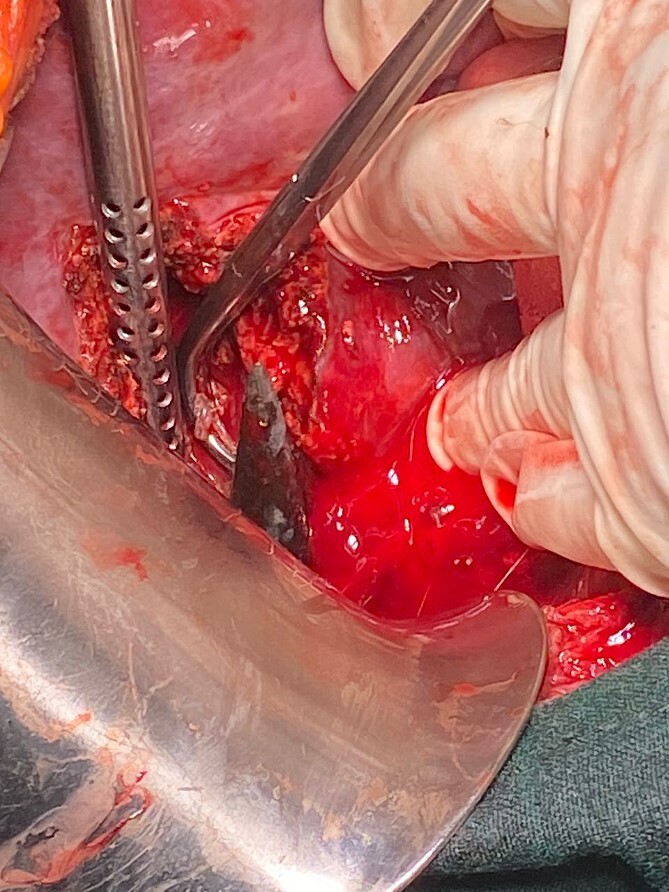 Figure 5
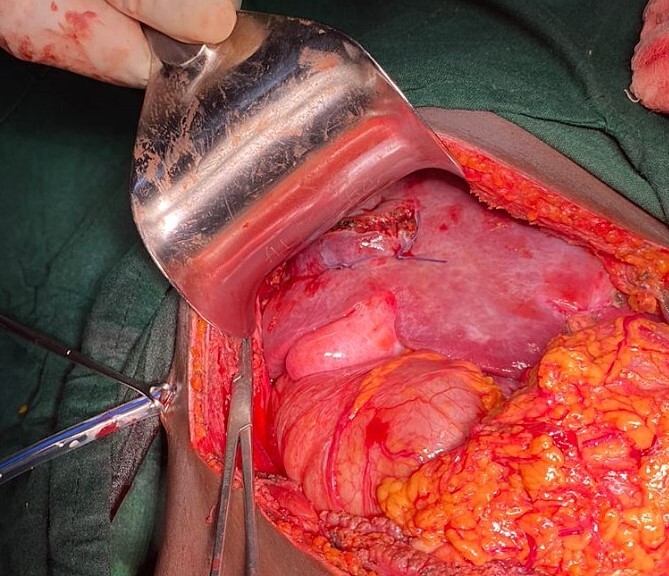 Figure 6
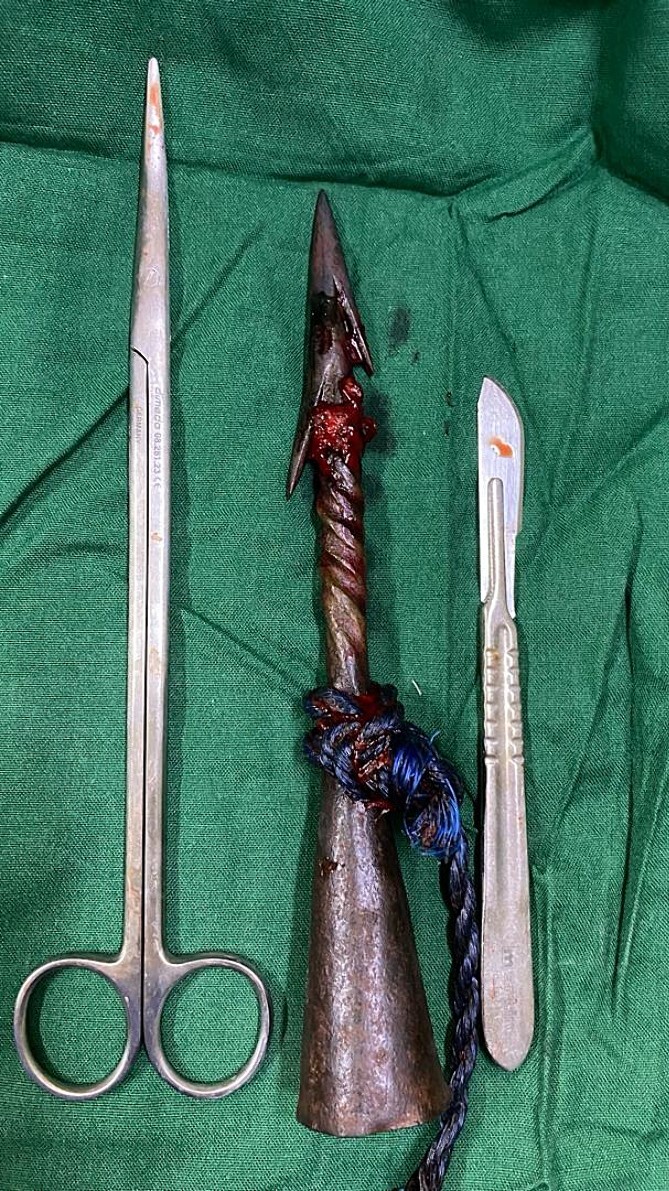 Figure 7
Peer Reviews
No public reviews on file for this paper yet. If you reviewed it on a platform where reviews are public (OpenReview, ICLR, NeurIPS, ICML), you can paste yours below so the community can read it here.
Videos
No videos yet. Explain this paper in a talk, walkthrough, or lecture? Add one.
Taxonomy
TopicsTraumatic Ocular and Foreign Body Injuries · Forensic and Genetic Research · Autopsy Techniques and Outcomes