Understanding and including ‘pink-collar’ workers in employment-based travel demand models
Yiping Yan, Abraham Leung, Matthew Burke, James McBroom, Humberto Merritt, Humberto Merritt, Humberto Merritt

TL;DR
This paper introduces a new way to classify commuters, including 'pink-collar' workers, to improve transport models and better predict travel behavior.
Contribution
The paper proposes a data-driven clustering approach to identify commuter types, including a distinct 'pink-collar' segment.
Findings
Using unsupervised clustering, eight distinct commuter types were identified from survey data.
A three-cluster segmentation revealed a 'pink collar' group dominated by female clerical and service workers with shorter commutes.
The method improves transport models by capturing nuanced travel behaviors across different worker types.
Abstract
The segmentation of commuters into either blue or white-collar workers remains is still common in urban transport models. Internationally, models have started to use more elaborate segmentations, more reflective of changes in labour markets, such as increased female participation. Finding appropriate labour market segmentations for commute trip modelling remains a challenge. This paper harnesses a data-driven approach using unsupervised clustering–applied to 2017–20 South East Queensland Travel Survey (SEQTS) data. Commuter types are grouped by occupational, industry, and socio-demographic variables (i.e., gender, age, household size, household vehicle ownership and worker skill score). The results show that at a large number of clusters (i.e., k = 8) a highly distinct set of commuter types can be observed. But model run times tend to require a much smaller number of market segments.…
Genes, proteins, chemicals, diseases, species, mutations and cell lines named across the full text — each resolved to its canonical identifier and authoritative record.
Click any figure to enlarge with its caption.
 Figure 1
 Figure 2
 Figure 3
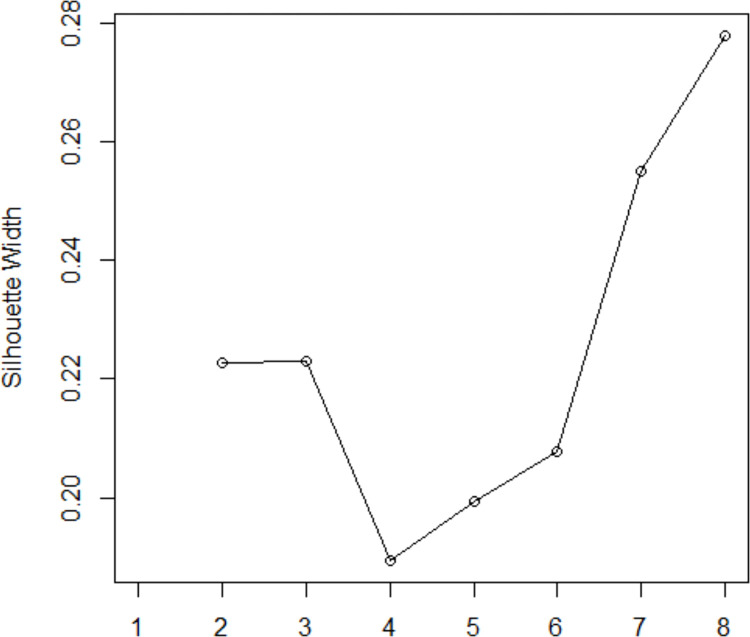 Figure 4
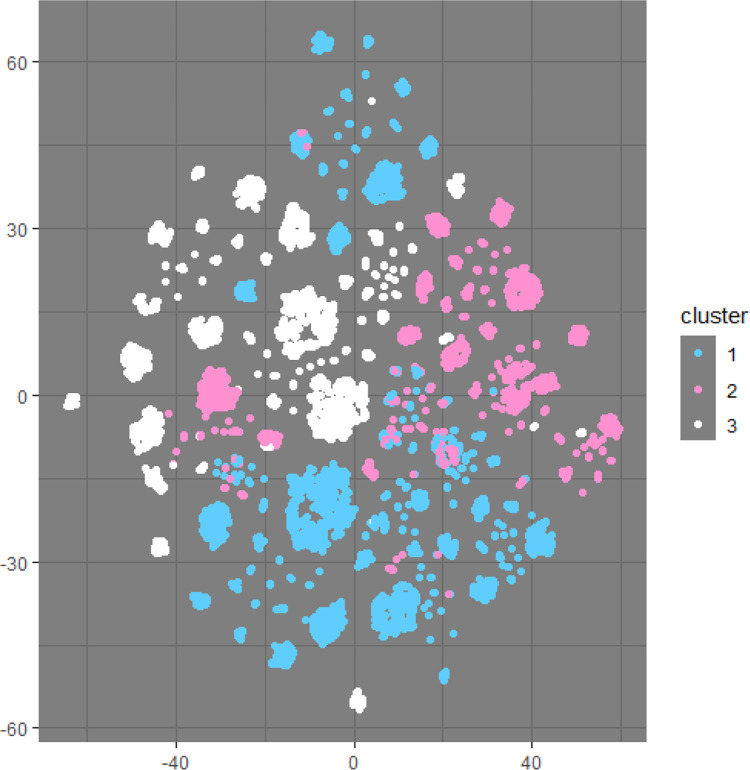 Figure 5
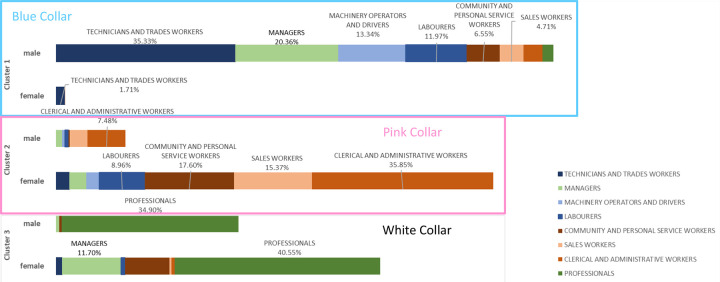 Figure 6
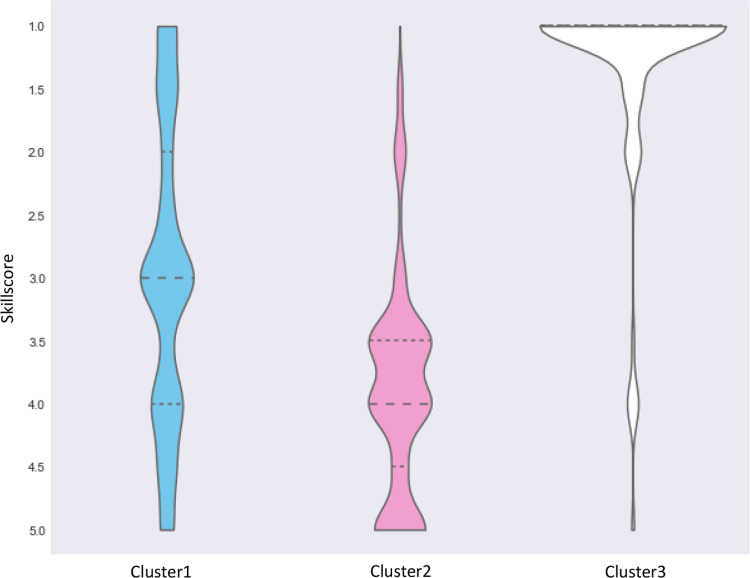 Figure 7
 Figure 8
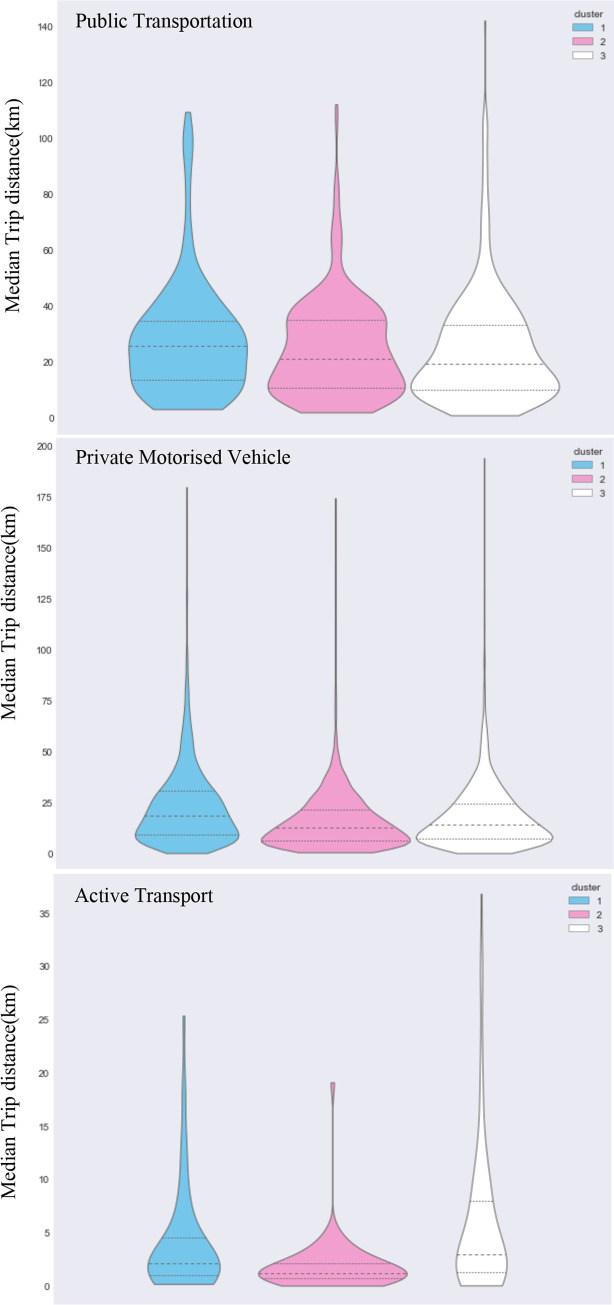 Figure 9
 Figure 10
 Figure 11
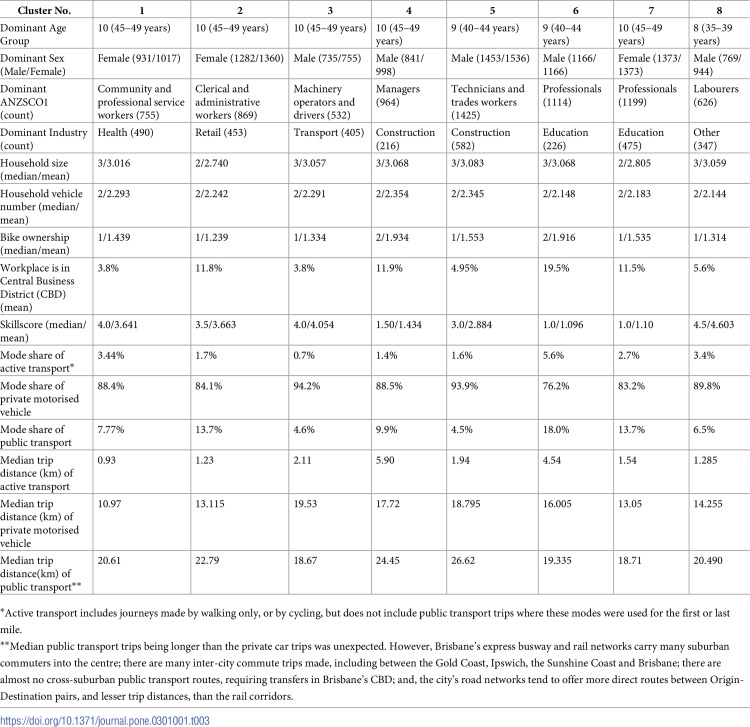 Figure 12
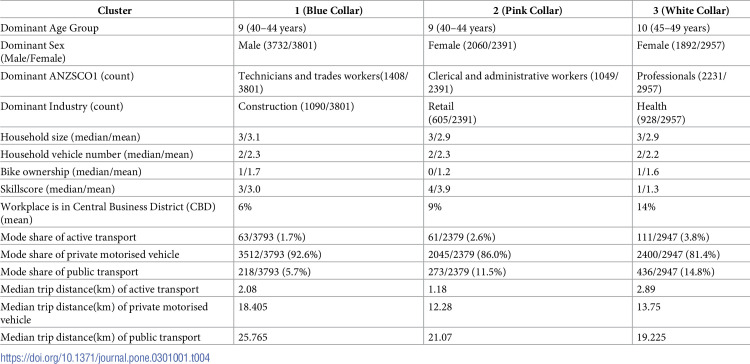 Figure 13
Peer Reviews
No public reviews on file for this paper yet. If you reviewed it on a platform where reviews are public (OpenReview, ICLR, NeurIPS, ICML), you can paste yours below so the community can read it here.
Videos
No videos yet. Explain this paper in a talk, walkthrough, or lecture? Add one.
Taxonomy
TopicsUrban Transport and Accessibility · Urban and Freight Transport Logistics · Transportation and Mobility Innovations