“Could a subset of joint mobility tests define generalized joint hypermobility?”: A descriptive observational inception study
Angela Schlager, Lena Nilsson-Wikmar, Kerstin Ahlqvist, Christina B. Olsson, Per Kristiansson

TL;DR
This study explores whether a subset of joint mobility tests can define generalized joint hypermobility, finding that a broader assessment is likely needed.
Contribution
The study demonstrates that no single subset of joint mobility tests can reliably define generalized joint hypermobility.
Findings
No subset of joint mobility tests could define generalized joint hypermobility.
Higher standard deviation levels led to higher limits for classifying hypermobility and lower prevalence.
Different combinations of joint tests resulted in a prevalence range of 0% to 12.9% for generalized joint hypermobility.
Abstract
Generalized joint hypermobility is an inherited collagen phenotype based on clinical assessments of joint mobility. However, there is no international consensus to define generalized joint hypermobility, both considering which joint mobility tests should be included and limits for joint hypermobility. The primary aim of the study was to identify a subset of joint mobility tests to define generalized joint hypermobility. A further aim was to evaluate standardized limits for the classification of hypermobility in different joint types throughout the body. A total of 255 early pregnant women were included in the study. Joint mobility was measured according to a structured protocol. Correlation and principal component analysis were used to find a subset of joint mobility tests. To classify hypermobility in each joint mobility test, five different standard deviation levels plus 0.84, plus…
Genes, proteins, chemicals, diseases, species, mutations and cell lines named across the full text — each resolved to its canonical identifier and authoritative record.
Click any figure to enlarge with its caption.
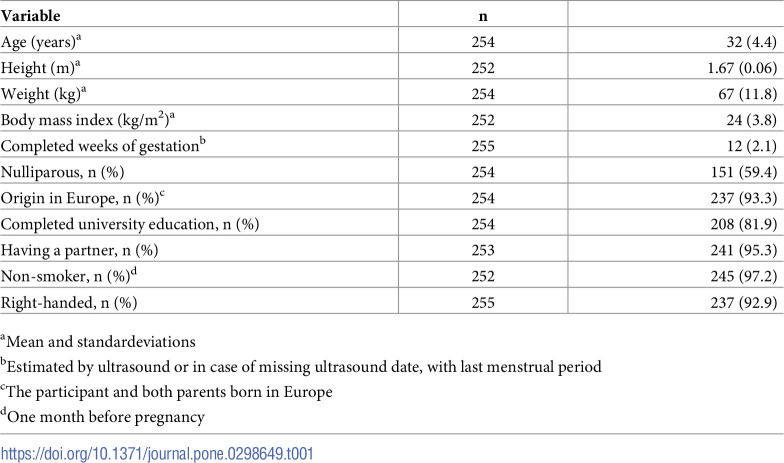 Figure 1
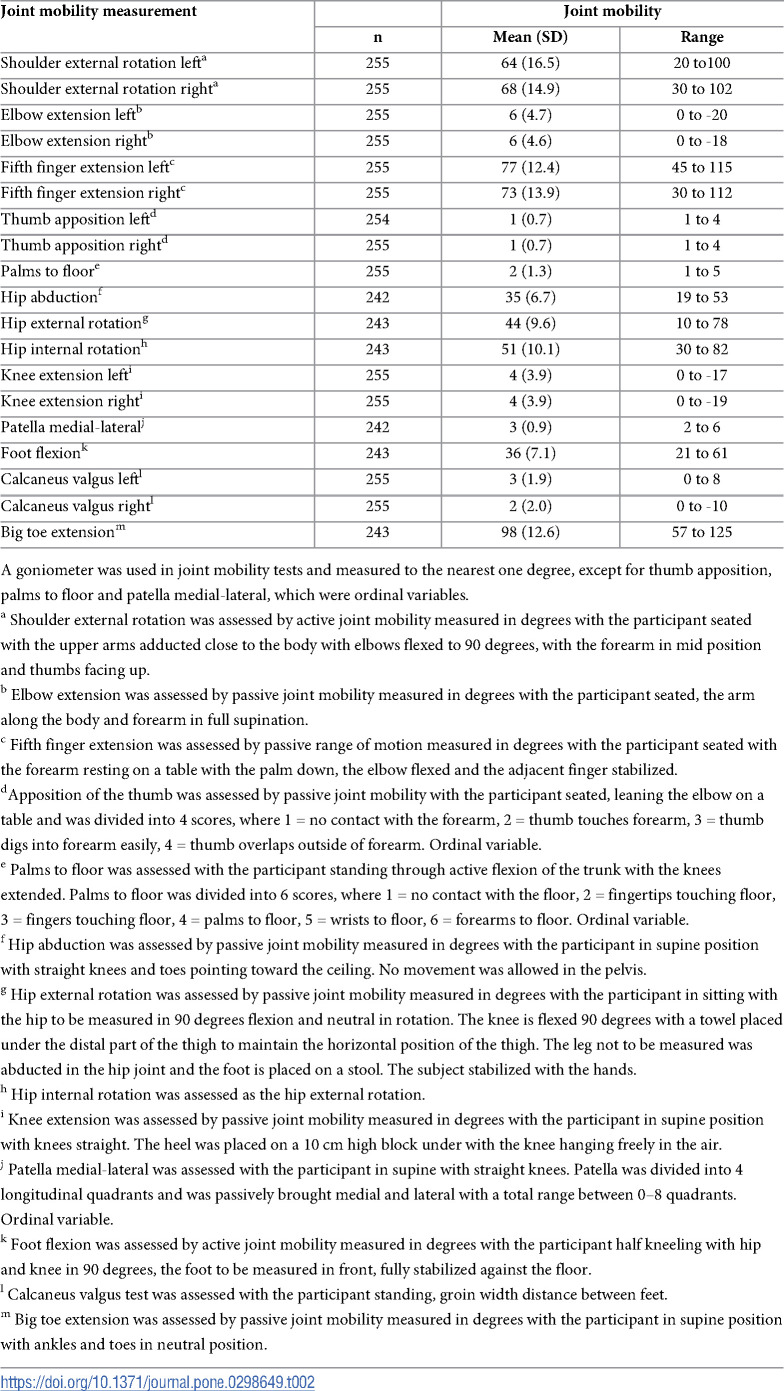 Figure 2
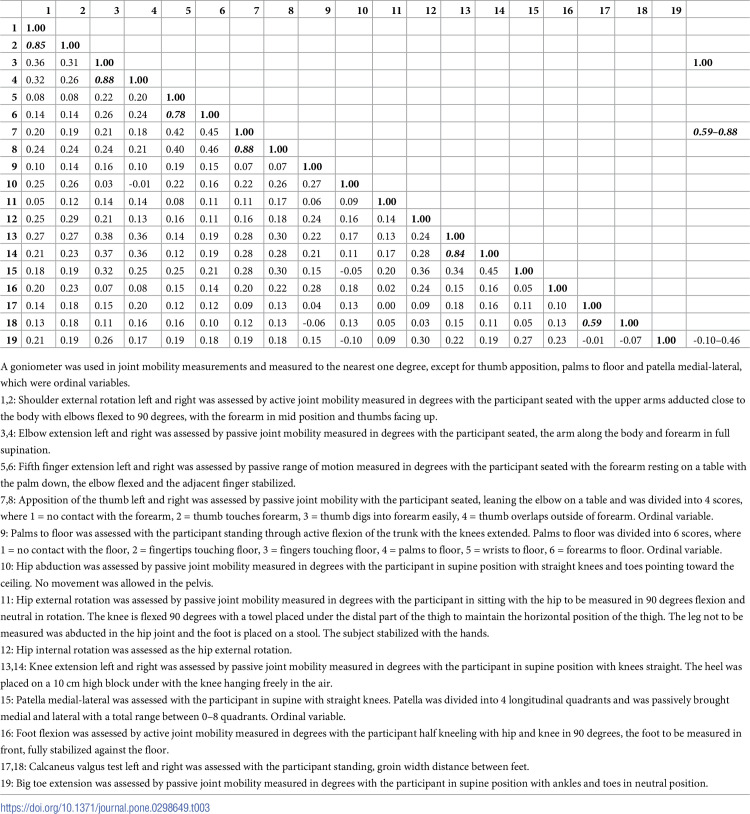 Figure 3
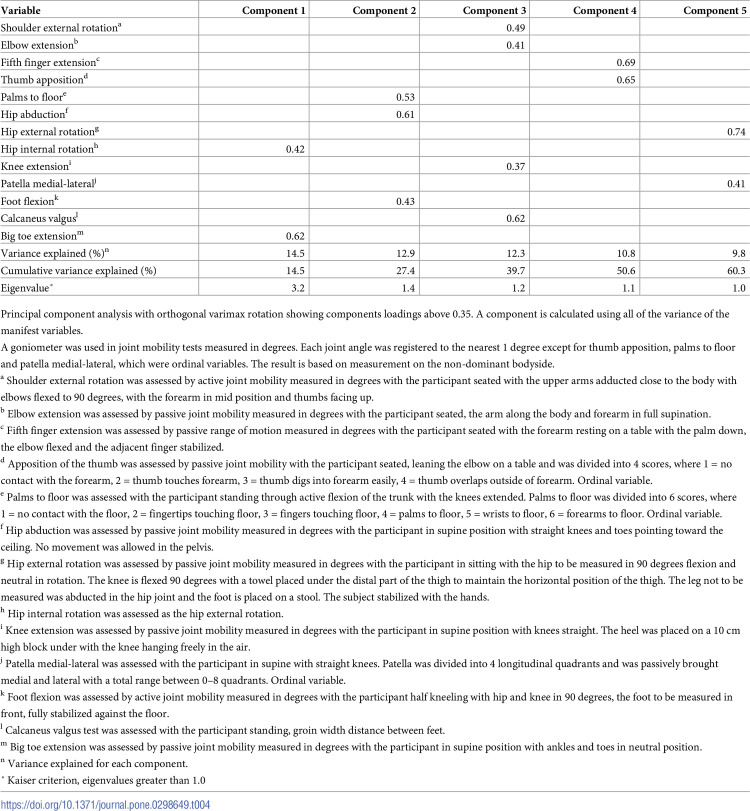 Figure 4
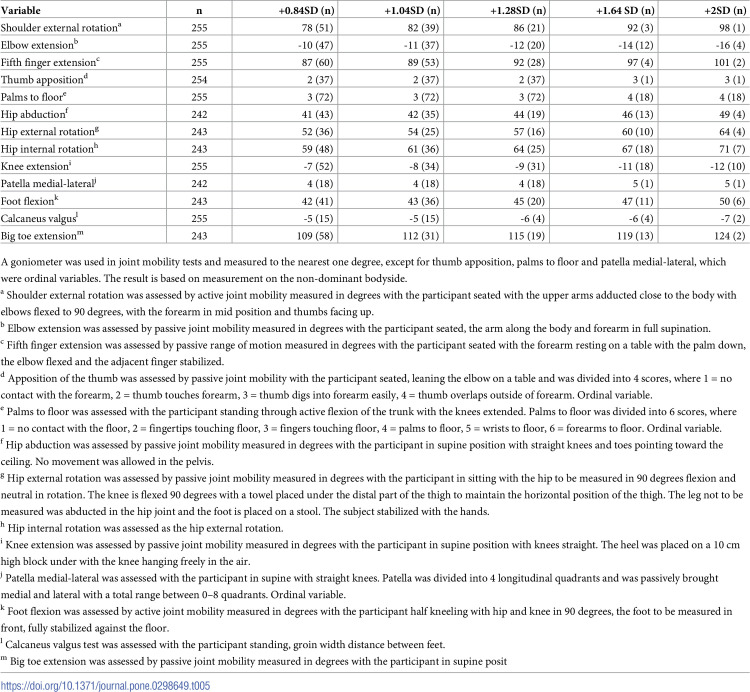 Figure 5
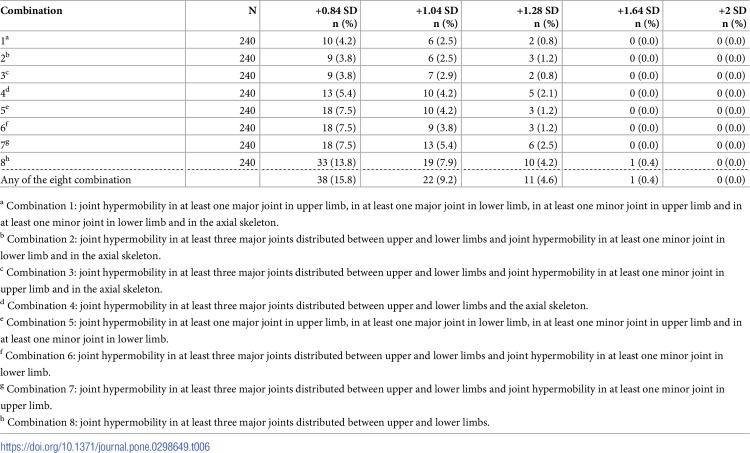 Figure 6
Peer Reviews
No public reviews on file for this paper yet. If you reviewed it on a platform where reviews are public (OpenReview, ICLR, NeurIPS, ICML), you can paste yours below so the community can read it here.
Videos
No videos yet. Explain this paper in a talk, walkthrough, or lecture? Add one.
Taxonomy
TopicsConnective tissue disorders research · Hip disorders and treatments · Bone fractures and treatments