Study of Direct N7 Regioselective tert-Alkylation of 6-Substituted Purines and Their Modification at Position C6 through O, S, N, and C Substituents
Filip Nevrlka, Adam Bědroň, Michal Valenta, Lenka Tranová, Jakub Stýskala

TL;DR
Scientists developed a new method to selectively attach tert-alkyl groups to specific positions in purine compounds, which could lead to new biologically active molecules.
Contribution
A novel regioselective method for N7 tert-alkylation of 6-substituted purines is introduced, enabling new purine transformations.
Findings
A method using N-trimethylsilylated purines and SnCl4 catalyst successfully introduces tert-alkyl groups at the N7 position.
The stability of tert-butyl groups at N7 was confirmed through model reactions, leading to new 6,7-disubstituted purine derivatives.
The approach allows preparation of 7-(tert-butyl)-6-chloropurine, a compound useful for further chemical transformations.
Abstract
A new N7 direct regioselective method allowing the introduction of tert-alkyl groups into appropriate 6-substituted purine derivatives is developed. This method is based on a reaction of N-trimethylsilylated purines with a tert-alkyl halide using SnCl4 as a catalyst. In this work, we study the structure and optimal reaction conditions leading to the N7 isomer and in some cases also to the N9 isomer. The main goal is devoted to preparing 7-(tert-butyl)-6-chloropurine as a suitable compound for other purine transformations. The stability of the tert-butyl group at the N7 position is tested for classic model reactions, leading to the preparation of new 6,7-disubstituted purine derivatives, which is also interesting from the point of view of possible biological activity.
Genes, proteins, chemicals, diseases, species, mutations and cell lines named across the full text — each resolved to its canonical identifier and authoritative record.
Click any figure to enlarge with its caption.
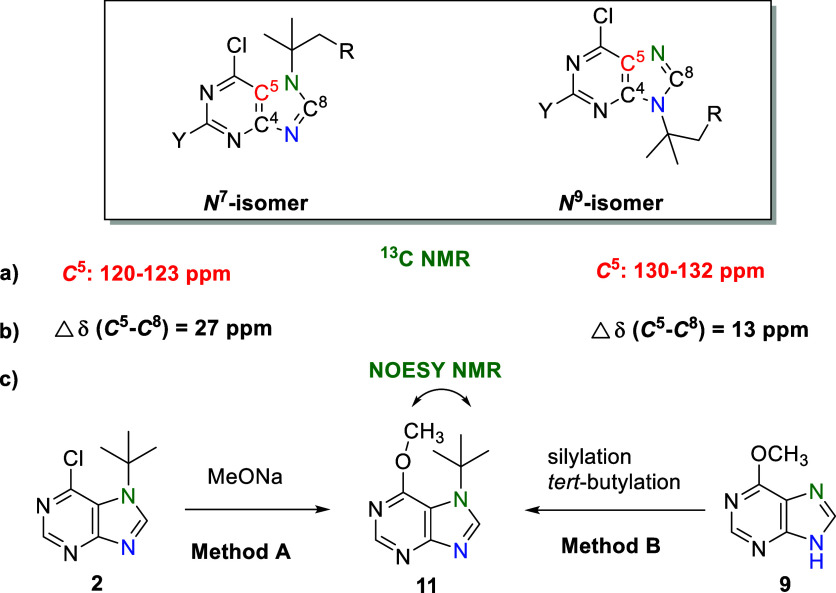 Figure 1
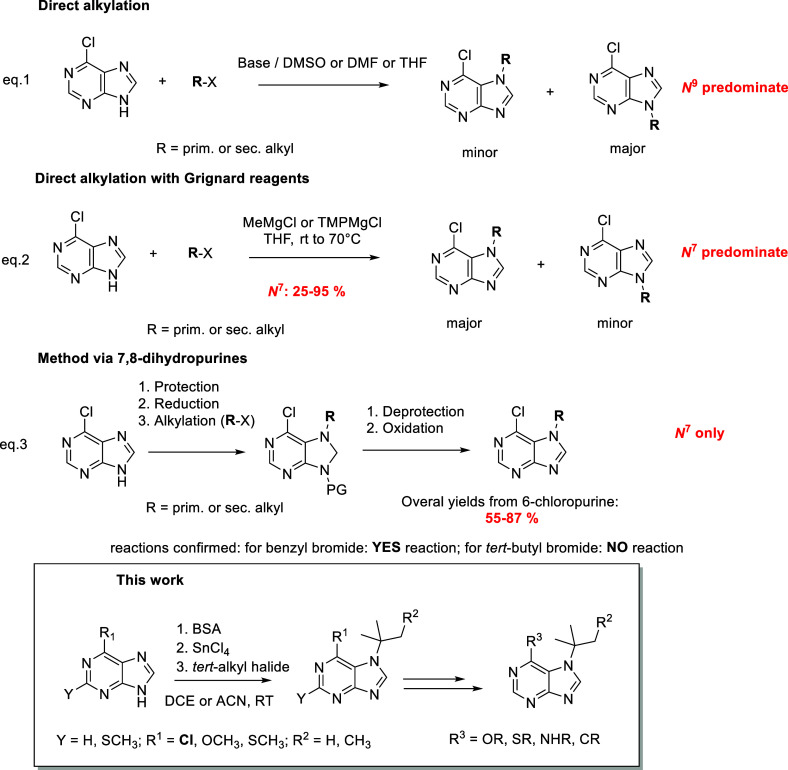 Figure 2
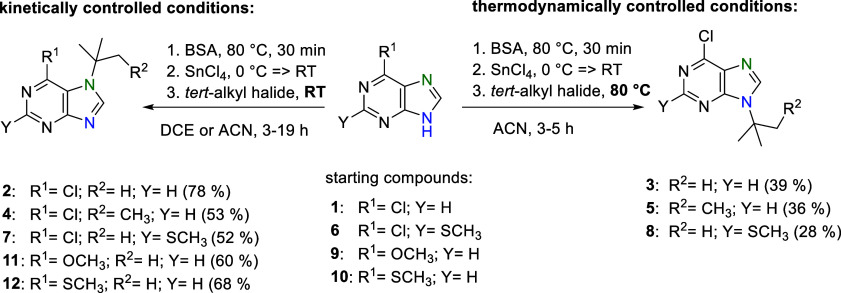 Figure 3
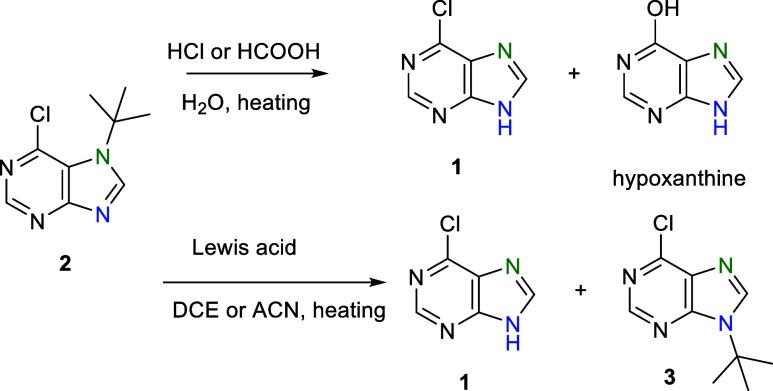 Figure 4
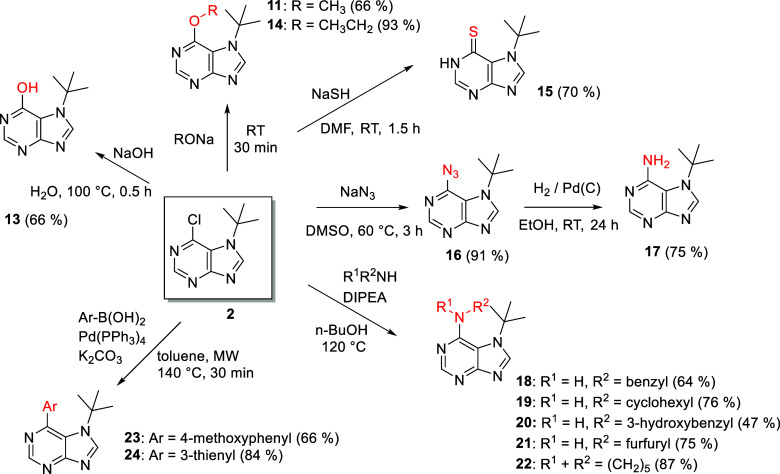 Figure 5
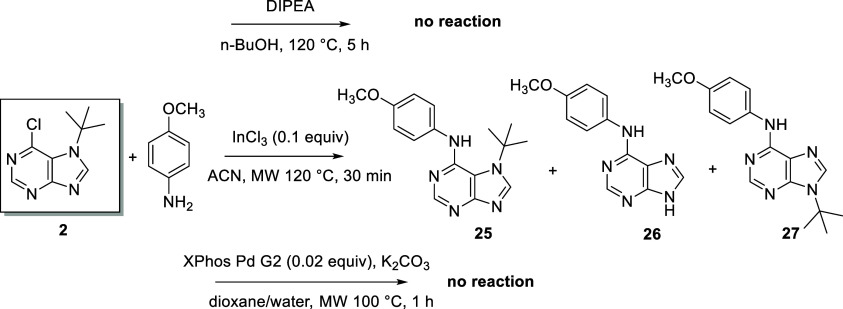 Figure 6
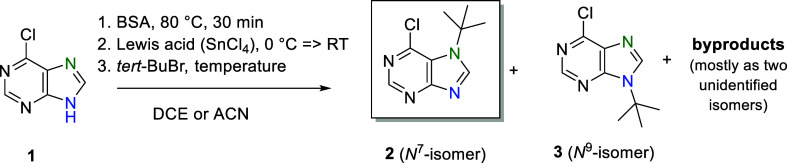 Figure 7
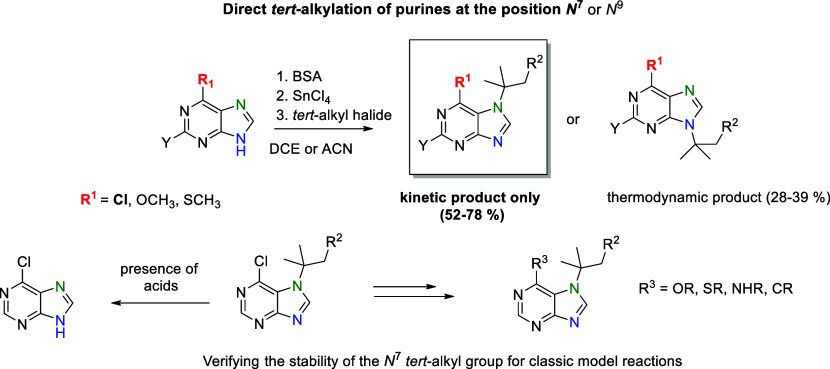 Figure 8
Peer Reviews
No public reviews on file for this paper yet. If you reviewed it on a platform where reviews are public (OpenReview, ICLR, NeurIPS, ICML), you can paste yours below so the community can read it here.
Videos
No videos yet. Explain this paper in a talk, walkthrough, or lecture? Add one.
Taxonomy
TopicsPneumocystis jirovecii pneumonia detection and treatment · Biochemical and Molecular Research · Adenosine and Purinergic Signaling