Global longitudinal strain is an informative index of left ventricular performance in neonates receiving intensive care
Enrico Petoello, Alice Iride Flore, Silvia Nogara, Elena Bonafiglia, Maria Beatrice Lenzi, Olivia C. Arnone, Giovanni Benfari, Martina Ciarcià, Iuri Corsini, Koert De Waal, Leonardo Gottin, Benjamim Ficial

TL;DR
This study shows that global longitudinal strain is a better measure of heart function in critically ill newborns compared to traditional methods.
Contribution
The study demonstrates that global longitudinal strain outperforms conventional metrics in assessing neonatal heart function.
Findings
Global longitudinal strain explained 73% of the variance in predicting stroke volume indexed for body weight.
Global longitudinal strain had a higher diagnostic accuracy for uncompensated shock compared to ejection fraction, S', and shortening fraction.
Global longitudinal strain showed moderate agreement with ejection fraction but limited agreement with S' and shortening fraction.
Abstract
Echocardiographic assessment of left ventricular function is crucial in NICU. The study aimed to compare the accuracy and agreement of global longitudinal strain (GLS) with conventional measurements. Real-life echocardiograms of neonates receiving intensive care were retrospectively reviewed. Shortening fraction (SF), ejection fraction (EF) and S’ measurements were retrieved from health records. GLS was calculated offline from stored images. The association with stroke volume indexed for body weight (iSV) was evaluated by regression analysis. The diagnostic ability to identify uncompensated shock was assessed by ROC curve analysis. Cohen's κ was run to assess agreement. 334 echocardiograms of 155 neonates were evaluated. Mean ± SD gestational age and birth weight were 34.5 ± 4.1 weeks and 2264 ± 914 g, respectively. SF, EF, S’ and GLS were associated with iSV with R2 of 0.133, 0.332,…
Genes, proteins, chemicals, diseases, species, mutations and cell lines named across the full text — each resolved to its canonical identifier and authoritative record.
Click any figure to enlarge with its caption.
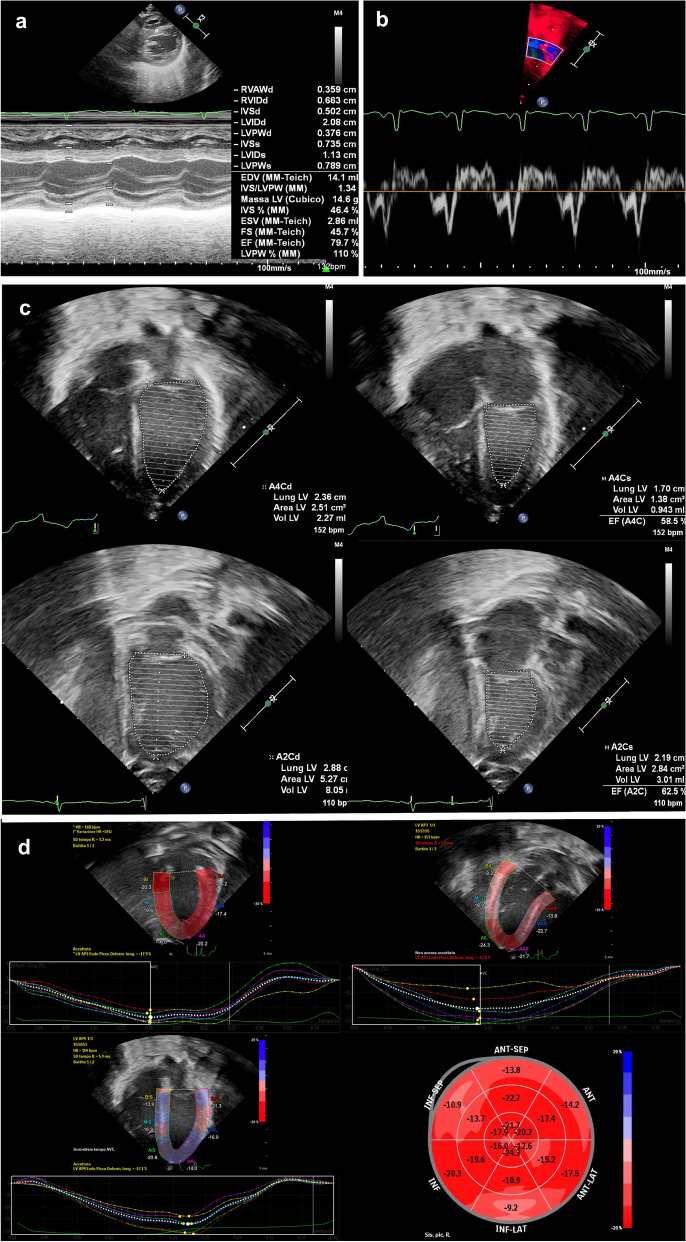 Figure 1
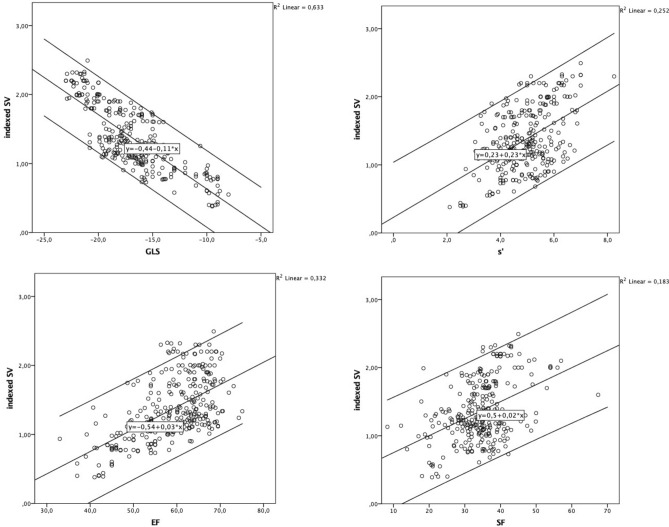 Figure 2
Peer Reviews
No public reviews on file for this paper yet. If you reviewed it on a platform where reviews are public (OpenReview, ICLR, NeurIPS, ICML), you can paste yours below so the community can read it here.
Videos
No videos yet. Explain this paper in a talk, walkthrough, or lecture? Add one.
Taxonomy
TopicsCombustion and Detonation Processes · Environmental and Industrial Safety · Fuel Cells and Related Materials