HOIL-1L deficiency induces cell cycle alteration which causes immaturity of skeletal muscle and cardiomyocytes
Kentaro Akagi, Shiro Baba, Hiroaki Fujita, Yasuhiro Fuseya, Daisuke Yoshinaga, Hirohito Kubota, Eitaro Kume, Fumiaki Fukumura, Koichi Matsuda, Takayuki Tanaka, Takuya Hirata, Megumu K. Saito, Kazuhiro Iwai, Junko Takita

TL;DR
This study shows that a deficiency in HOIL-1L leads to cell cycle issues that impair the development of muscle and heart cells, contributing to myopathy and dilated cardiomyopathy.
Contribution
The study identifies HOIL-1L as a key regulator of cell cycle and maturation in muscle and heart cells using both mouse and human cell models.
Findings
HOIL-1L deficiency causes mitotic cell accumulation and impaired differentiation in myotubes.
Patient-derived heart cells show abnormal morphology and excessive multinucleation.
HOIL-1L is essential for proper cell cycle regulation and maturation of muscle and heart cells.
Abstract
HOIL-1L deficiency was recently reported to be one of the causes of myopathy and dilated cardiomyopathy (DCM). However, the mechanisms by which myopathy and DCM develop have not been clearly elucidated. Here, we sought to elucidate these mechanisms using the murine myoblast cell line C2C12 and disease-specific human induced pluripotent stem cells (hiPSCs). Myotubes differentiated from HOIL-1L-KO C2C12 cells exhibited deteriorated differentiation and mitotic cell accumulation. CMs differentiated from patient-derived hiPSCs had an abnormal morphology with a larger size and were excessively multinucleated compared with CMs differentiated from control hiPSCs. Further analysis of hiPSC-derived CMs showed that HOIL-1L deficiency caused cell cycle alteration and mitotic cell accumulation. These results demonstrate that abnormal cell maturation possibly contribute to the development of myopathy…
Genes, proteins, chemicals, diseases, species, mutations and cell lines named across the full text — each resolved to its canonical identifier and authoritative record.
Click any figure to enlarge with its caption.
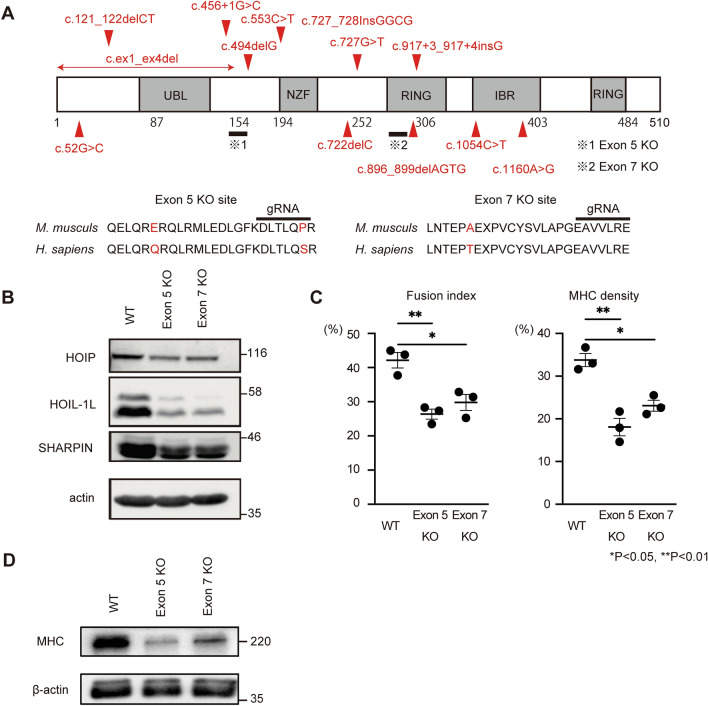 Figure 1
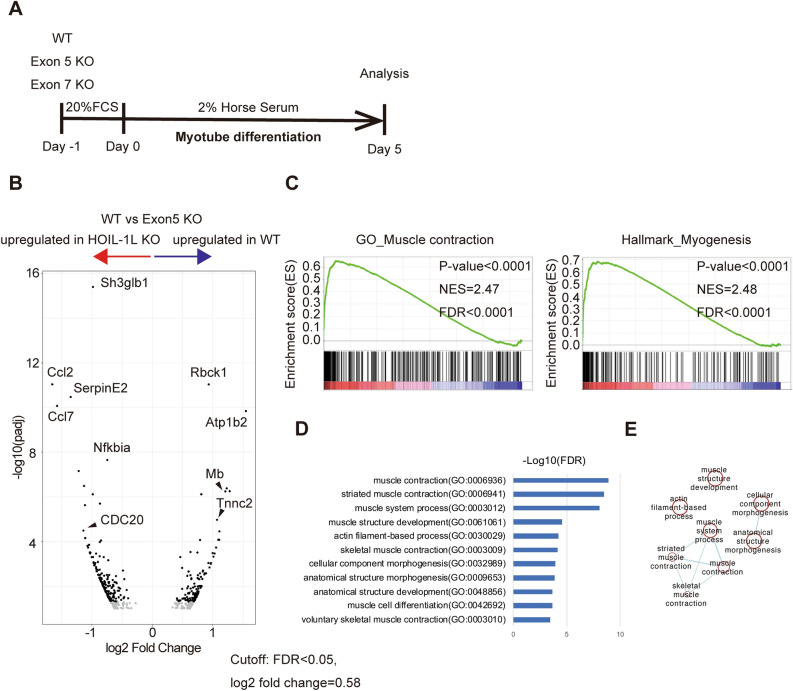 Figure 2
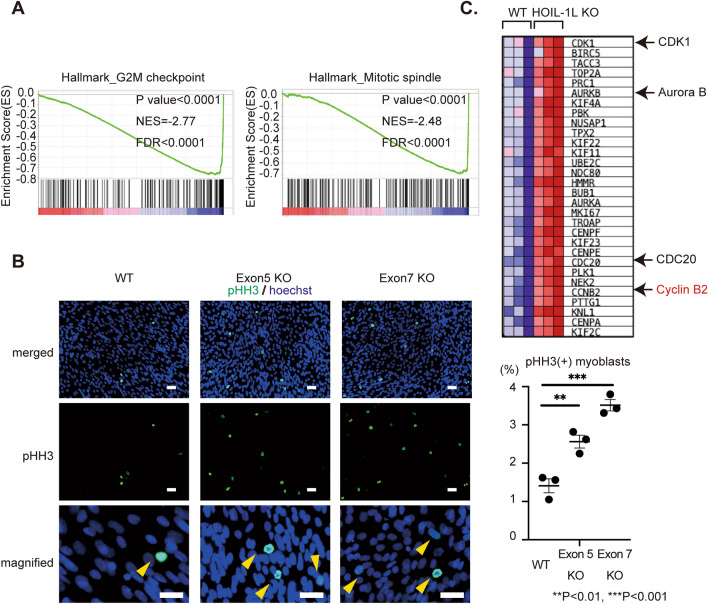 Figure 3
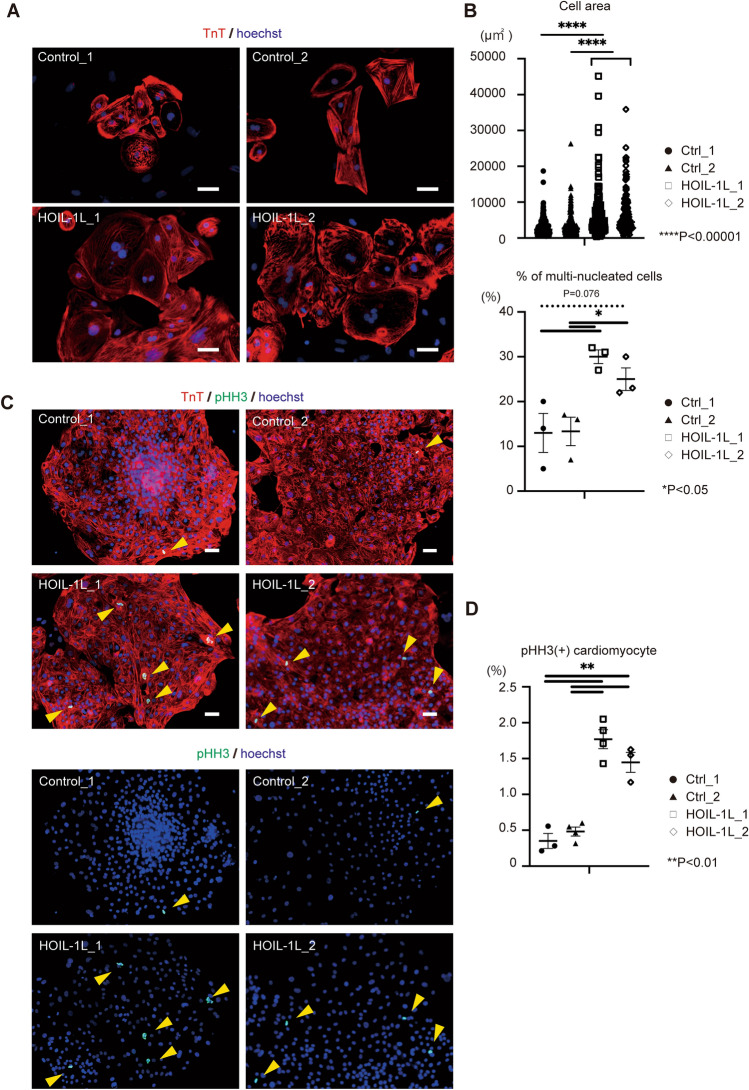 Figure 4
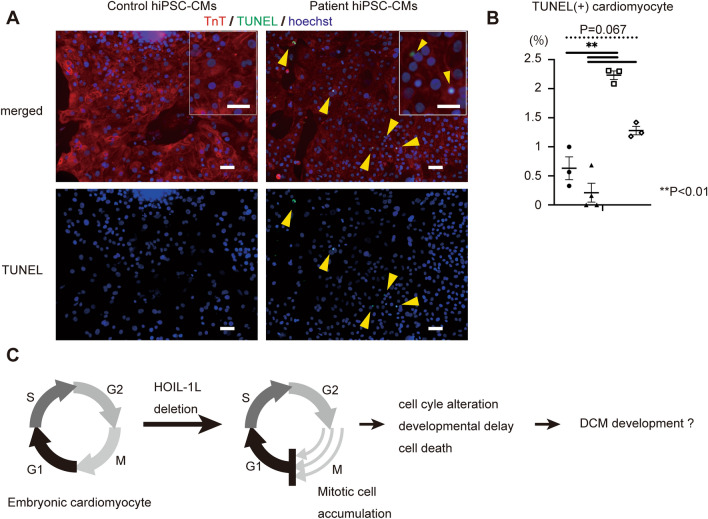 Figure 5
Peer Reviews
No public reviews on file for this paper yet. If you reviewed it on a platform where reviews are public (OpenReview, ICLR, NeurIPS, ICML), you can paste yours below so the community can read it here.
Videos
No videos yet. Explain this paper in a talk, walkthrough, or lecture? Add one.
Taxonomy
TopicsMuscle Physiology and Disorders · Pluripotent Stem Cells Research · Genetics and Neurodevelopmental Disorders