MMM and MMMSynth: Clustering of heterogeneous tabular data, and synthetic data generation
Chandrani Kumari, Rahul Siddharthan, Mohd Amril Nurman Mohd Nazir, Zeyar Aung, Zeyar Aung

TL;DR
This paper introduces new methods for clustering and generating synthetic data from heterogeneous tabular datasets, improving performance over existing techniques.
Contribution
The paper introduces MMM and MMMSynth, novel algorithms for clustering and synthetic data generation in heterogeneous tabular data.
Findings
MMM outperforms standard algorithms in clustering synthetic and real heterogeneous data.
MMMSynth generates high-quality synthetic data that approaches the performance of real data in ML tasks.
The synthetic data generation method outperforms existing literature approaches.
Abstract
We provide new algorithms for two tasks relating to heterogeneous tabular datasets: clustering, and synthetic data generation. Tabular datasets typically consist of heterogeneous data types (numerical, ordinal, categorical) in columns, but may also have hidden cluster structure in their rows: for example, they may be drawn from heterogeneous (geographical, socioeconomic, methodological) sources, such that the outcome variable they describe (such as the presence of a disease) may depend not only on the other variables but on the cluster context. Moreover, sharing of biomedical data is often hindered by patient confidentiality laws, and there is current interest in algorithms to generate synthetic tabular data from real data, for example via deep learning. We demonstrate a novel EM-based clustering algorithm, MMM (“Madras Mixture Model”), that outperforms standard algorithms in…
Genes, proteins, chemicals, diseases, species, mutations and cell lines named across the full text — each resolved to its canonical identifier and authoritative record.
Click any figure to enlarge with its caption.
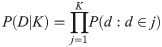 Figure 1
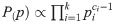 Figure 2
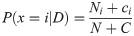 Figure 3
 Figure 4
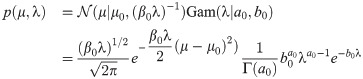 Figure 5
 Figure 6
 Figure 7
 Figure 8
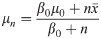 Figure 9
 Figure 10
 Figure 11
 Figure 12
 Figure 13
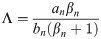 Figure 14
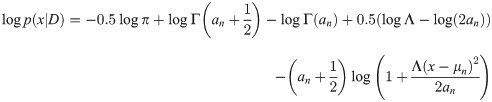 Figure 15
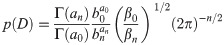 Figure 16
 Figure 17
 Figure 18
 Figure 19
 Figure 20
 Figure 21
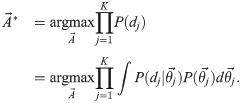 Figure 22
 Figure 23
 Figure 24
 Figure 25
 Figure 26
 Figure 27
 Figure 28
 Figure 29
 Figure 30
 Figure 31
 Figure 32
 Figure 33
 Figure 34
 Figure 35
 Figure 36
 Figure 37
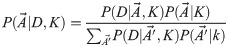 Figure 38
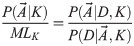 Figure 39
 Figure 40
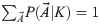 Figure 41
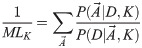 Figure 42
 Figure 43
 Figure 44
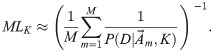 Figure 45
 Figure 46
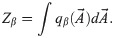 Figure 47
 Figure 48
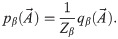 Figure 49
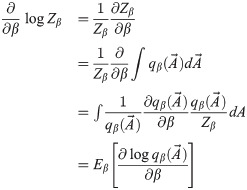 Figure 50
Peer Reviews
No public reviews on file for this paper yet. If you reviewed it on a platform where reviews are public (OpenReview, ICLR, NeurIPS, ICML), you can paste yours below so the community can read it here.
Videos
No videos yet. Explain this paper in a talk, walkthrough, or lecture? Add one.
Taxonomy
TopicsBayesian Methods and Mixture Models · Data-Driven Disease Surveillance · Advanced Clustering Algorithms Research