Feasibility and reliability of fetal two dimensional speckle tracking echocardiography at 16 weeks gestational age: A pilot study
Thomas J. Nichting, Zoé A. van Lier, Chantelle de Vet, Myrthe van der Ven, Daisy A. A. van der Woude, Sally A. Clur, Noortje H. M. van Oostrum, S. Guid Oei, Judith O. E. H. van Laar

TL;DR
This pilot study shows that fetal 2D-STE at 16 weeks is feasible but needs better reliability for consistent results.
Contribution
Demonstrates feasibility of 2D-STE at 16 weeks and identifies reliability challenges for early cardiac assessment.
Findings
74% of ultrasound clips were suitable for 2D-STE analysis at 16 weeks.
Moderate to good intra- and inter-operator reliability was observed for global longitudinal strain measurements.
Strict protocols are essential for successful fetal 2D-STE at this gestational age.
Abstract
Fetal two-dimensional speckle tracking echocardiography (2D-STE) is an emerging technique for assessing fetal cardiac function by measuring global longitudinal strain. Alterations in global longitudinal strain may serve as early indicator of pregnancy complications, making 2D-STE a potentially valuable tool for early detection. Early detection can facilitate timely interventions to reduce fetal and maternal morbidity and mortality. Therefore, the aim of this study was to investigate the feasibility of performing 2D-STE at 16 weeks gestational age. This pilot study utilized 50 ultrasound clips of the fetal four-chamber view recorded between 15+5 and 16+2 weeks gestational age from a prospective cohort study. A strict protocol assessed three parameters essential for 2D-STE analysis: fetal four-chamber view ultrasound clip quality, region of interest, and frame rates. Two independent…
Genes, proteins, chemicals, diseases, species, mutations and cell lines named across the full text — each resolved to its canonical identifier and authoritative record.
Click any figure to enlarge with its caption.
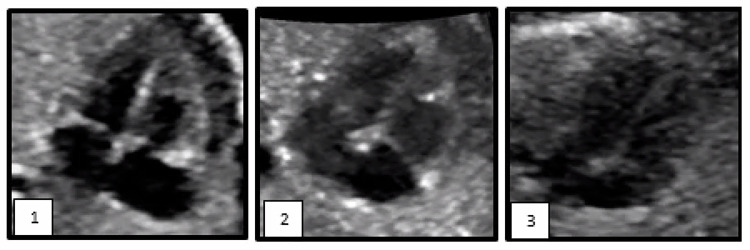 Figure 1
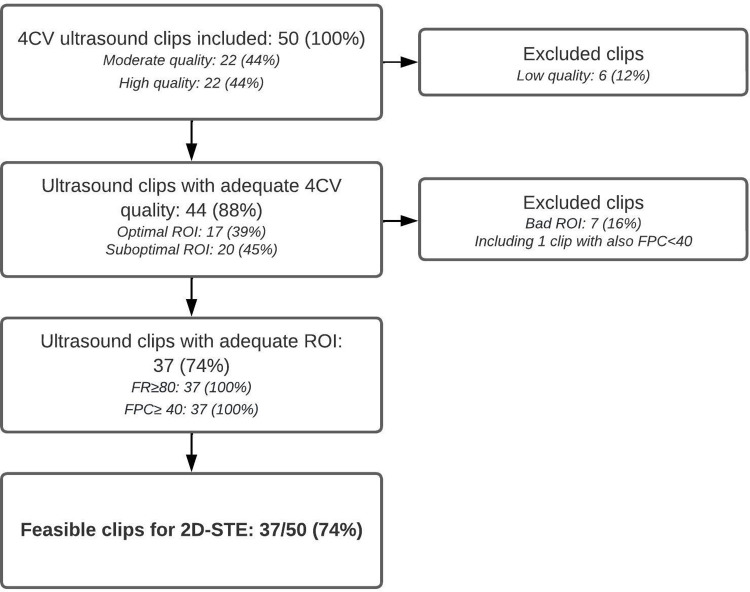 Figure 2
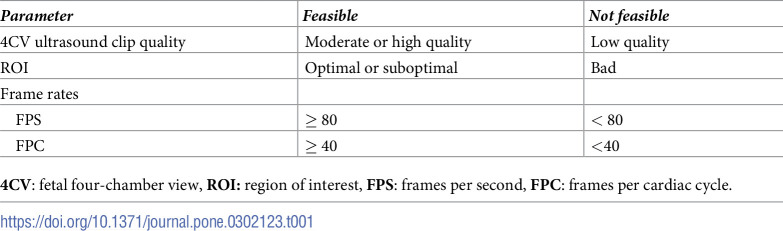 Figure 3
 Figure 4
Peer Reviews
No public reviews on file for this paper yet. If you reviewed it on a platform where reviews are public (OpenReview, ICLR, NeurIPS, ICML), you can paste yours below so the community can read it here.
Videos
No videos yet. Explain this paper in a talk, walkthrough, or lecture? Add one.
Taxonomy
TopicsCongenital Heart Disease Studies · Cardiovascular Function and Risk Factors · Pregnancy and preeclampsia studies