533 Preliminary in Vivo and Atomic Force Microscopy Assessment of Uninjured Skin, Donor and Graft Sites
Apolline S Pistek, Lindsay Burnett, Vincent Gabriel, Shyla K Bharadia, Priyanka G Mukherjee, Mathias Amrein

TL;DR
This study uses non-invasive and microscopic methods to assess mechanical changes in skin after grafting, showing grafted skin is stiffer than donor or control sites.
Contribution
The study introduces a combined non-invasive and atomic force microscopy approach to assess mechanical properties of skin grafts and scars.
Findings
Grafted skin showed the highest Young’s elasticity modulus (2.70 ± 0.10 kPa) compared to donor and control sites.
Control sites had the lowest elasticity (1.49 ± 0.12 kPa), while donor sites were intermediate (1.98 ± 0.88 kPa).
Non-invasive vacuum measurements aligned with atomic force microscopy results, suggesting consistent mechanical trends.
Abstract
With limited dermal function at the recipient site, fibrosis is expected following split-thickness skin grafting. Additional hypertrophic scar may develop within the graft, along seams and margins or at the donor site. This study focuses on the mechanical changes in the skin following split-thickness skin grafting as assessed by a non-invasive negative pressure device and atomic force microscopy to describe gross and sub-cellular mechanical properties in the differing skin states post-grafting. Participants with full-thickness burn injuries acutely managed with a split-thickness skin graft, closed donor and graft sites without any previous steroid injection or laser therapeutic interventions and a suitable control site were recruited. A negative pressure device was applied to grafted, donor, and uninjured contralateral control sites and response recorded to vacuum pressure and release…
Click any figure to enlarge with its caption.
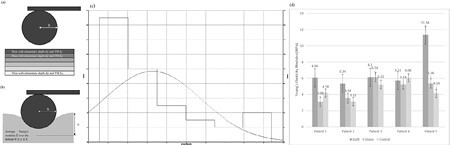 Figure 1
Peer Reviews
No public reviews on file for this paper yet. If you reviewed it on a platform where reviews are public (OpenReview, ICLR, NeurIPS, ICML), you can paste yours below so the community can read it here.
Videos
No videos yet. Explain this paper in a talk, walkthrough, or lecture? Add one.
Taxonomy
TopicsReconstructive Surgery and Microvascular Techniques · Wound Healing and Treatments