Is alcohol and psychoactive medication use associated with excess hospital length-of-stay and admission frequency? A cross-sectional, observational study
Danil Gamboa, Saranda Kabashi, Benedicte Jørgenrud, Anners Lerdal, Gudmund Nordby, Stig Tore Bogstrand

TL;DR
This study finds that using multiple psychoactive medications is linked to longer hospital stays and more frequent admissions, while harmful alcohol use is mainly linked to more frequent admissions.
Contribution
The study identifies a novel association between polypharmacy of psychoactive drugs and increased hospital length-of-stay and admission frequency.
Findings
Use of two or more psychoactive medications is associated with a 60% higher odds of excess length-of-stay and a 272% higher odds of excess admission frequency.
Harmful alcohol consumption is not linked to longer hospital stays but is associated with increased admission frequency.
The associations remain significant even when adjusting for factors like age, gender, and pre-existing conditions.
Abstract
Hospital length-of-stay and admission frequency are commonly used indicators of disease burden and health resource expenditures. However, the impact of psychoactive prescription medication use and harmful alcohol consumption on both the duration and frequency of hospital admissions is under-explored. We conducted an analysis of data gathered from 2872 patients admitted to the Emergency Department at Lovisenberg Diaconal Hospital in Oslo, Norway. Psychoactive medicines (benzodiazepines, opioids, and z-hypnotics) were detected via liquid chromatography-mass spectrometry analysis of whole blood, while alcohol consumption was self-reported through the Alcohol Use Disorder Identification Test-4 (AUDIT-4). Using logistic regression, we examined associations with our primary outcomes, which were excess length-of-stay and admission frequency, defined as exceeding the sample median of 3.0 days…
Genes, proteins, chemicals, diseases, species, mutations and cell lines named across the full text — each resolved to its canonical identifier and authoritative record.
Click any figure to enlarge with its caption.
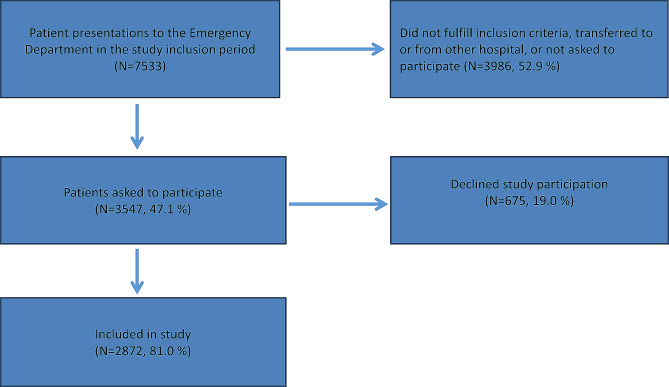 Figure 1
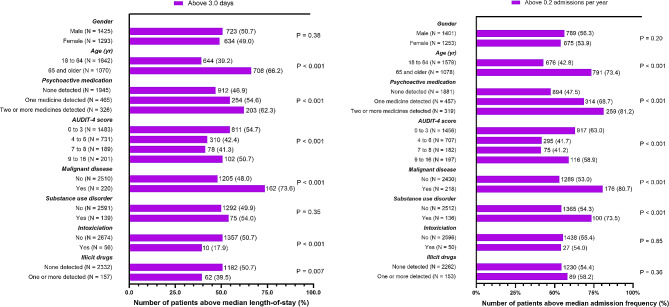 Figure 2
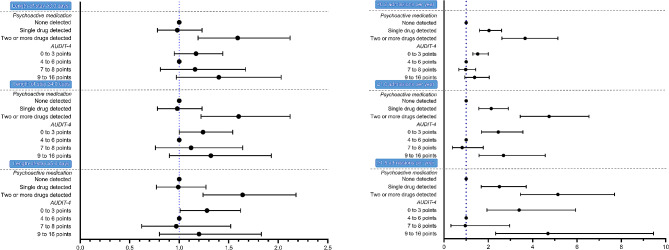 Figure 3
Peer Reviews
No public reviews on file for this paper yet. If you reviewed it on a platform where reviews are public (OpenReview, ICLR, NeurIPS, ICML), you can paste yours below so the community can read it here.
Videos
No videos yet. Explain this paper in a talk, walkthrough, or lecture? Add one.
Taxonomy
TopicsEmergency and Acute Care Studies · Healthcare Policy and Management · Healthcare Decision-Making and Restraints