Predictors for participation in mass-treatment and female genital schistosomiasis re-investigation, and the effect of praziquantel treatment in South African adolescents
Takalani Girly Nemungadi, Elisabeth Kleppa, Hashini Nilushika Galappaththi-Arachchige, Pavitra Pillay, Svein Gunnar Gundersen, Birgitte Jyding Vennervald, Patricia Doris Ndhlovu, Myra Taylor, Saloshni Naidoo, Eyrun Floerecke Kjetland, Luc E. Coffeng, Eva Clark, Eva Clark

TL;DR
This study explores factors influencing treatment and follow-up in young South African women with genital schistosomiasis and finds praziquantel treatment may help reduce abnormal blood vessels.
Contribution
The study is the first to investigate the effect of praziquantel treatment on FGS in adolescents and identifies predictors for treatment and follow-up participation.
Findings
Only 26% of participants accepted mass treatment and 17% returned for follow-up gynecological investigations.
Multivariable analysis showed praziquantel treatment significantly reduced abnormal blood vessels.
Factors like water contact and family structure influenced treatment and follow-up participation.
Abstract
Female Genital Schistosomiasis (FGS) causes intravaginal lesions and symptoms that could be mistaken for sexually transmitted diseases or cancer. In adults, FGS lesions [grainy sandy patches (GSP), homogenous yellow patches (HYP), abnormal blood vessels and rubbery papules] are refractory to treatment. The effect of treatment has never been explored in young women; it is unclear if gynaecological investigation will be possible in this young age group (16–23 years). We explored the predictors for accepting anti-schistosomal treatment and/or gynaecological reinvestigation in young women, and the effects of anti-schistosomal mass-treatment (praziquantel) on the clinical manifestations of FGS at an adolescent age. The study was conducted between 2011 and 2013 in randomly selected, rural, high schools in Ilembe, uThungulu and Ugu Districts, KwaZulu-Natal Province, East Coast of South…
Genes, proteins, chemicals, diseases, species, mutations and cell lines named across the full text — each resolved to its canonical identifier and authoritative record.
Click any figure to enlarge with its caption.
 Figure 1
 Figure 2
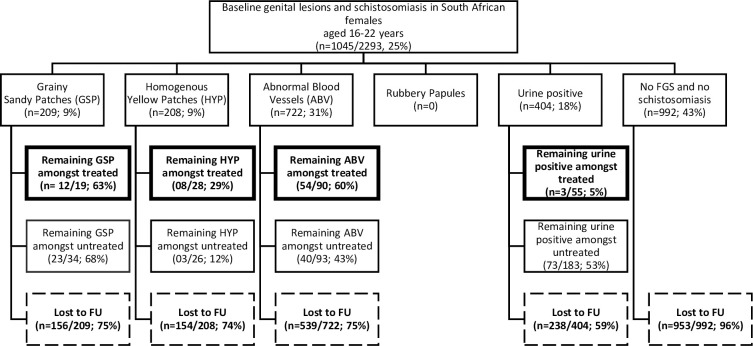 Figure 3
 Figure 4
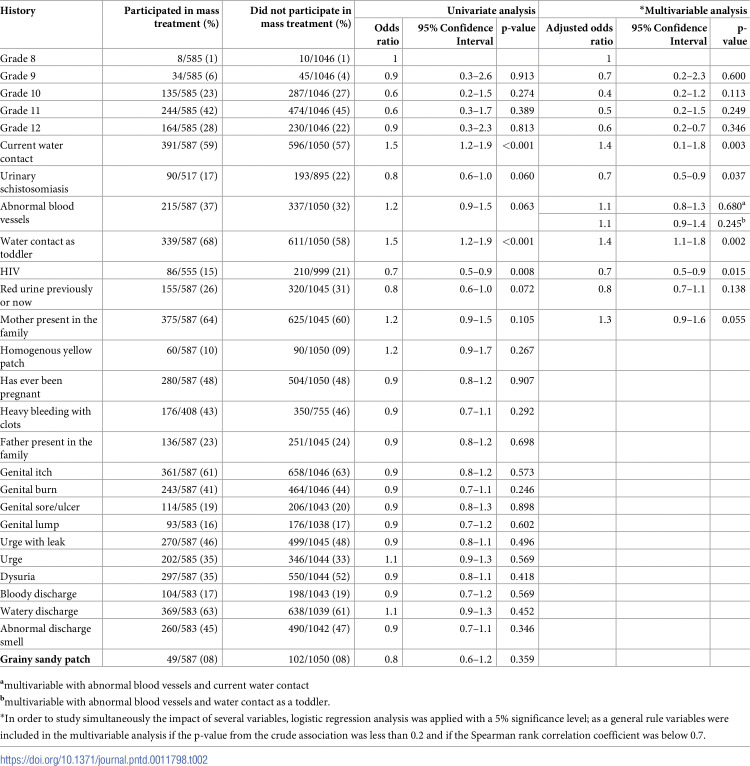 Figure 5
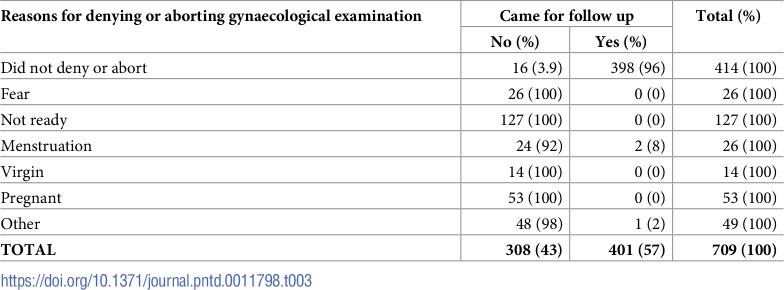 Figure 6
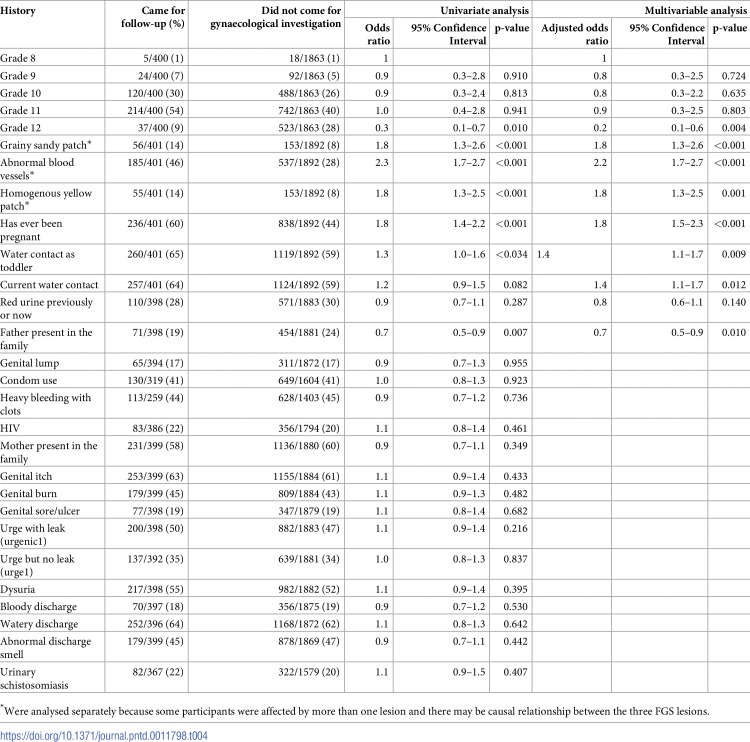 Figure 7
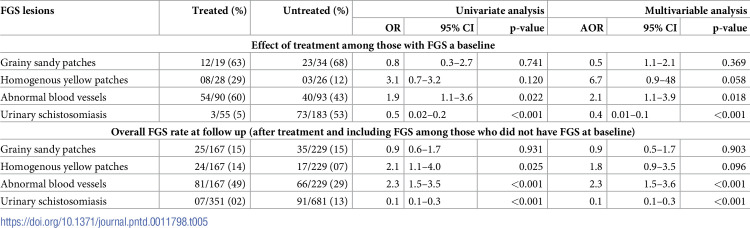 Figure 8
Peer Reviews
No public reviews on file for this paper yet. If you reviewed it on a platform where reviews are public (OpenReview, ICLR, NeurIPS, ICML), you can paste yours below so the community can read it here.
Videos
No videos yet. Explain this paper in a talk, walkthrough, or lecture? Add one.
Taxonomy
TopicsParasites and Host Interactions · Global Maternal and Child Health · Global Health Workforce Issues