Patterns and trends of medicinal poisoning substances: a population-based cohort study of injuries in 0–11 year old children from 1998–2018
Edward G Tyrrell, Elizabeth Orton, Laila J Tata, Denise Kendrick

TL;DR
This study examines how medicinal poisonings in young children in England changed from 1998 to 2018, finding that antidepressant and opioid poisonings decreased while paracetamol poisonings increased, with higher rates in more deprived areas.
Contribution
The study identifies socioeconomic gradients in medicinal poisoning rates and highlights the need for targeted and universal safe storage interventions.
Findings
Poisonings from drugs with dependence/withdrawal risk decreased by 33% over the study period.
Paracetamol poisonings increased by 43%, while other OTC drug poisonings remained stable.
Higher socioeconomic deprivation was linked to increased poisoning rates for prescribed medications but not OTC drugs.
Abstract
There have been sharp increases in antidepressant and opioid prescriptions over the last 10 years, as well as increased over-the-counter medicine availability. However, the impact on childhood medicinal poisonings rates, particularly by socioeconomic deprivation is unclear. This study reports population level medicinal poisoning substance patterns in England among children aged 0–11 years, helping inform safety advice and poisoning prevention interventions. An open cohort study of 1,489,620 0–11 year olds was conducted from 1998 to 2018, using the Clinical Practice Research Datalink, to examine inpatient hospital admissions for poisoning. Incidence rates and adjusted incidence rate ratios (aIRR) were calculated for poisoning substance groups by age, sex, socio-economic deprivation and year. 3,685 medicinal poisoning hospital admissions were identified. The most common substances were…
Genes, proteins, chemicals, diseases, species, mutations and cell lines named across the full text — each resolved to its canonical identifier and authoritative record.
Click any figure to enlarge with its caption.
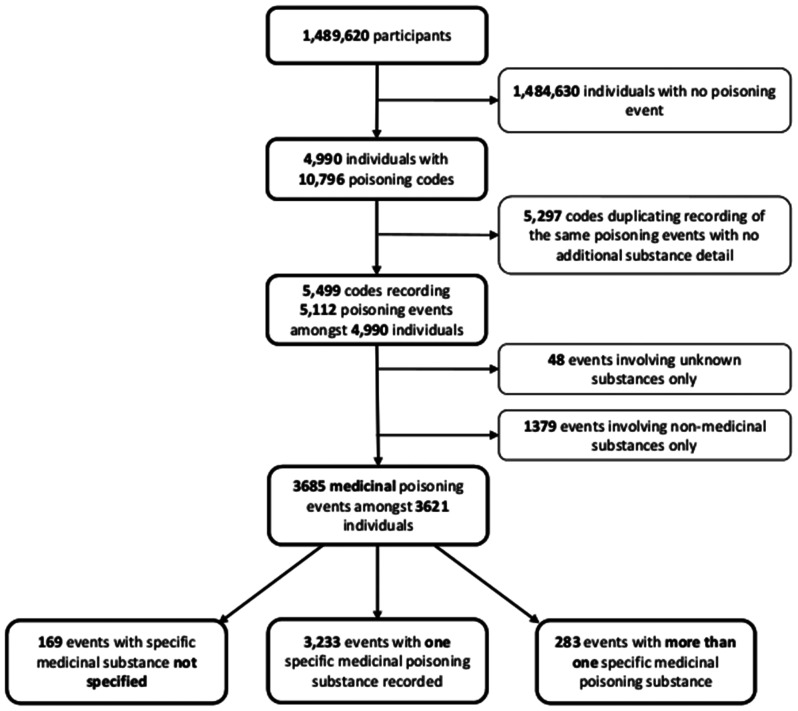 Figure 1
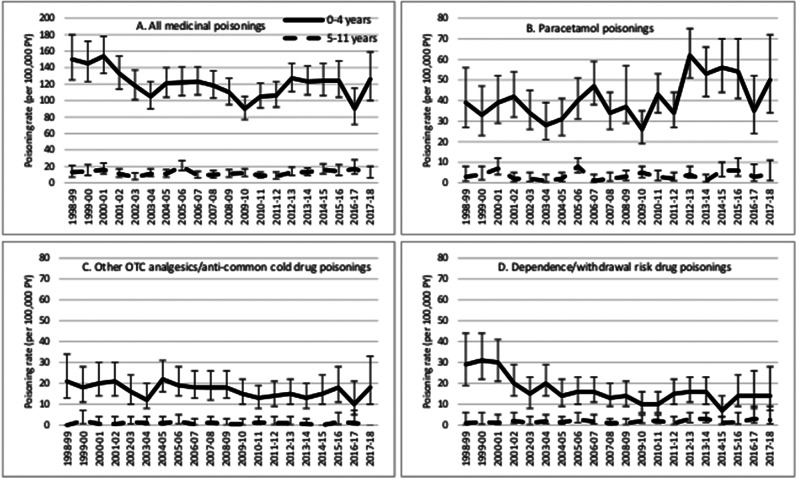 Figure 2
Peer Reviews
No public reviews on file for this paper yet. If you reviewed it on a platform where reviews are public (OpenReview, ICLR, NeurIPS, ICML), you can paste yours below so the community can read it here.
Videos
No videos yet. Explain this paper in a talk, walkthrough, or lecture? Add one.
Taxonomy
TopicsHealthcare cost, quality, practices · Poisoning and overdose treatments · Emergency and Acute Care Studies