Multimodal Assessment of Smoking cue Reactivity During a Smoking Cue Exposure Task
A.M. Kroczek, B. Schröder, D. Rosenbaum, A. Mühleck, J. Diemer, A. Mühlberger, A. J. Fallgatter, A. Batra, A.-C. Ehlis

TL;DR
This study explores how smoking cues affect brain activity and heart rate in smokers and non-smokers, using a multimodal approach to better understand cue reactivity in substance use disorders.
Contribution
The study introduces a multimodal method combining EEG and HRV to assess cue reactivity in a naturalistic smoking exposure task.
Findings
Smokers showed increased beta power during smoking cue exposure compared to controls.
Beta power correlated inversely with maximum craving in smokers.
HRV correlated negatively with smoking urges in smokers post-exposure.
Abstract
Background. Cue-reactivity as a characteristic symptom of substance use disorders (SUD) is highly context dependent. Paradigms with high context validity need to be established for the investigation of underlying neurobiological mechanisms. While craving can be assessed by self-report as one aspect of cue-reactivity (CR), the assessment of biological measures such as the autonomous response and EEG promises a holistic perspective including CR at an automatized level. In a multimodal approach, smoking cue exposure (CE) effects on heart rate variability (HRV), EEG frequency power, and craving as well as their interrelation were assessed. This pilot study focused on the validity of CR measurements in a naturalistic CE paradigm. Methods. EEG frequency power, HRV, and craving were assessed during resting state (RS) and smoking CE in smokers (n = 14) and nonsmoking controls (n = 10) to…
Genes, proteins, chemicals, diseases, species, mutations and cell lines named across the full text — each resolved to its canonical identifier and authoritative record.
Click any figure to enlarge with its caption.
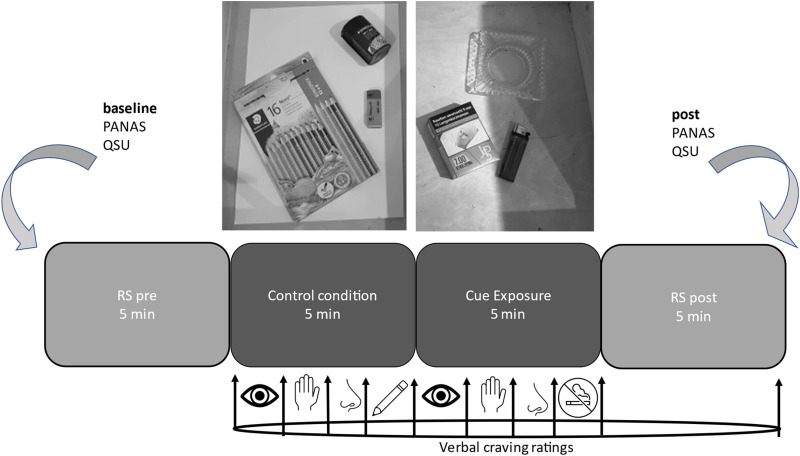 Figure 1
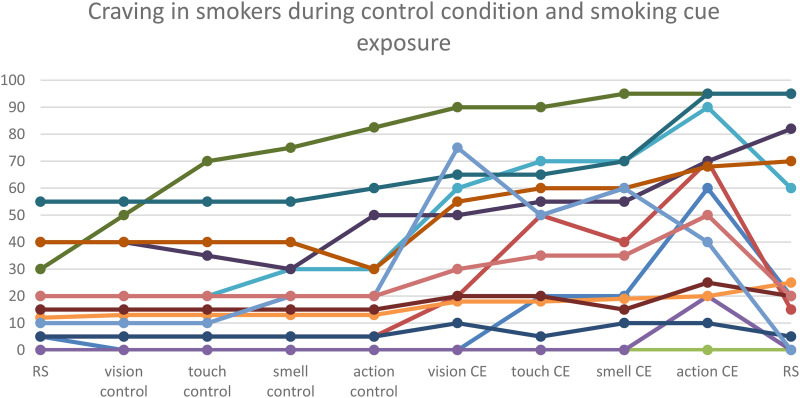 Figure 2
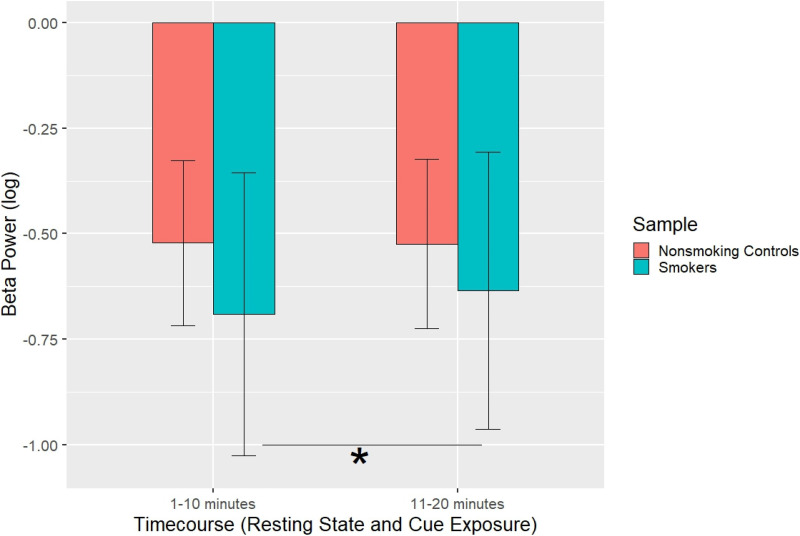 Figure 3
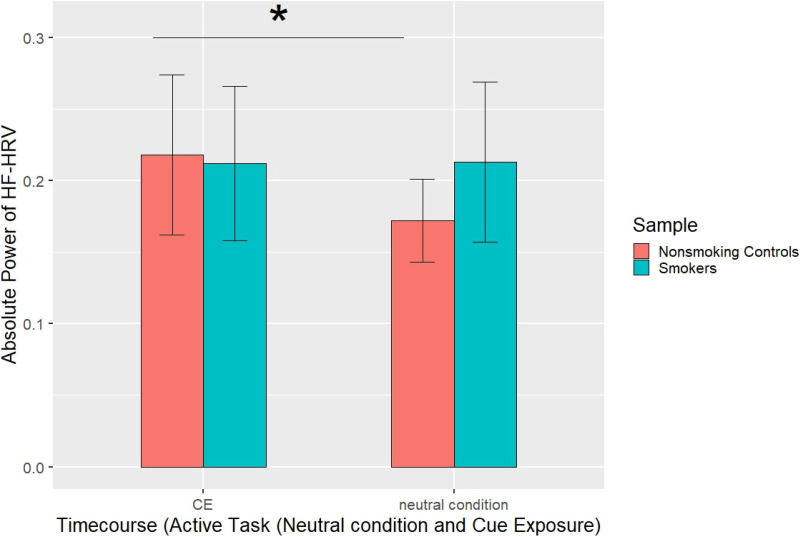 Figure 4
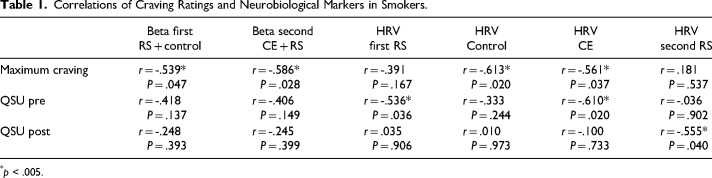 Figure 5
Peer Reviews
No public reviews on file for this paper yet. If you reviewed it on a platform where reviews are public (OpenReview, ICLR, NeurIPS, ICML), you can paste yours below so the community can read it here.
Videos
No videos yet. Explain this paper in a talk, walkthrough, or lecture? Add one.
Taxonomy
TopicsCultural and Social Studies in Latin America · Political and Social Dynamics in Chile and Latin America