Expanding the Chemical Space of Transforming Growth Factor-β (TGFβ) Receptor Type II Degraders with 3,4-Disubstituted Indole Derivatives
Daniel Längle, Stephanie Wojtowicz-Piotrowski, Till Priegann, Niklas Keller, Fabian Wesseler, Elena S. Reckzeh, Karsten Steffens, Christoph Grathwol, Jana Lemke, Maren Flasshoff, Christian Näther, Anna C. Jonson, Andreas Link, Oliver Koch, Gianni M. Di Guglielmo, Dennis Schade

TL;DR
This study expands the chemical space of TGFβ receptor type II degraders by identifying new indole-based compounds that effectively inhibit TGFβ signaling in cancer cells.
Contribution
The paper introduces two novel 3,4-disubstituted indole chemotypes as potent TβRII degraders.
Findings
Compounds 2r and 3n selectively degrade TβRII without affecting TβRI.
The new degraders block endothelial-to-mesenchymal transition and cell migration in cancer cells.
They do not disrupt the microtubule network, indicating good selectivity.
Abstract
The TGFβ type II receptor (TβRII) is a central player in all TGFβ signaling downstream events, has been linked to cancer progression, and thus, has emerged as an auspicious anti-TGFβ strategy. Especially its targeted degradation presents an excellent goal for effective TGFβ pathway inhibition. Here, cellular structure–activity relationship (SAR) data from the TβRII degrader chemotype 1 was successfully transformed into predictive ligand-based pharmacophore models that allowed scaffold hopping. Two distinct 3,4-disubstituted indoles were identified from virtual screening: tetrahydro-4-oxo-indole 2 and indole-3-acetate 3. Design, synthesis, and screening of focused amide libraries confirmed 2r and 3n as potent TGFβ inhibitors. They were validated to fully recapitulate the ability of 1 to selectively degrade TβRII, without affecting TβRI. Consequently, 2r and 3n efficiently blocked…
Genes, proteins, chemicals, diseases, species, mutations and cell lines named across the full text — each resolved to its canonical identifier and authoritative record.
Click any figure to enlarge with its caption.
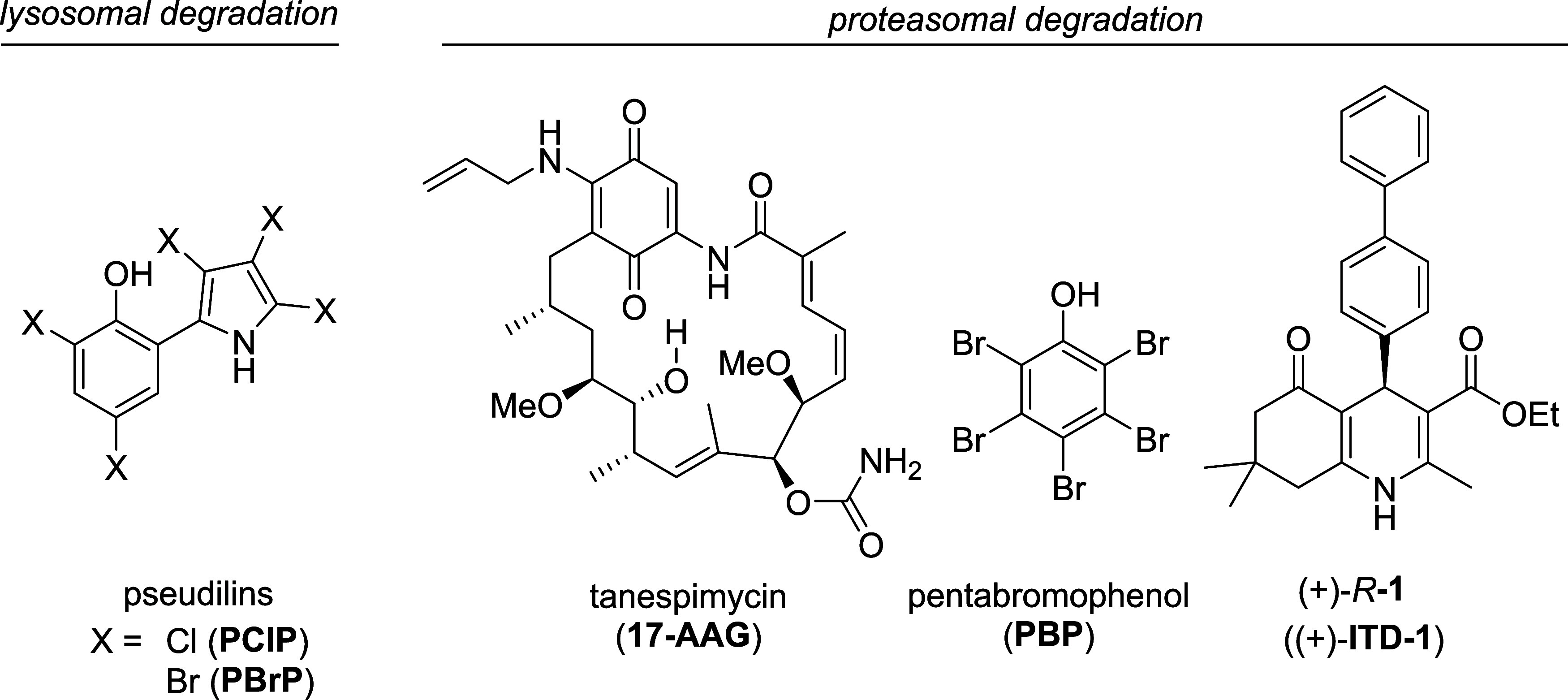 Figure 1
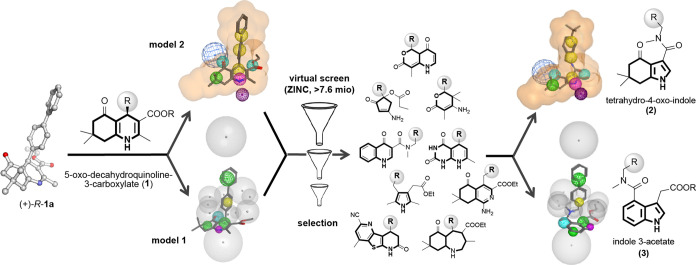 Figure 2
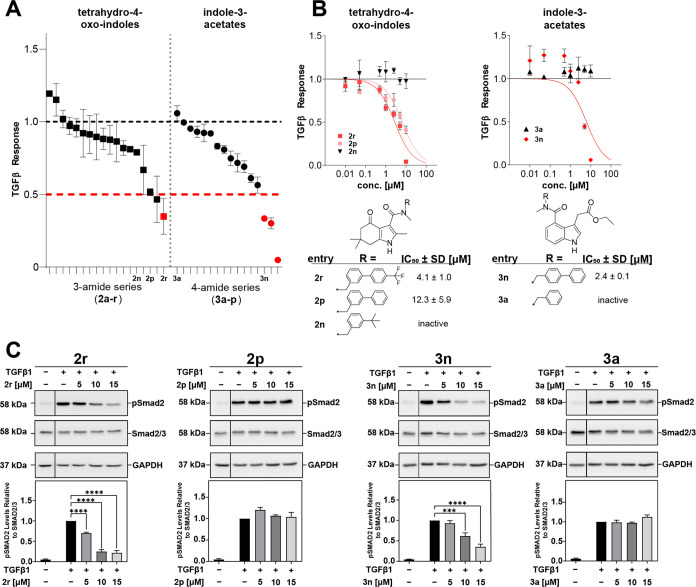 Figure 3
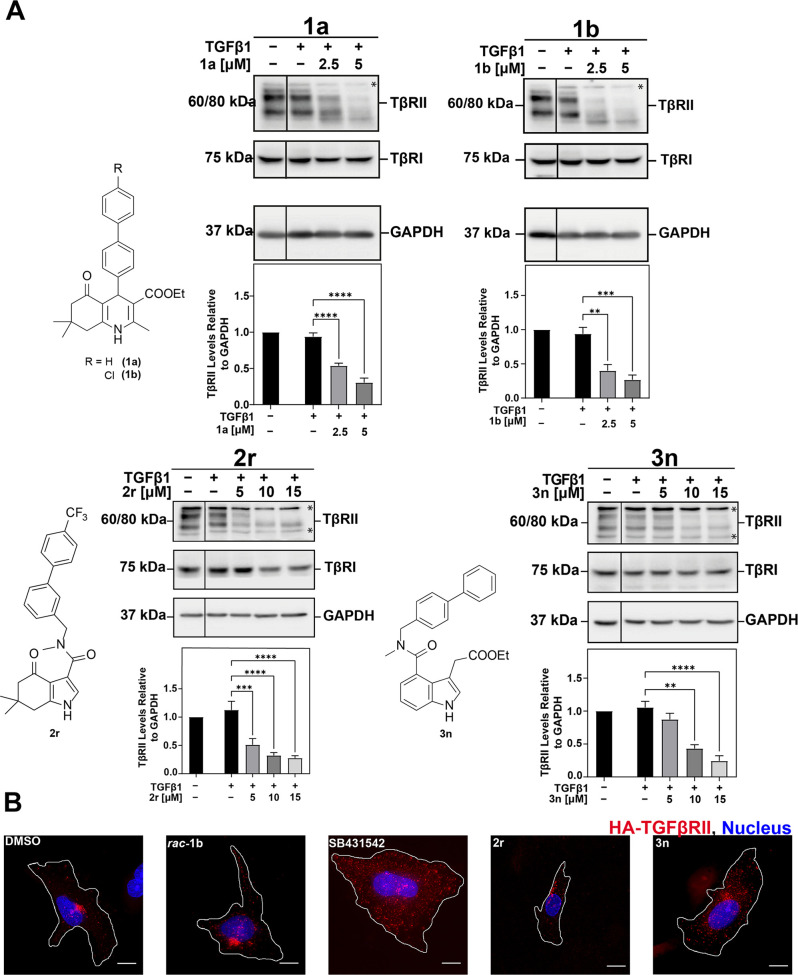 Figure 4
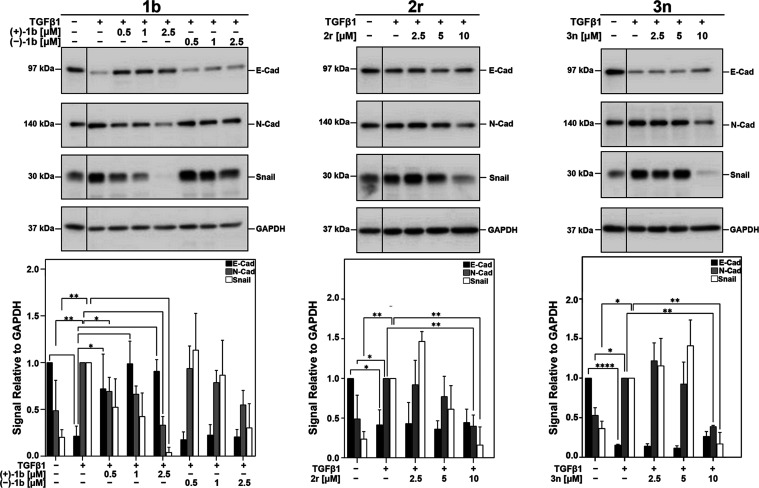 Figure 5
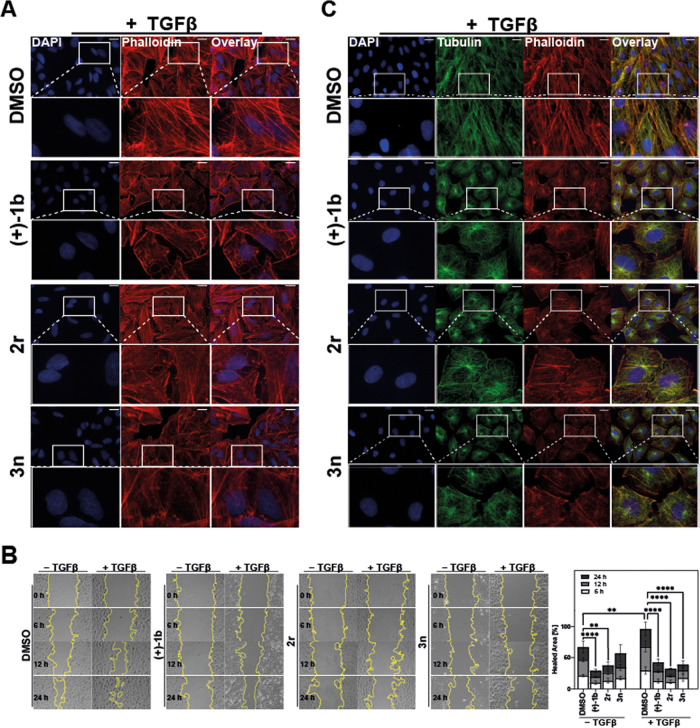 Figure 6
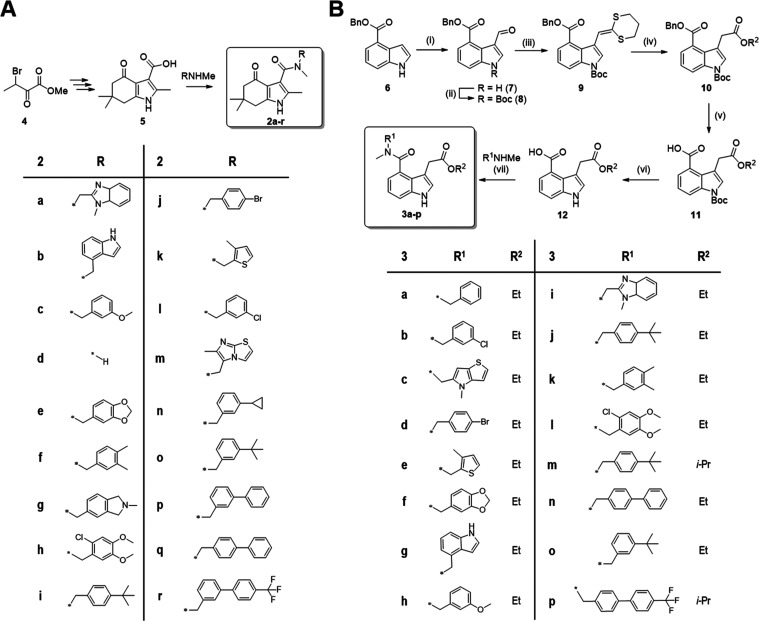 Figure 7
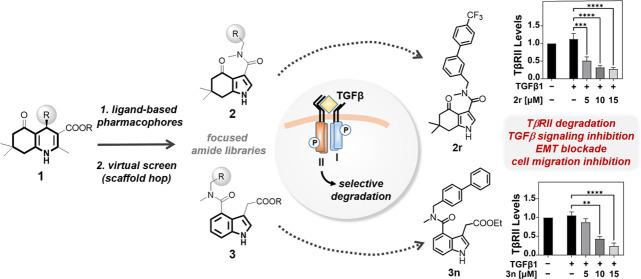 Figure 8
Peer Reviews
No public reviews on file for this paper yet. If you reviewed it on a platform where reviews are public (OpenReview, ICLR, NeurIPS, ICML), you can paste yours below so the community can read it here.
Videos
No videos yet. Explain this paper in a talk, walkthrough, or lecture? Add one.
Taxonomy
TopicsTGF-β signaling in diseases · Cancer-related gene regulation · Protein Kinase Regulation and GTPase Signaling