Semen enhances transmitted/founder HIV-1 infection and only marginally reduces antiviral activity of broadly neutralizing antibodies
Pascal von Maltitz, Lukas Wettstein, Tatjana Weil, Philipp Schommers, Florian Klein, Jan Münch

TL;DR
Semen increases HIV-1 infectivity but only slightly reduces the effectiveness of broadly neutralizing antibodies, suggesting they could still be used in microbicides.
Contribution
The study reveals that semen only marginally affects the neutralizing activity of broadly neutralizing antibodies, offering new insights for microbicide development.
Findings
Semen enhances infection of HIV-1 transmitted/founder viruses.
Semen only marginally reduces the neutralizing activity of tested broadly neutralizing antibodies.
Broadly neutralizing antibodies show potential for use in microbicides despite the presence of semen.
Abstract
Topically applied microbicides may play a critical role in preventing sexual transmission of human immunodeficiency virus type 1 (HIV-1); however, their efficacy can be compromised by amyloid fibrils present in semen, which significantly increase HIV-1 infectivity. This phenomenon may have contributed to the failure of most microbicide candidates in clinical settings. Understanding the impact of semen on microbicide effectiveness is thus crucial. In our study, we evaluated the influence of semen on the neutralizing activity of broadly neutralizing antibodies (bNAbs), including PG16, PGT121, 10–1074, 3BNC117, and VRC01, which are potential microbicide candidates. We found that semen enhances infection of HIV-1 transmitted/founder viruses but only marginally affects the neutralizing activity of tested antibodies, suggesting their potential for microbicide application. Our findings…
Genes, proteins, chemicals, diseases, species, mutations and cell lines named across the full text — each resolved to its canonical identifier and authoritative record.
Click any figure to enlarge with its caption.
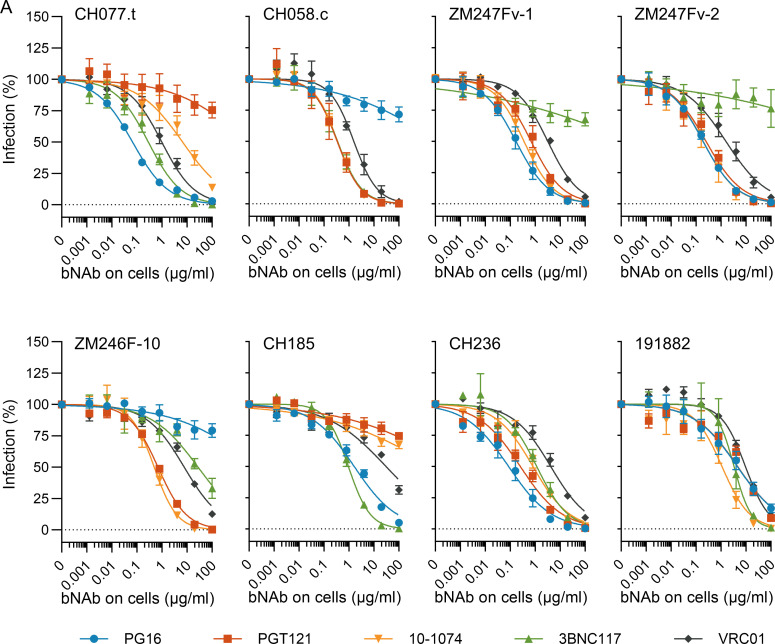 Figure 1
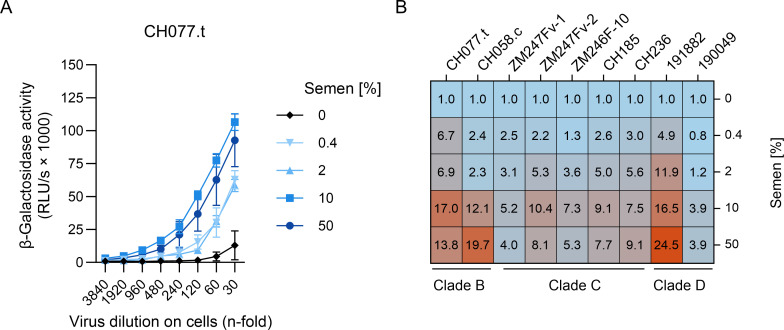 Figure 2
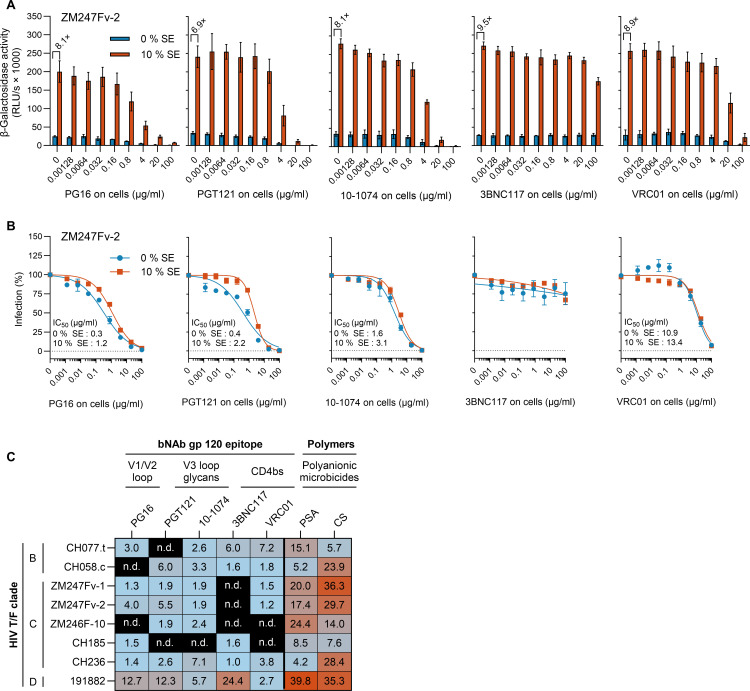 Figure 3
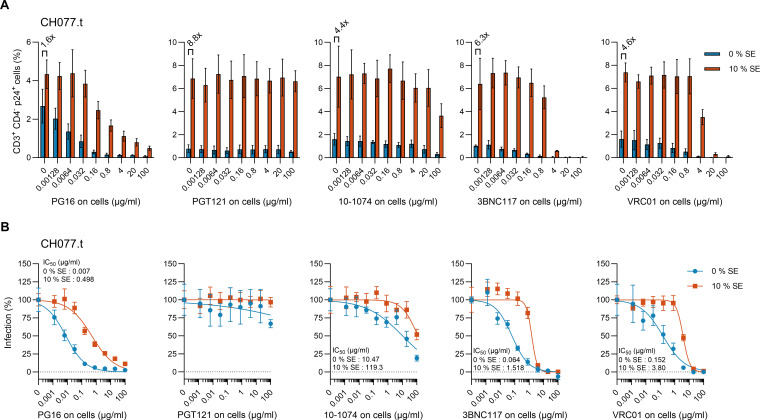 Figure 4
Peer Reviews
No public reviews on file for this paper yet. If you reviewed it on a platform where reviews are public (OpenReview, ICLR, NeurIPS, ICML), you can paste yours below so the community can read it here.
Videos
No videos yet. Explain this paper in a talk, walkthrough, or lecture? Add one.
Taxonomy
TopicsHIV Research and Treatment · Adolescent Sexual and Reproductive Health · HIV/AIDS Research and Interventions