Bacillus subtilis remains translationally active after CRISPRi-mediated replication initiation arrest
Vanessa Muñoz-Gutierrez, Fabián A. Cornejo, Katja Schmidt, Christian K. Frese, Manuel Halte, Marc Erhardt, Alexander K. W. Elsholz, Kürşad Turgay, Emmanuelle Charpentier

TL;DR
This study shows that Bacillus subtilis can keep translating and growing even when DNA replication is blocked using CRISPRi.
Contribution
A precise CRISPRi method to arrest replication initiation in B. subtilis without inducing stress or affecting other DnaA functions.
Findings
CRISPRi targeting DnaA boxes 6 and 7 effectively halted replication initiation in B. subtilis.
Non-replicating cells continued translation and growth without triggering global stress responses.
The method allows studying non-replicating bacterial states for adaptive strategies and biotechnological applications.
Abstract
Initiation of bacterial DNA replication takes place at the origin of replication (oriC), a region characterized by the presence of multiple DnaA boxes that serve as the binding sites for the master initiator protein DnaA. This process is tightly controlled by modulation of the availability or activity of DnaA and oriC during development or stress conditions. Here, we aimed to uncover the physiological and molecular consequences of stopping replication in the model bacterium Bacillus subtilis. We successfully arrested replication in B. subtilis by employing a clustered regularly interspaced short palindromic repeats interference (CRISPRi) approach to specifically target the key DnaA boxes 6 and 7, preventing DnaA binding to oriC. In this way, other functions of DnaA, such as a transcriptional regulator, were not significantly affected. When replication initiation was halted by this…
Genes, proteins, chemicals, diseases, species, mutations and cell lines named across the full text — each resolved to its canonical identifier and authoritative record.
Click any figure to enlarge with its caption.
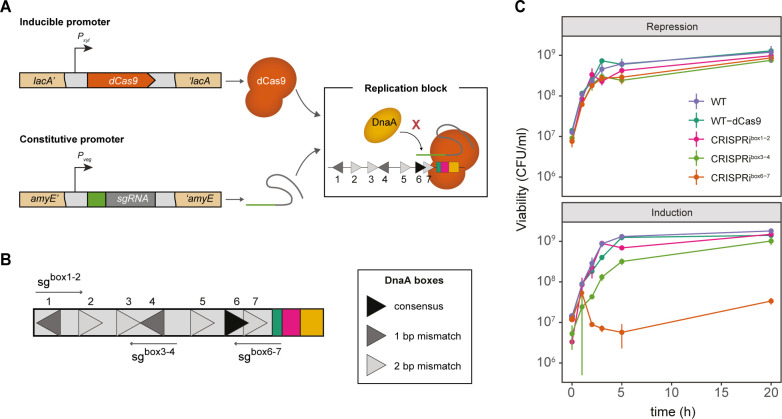 Figure 1
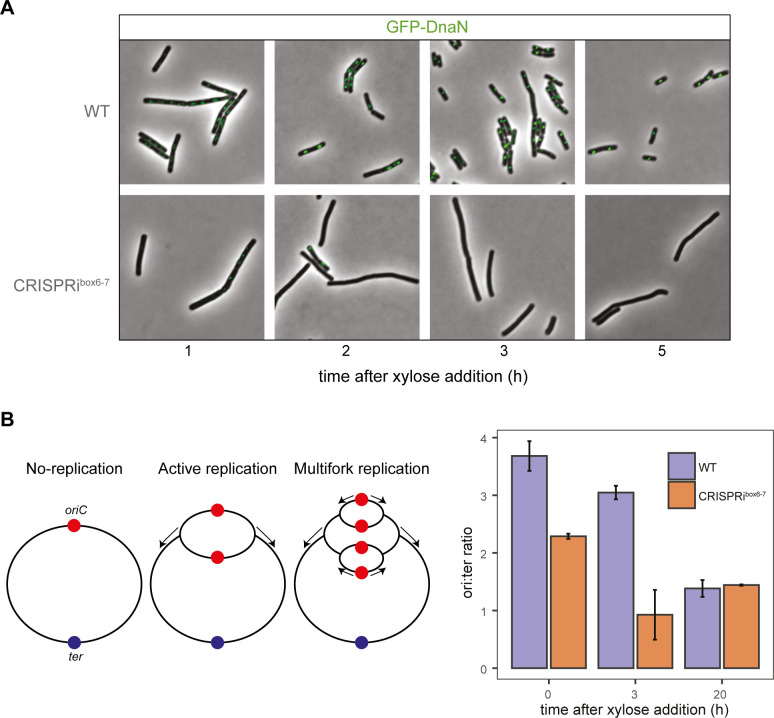 Figure 2
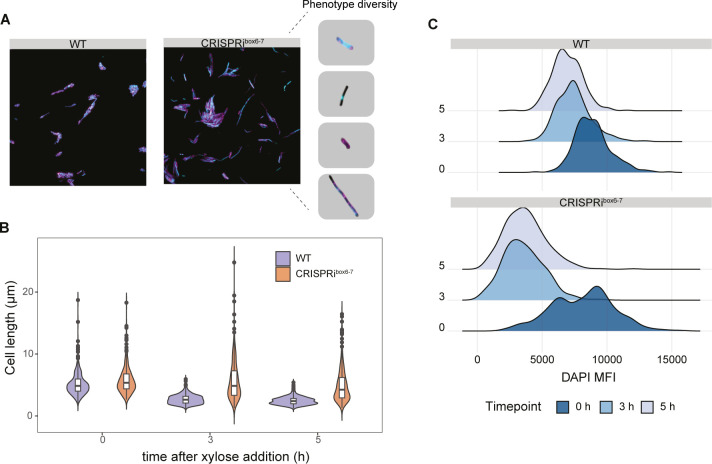 Figure 3
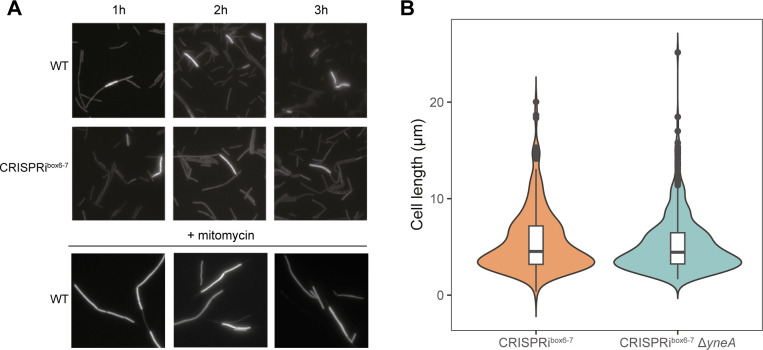 Figure 4
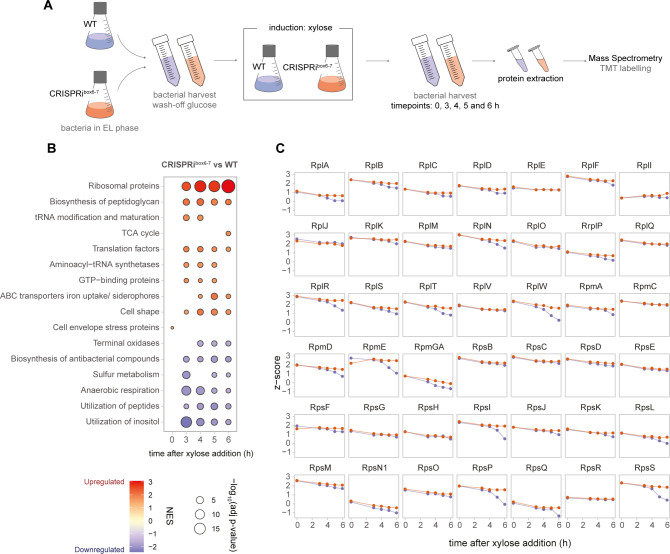 Figure 5
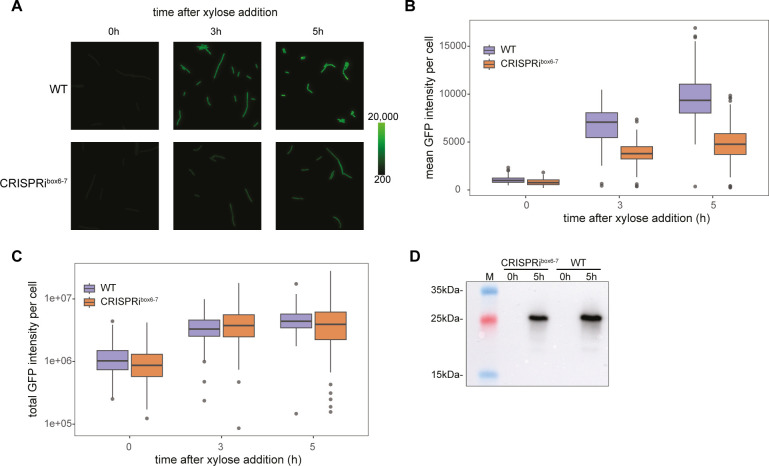 Figure 6
Peer Reviews
No public reviews on file for this paper yet. If you reviewed it on a platform where reviews are public (OpenReview, ICLR, NeurIPS, ICML), you can paste yours below so the community can read it here.
Videos
No videos yet. Explain this paper in a talk, walkthrough, or lecture? Add one.
Taxonomy
TopicsCRISPR and Genetic Engineering · Bacterial Genetics and Biotechnology · DNA Repair Mechanisms