The time course of stimulus-specific perceptual learning
Patrick J. Bennett, Ali Hashemi, Jordan W. Lass, Allison B. Sekuler, Zahra Hussain

TL;DR
The study shows that perceptual learning for texture identification improves gradually with practice and is specific to the stimuli used.
Contribution
The research demonstrates that stimulus-specific learning in texture identification occurs gradually and is consistent over both short and long time intervals.
Findings
Stimulus-specific learning increased linearly with the logarithm of training trials in session 1.
Learning effects were significant after about 100 training trials and were consistent across 1-day and 1-week intervals.
Stimulus novelty effects did not differ between the two experiments.
Abstract
Practice on perceptual tasks can lead to long-lasting, stimulus-specific improvements. Rapid stimulus-specific learning, assessed 24 hours after practice, has been found with just 105 practice trials in a face identification task. However, a much longer time course for stimulus-specific learning has been found in other tasks. Here, we examined 1) whether rapid stimulus-specific learning occurs for unfamiliar, non-face stimuli in a texture identification task; 2) the effects of varying practice across a range from just 21 trials up to 840 trials; and 3) if rapid, stimulus-specific learning persists over a 1-week, as well as a 1-day, interval. Observers performed a texture identification task in two sessions separated by one day (Experiment 1) or 1 week (Experiment 2). Observers received varying amounts of practice (21, 63, 105, or 840 training trials) in session 1 and completed 840…
Genes, proteins, chemicals, diseases, species, mutations and cell lines named across the full text — each resolved to its canonical identifier and authoritative record.
Click any figure to enlarge with its caption.
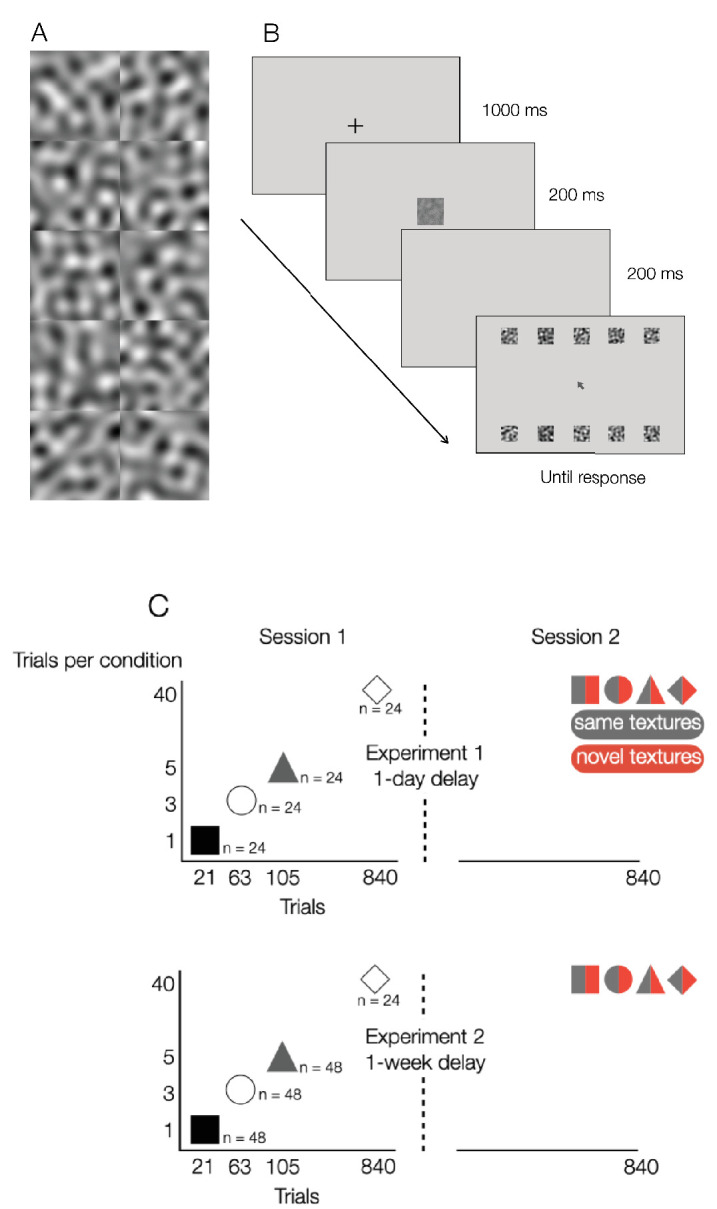 Figure 1
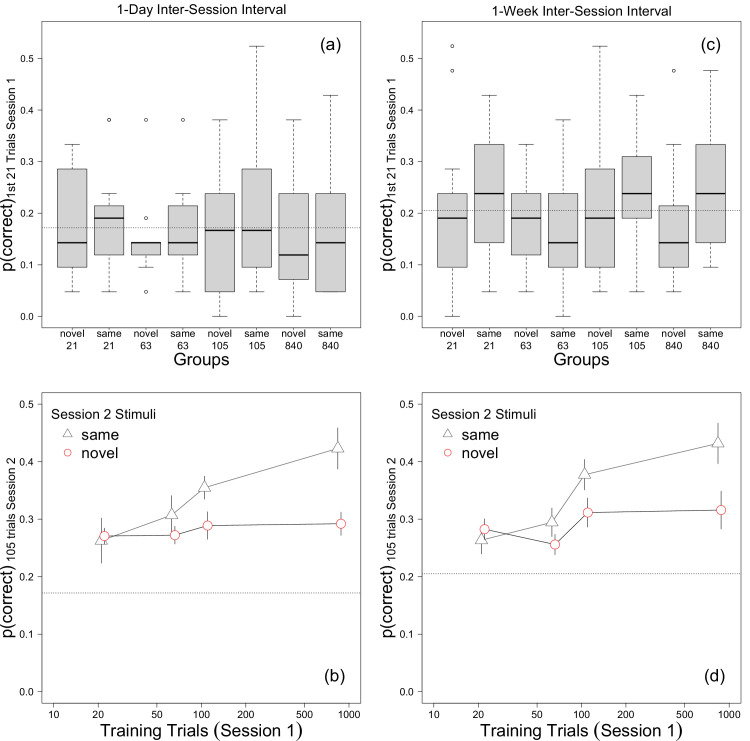 Figure 2
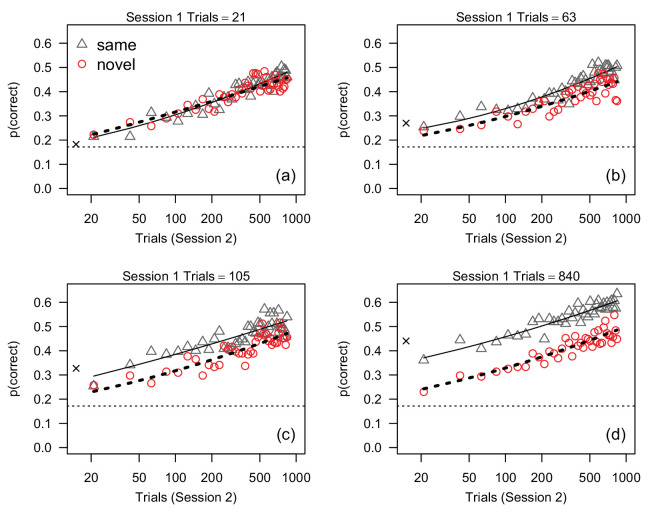 Figure 3
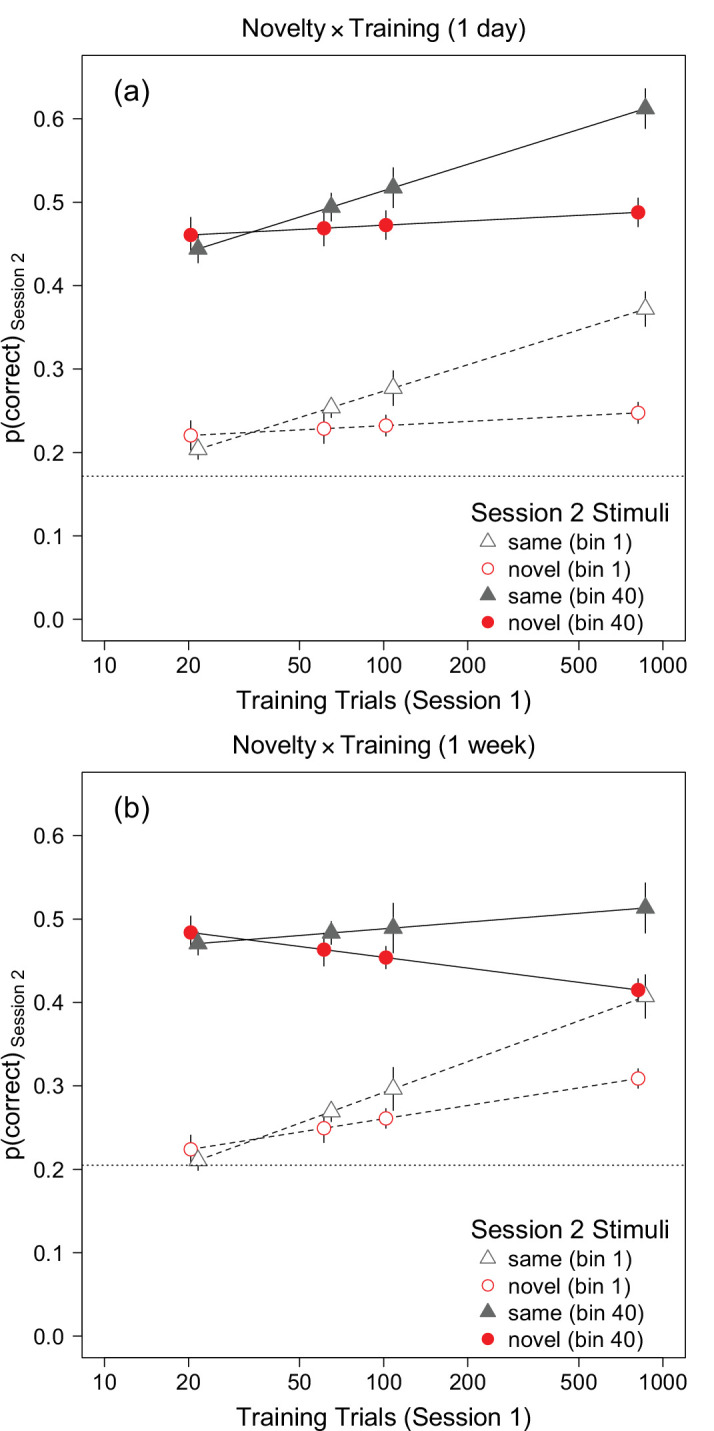 Figure 4
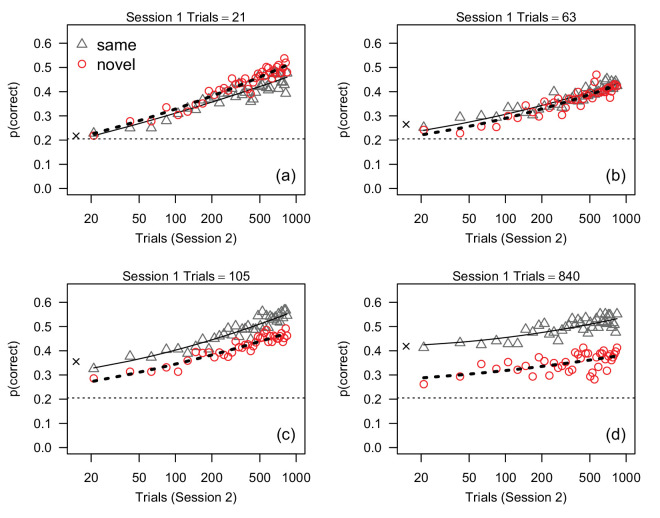 Figure 5
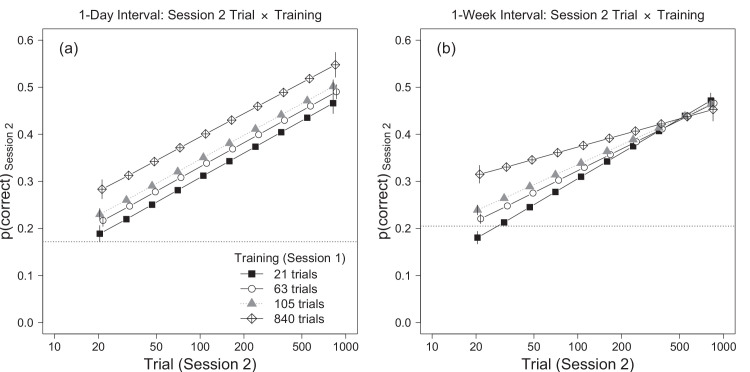 Figure 6
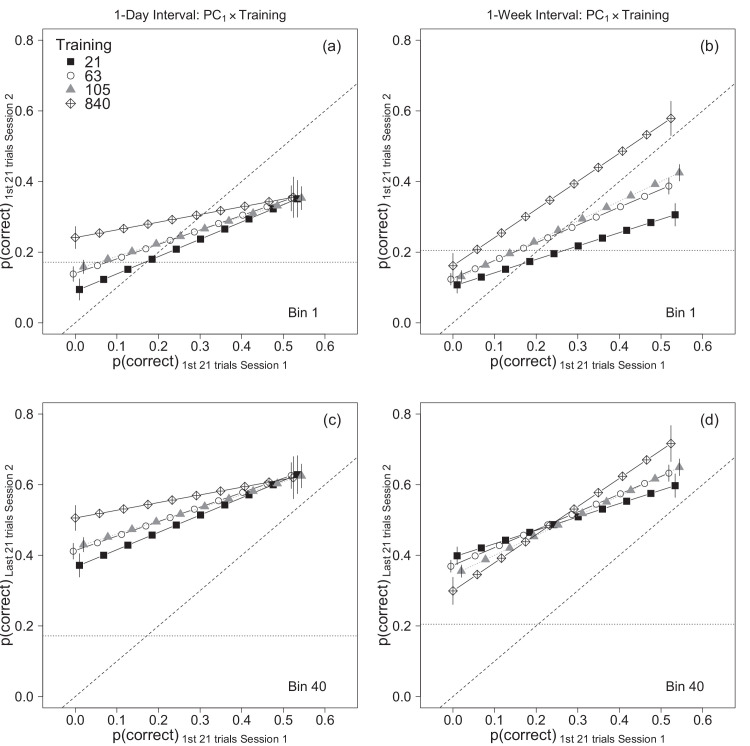 Figure 7
Peer Reviews
No public reviews on file for this paper yet. If you reviewed it on a platform where reviews are public (OpenReview, ICLR, NeurIPS, ICML), you can paste yours below so the community can read it here.
Videos
No videos yet. Explain this paper in a talk, walkthrough, or lecture? Add one.
Taxonomy
TopicsVisual perception and processing mechanisms · Face Recognition and Perception · Neural and Behavioral Psychology Studies