Foundation species stabilize an alternative eutrophic state in nutrient-disturbed ponds via selection on microbial community
Aditya Jeevannavar, Anita Narwani, Blake Matthews, Piet Spaak, Jeanine Brantschen, Elvira Mächler, Florian Altermatt, Manu Tamminen

TL;DR
This study shows that foundation species like mussels and macrophytes can stabilize turbid eutrophic states in ponds by influencing microbial communities.
Contribution
The study demonstrates how foundation species can stabilize prokaryotic communities and promote eutrophic states in nutrient-disturbed ponds.
Findings
Nutrient disturbance and foundation species strongly affect prokaryotic community composition and stability.
Foundation species stabilize prokaryotic communities post-disturbance by reducing changes in community composition.
Prokaryotic community changes directly and indirectly alter ecosystem properties like pH and dissolved oxygen.
Abstract
Eutrophication due to nutrient addition can result in major alterations in aquatic ecosystem productivity. Foundation species, individually and interactively, whether present as invasive species or as instruments of ecosystem management and restoration, can have unwanted effects like stabilizing turbid eutrophic states. In this study, we used whole-pond experimental manipulations to investigate the impacts of disturbance by nutrient additions in the presence and absence of two foundation species: Dreissena polymorpha (a freshwater mussel) and Myriophyllum spicatum (a macrophyte). We tracked how nutrient additions to ponds changed the prokaryotic and eukaryotic communities, using 16S, 18S, and COI amplicon sequencing. The nutrient disturbance and foundation species imposed strong selection on the prokaryotic communities, but not on the microbial eukaryotic communities. The prokaryotic…
Genes, proteins, chemicals, diseases, species, mutations and cell lines named across the full text — each resolved to its canonical identifier and authoritative record.
Click any figure to enlarge with its caption.
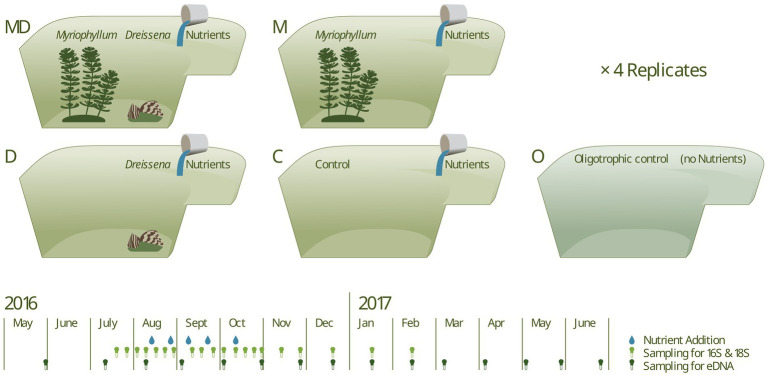 Figure 1
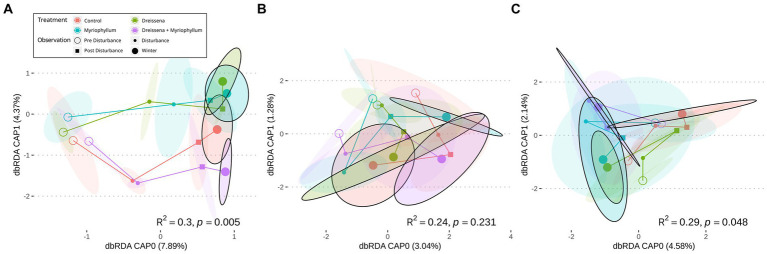 Figure 2
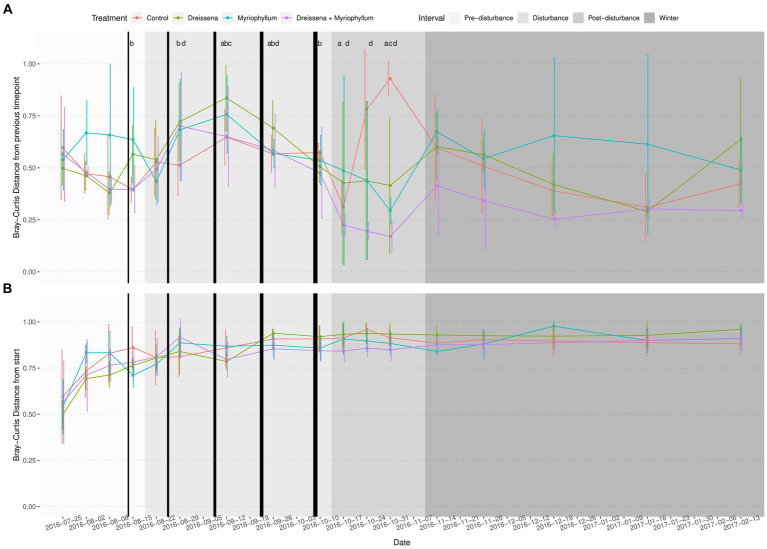 Figure 3
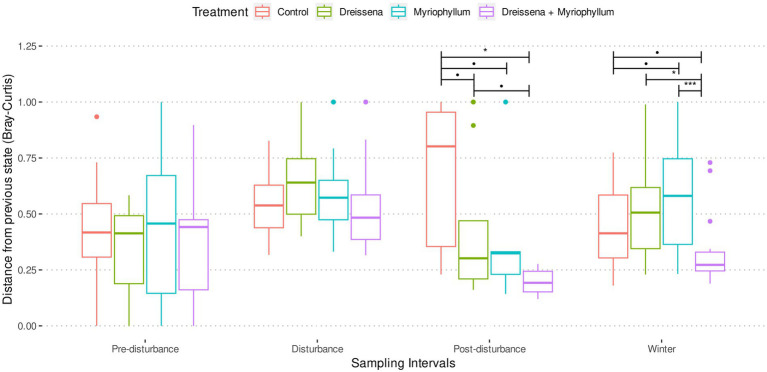 Figure 4
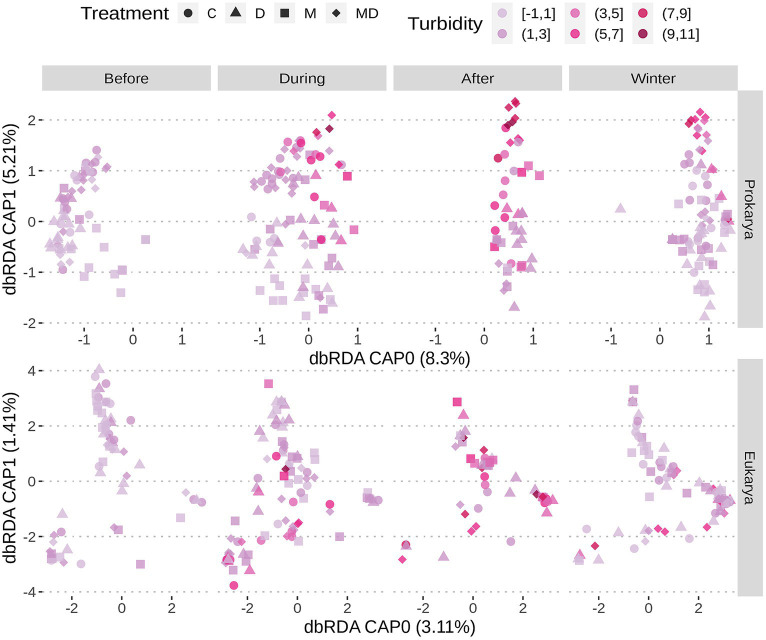 Figure 5
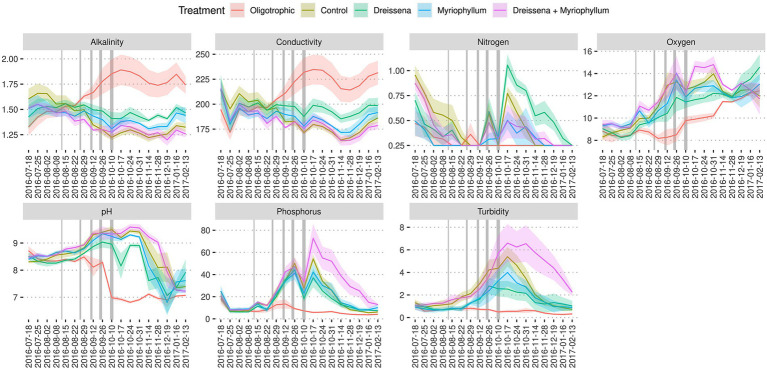 Figure 6
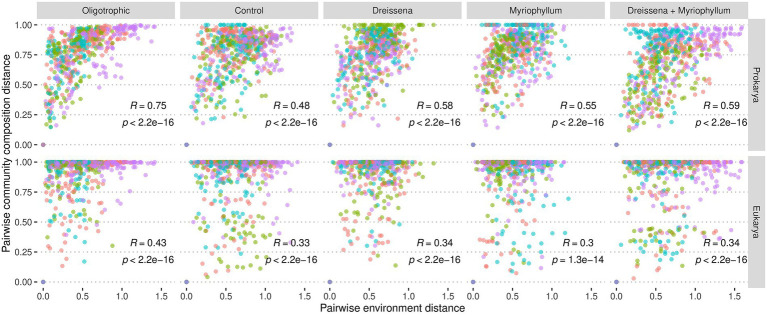 Figure 7
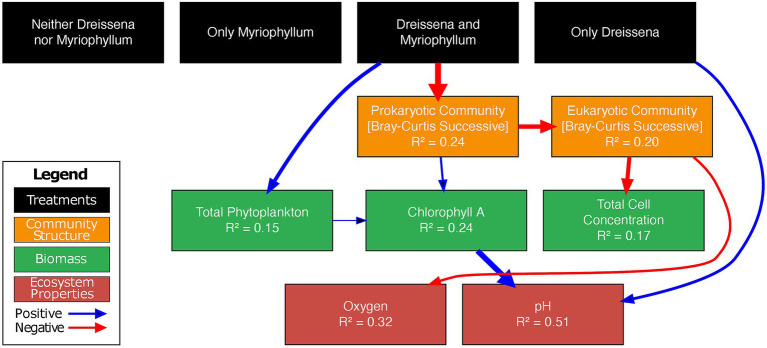 Figure 8
Peer Reviews
No public reviews on file for this paper yet. If you reviewed it on a platform where reviews are public (OpenReview, ICLR, NeurIPS, ICML), you can paste yours below so the community can read it here.
Videos
No videos yet. Explain this paper in a talk, walkthrough, or lecture? Add one.
Taxonomy
TopicsAquatic Invertebrate Ecology and Behavior · Environmental DNA in Biodiversity Studies · Wastewater Treatment and Nitrogen Removal