Chemoprophylaxis of precancerous lesions in patients who are at a high risk of developing colorectal cancer (Review)
Nonna E. Ogurchenok, Konstantin D. Khalin, Igor S. Bryukhovetskiy

TL;DR
This review discusses the role of β-catenin and other pathways in the progression of precancerous colorectal lesions and explores chemoprophylaxis strategies for high-risk patients.
Contribution
The paper provides a comprehensive analysis of chemoprophylaxis approaches based on endoscopic, morphological, and molecular-genetic findings.
Findings
β-catenin and the PI3K/AKT/mTOR pathway play key roles in the transformation of precancerous lesions into CRC.
Current diagnostic methods include colonoscopy, CT colonography, and stool DNA tests.
Chemoprophylaxis strategies vary depending on test results and molecular-genetic profiles.
Abstract
The diagnostics of colorectal cancer (CRC) and precancerous lesions in the colon is one of the most urgent matters to be considered for the modern protocols of complex examination, recommended for use from the age of 45 years, and including both instrumental and laboratory methods of research: Colonoscopy, CT colonography, flexible sigmoidoscopy, fecal occult blood test, fecal immunohistochemistry test and stool DNA test Nevertheless, the removal of those precancerous lesions does not solve the issue, and, apart from the regular endoscopic monitoring of patients who are at a high risk of developing CRC, the pharmacological treatment of certain key pathogenic mechanisms leading to the development of CRC is required. The present review to discusses the function of β-catenin in the transformation of precancerous colorectal lesions into CRC, when collaborating with PI3K/AKT/mTOR signaling…
Genes, proteins, chemicals, diseases, species, mutations and cell lines named across the full text — each resolved to its canonical identifier and authoritative record.
Click any figure to enlarge with its caption.
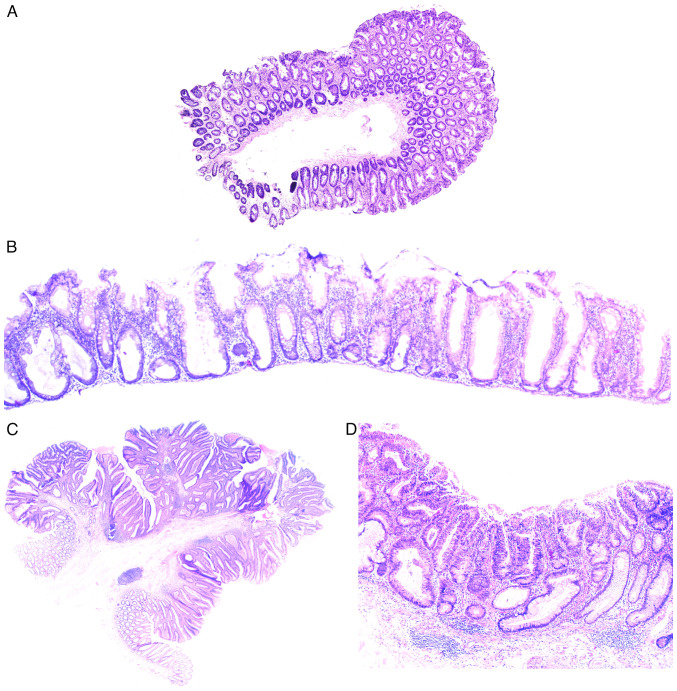 Figure 1
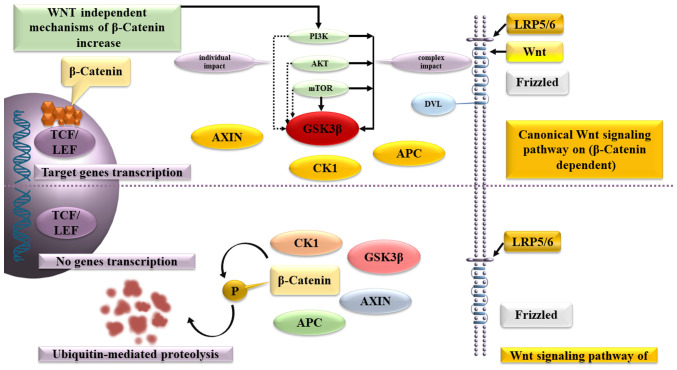 Figure 2
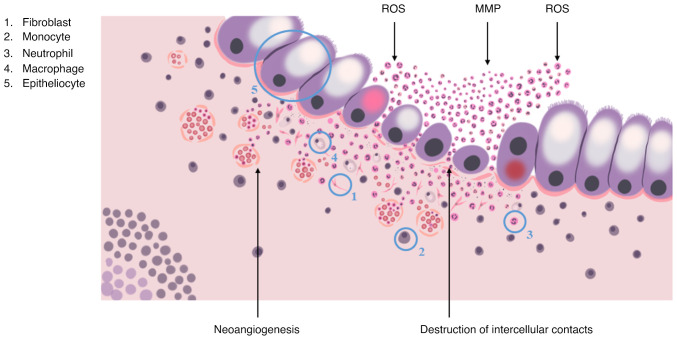 Figure 3
Peer Reviews
No public reviews on file for this paper yet. If you reviewed it on a platform where reviews are public (OpenReview, ICLR, NeurIPS, ICML), you can paste yours below so the community can read it here.
Videos
No videos yet. Explain this paper in a talk, walkthrough, or lecture? Add one.
Taxonomy
TopicsNutrition, Genetics, and Disease