Timely Pulmonary Tuberculosis Diagnosis Based on the Epidemiological Disease Spectrum: Population-Based Prospective Cohort Study in the Republic of Korea
Yousang Ko, Jae Seuk Park, Jinsoo Min, Hyung Woo Kim, Hyeon-Kyoung Koo, Jee Youn Oh, Yun-Jeong Jeong, Eunhye Lee, Bumhee Yang, Ju Sang Kim, Sung-Soon Lee, Yunhyung Kwon, Jiyeon Yang, Ji yeon Han, You Jin Jang, Jinseob Kim

TL;DR
This study introduces a new scoring system to assess and improve the timing of tuberculosis diagnosis in South Korea, showing how disease severity affects delays.
Contribution
A novel scoring system (PTBSS) is developed to evaluate pulmonary tuberculosis disease severity and its impact on diagnosis delays.
Findings
The PTBSS classifies patients into mild, moderate, and severe disease categories based on mortality correlation.
Health care delays decrease with higher disease severity, while patient delays show a U-shaped pattern.
Age and male sex are independent risk factors for severe PTB patterns.
Abstract
Timely pulmonary tuberculosis (PTB) diagnosis is a global health priority for interrupting transmission and optimizing treatment outcomes. The traditional dichotomous time-divided approach for addressing time delays in diagnosis has limited clinical application because the time delay significantly varies depending on each community in question. We aimed to reevaluate the diagnosis time delay based on the PTB disease spectrum using a novel scoring system that was applied at the national level in the Republic of Korea. The Pulmonary Tuberculosis Spectrum Score (PTBSS) was developed based on previously published proposals related to the disease spectrum, and its validity was assessed by examining both all-cause and PTB-related mortality. In our analysis, we integrated the PTBSS into the Korea Tuberculosis Cohort Registry. We evaluated various time delays, including patient, health care,…
Genes, proteins, chemicals, diseases, species, mutations and cell lines named across the full text — each resolved to its canonical identifier and authoritative record.
Click any figure to enlarge with its caption.
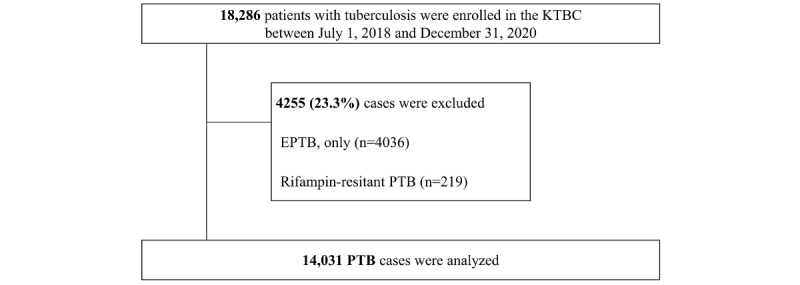 Figure 1
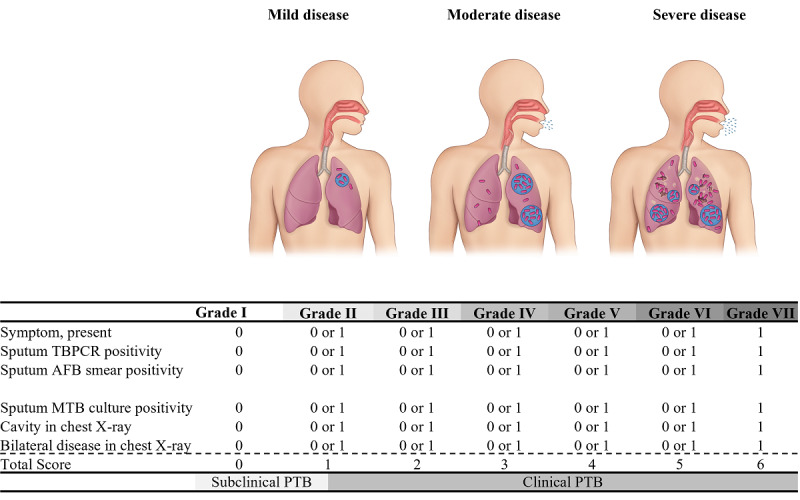 Figure 2
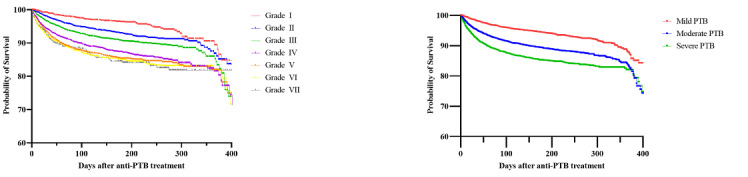 Figure 3
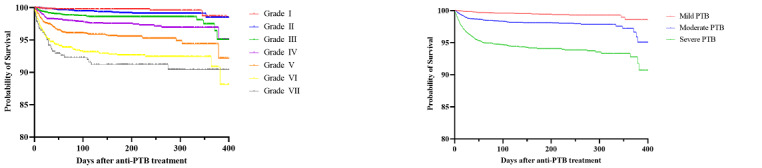 Figure 4
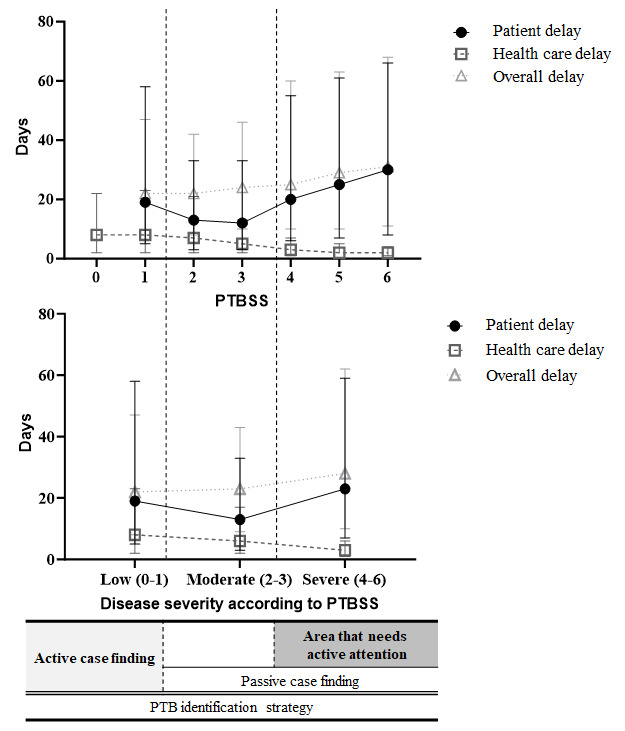 Figure 5
Peer Reviews
No public reviews on file for this paper yet. If you reviewed it on a platform where reviews are public (OpenReview, ICLR, NeurIPS, ICML), you can paste yours below so the community can read it here.
Videos
No videos yet. Explain this paper in a talk, walkthrough, or lecture? Add one.
Taxonomy
TopicsTuberculosis Research and Epidemiology · Mycobacterium research and diagnosis · Diagnosis and treatment of tuberculosis