A case of babesiosis in a returning traveller
James W. Mac Donald, John A. Frean, John M. Ratabane, Bhavani Moodley, Karissa Mannaru, Guillaume E. Holz

TL;DR
A traveler returning with symptoms similar to malaria was diagnosed with babesiosis after collaborative clinical and lab work.
Contribution
This case highlights the diagnostic challenges of babesiosis due to its similarity to malaria and the importance of clinical-laboratory collaboration.
Findings
Babesiosis symptoms can mimic falciparum malaria, leading to diagnostic confusion.
Prompt diagnosis and tailored treatment resolved persistent symptoms in the patient.
Collaboration between clinicians and laboratories is crucial for accurate babesiosis diagnosis.
Abstract
Human babesiosis data in Africa is scarce. The clinical presentation and parasite morphology mimics falciparum malaria infection. Diagnostic confirmation is informed by adequate history and communication with the laboratory to activate appropriate testing. This case report describes the course of a returning traveller with persisting symptoms that resolved on tailored antimicrobial therapy following prompt collaborative diagnosis. Case highlighting overlapping characteristics of Babesia and malaria infection, necessitating close clinical and laboratory correlation to confirm diagnosis.
Genes, proteins, chemicals, diseases, species, mutations and cell lines named across the full text — each resolved to its canonical identifier and authoritative record.
Click any figure to enlarge with its caption.
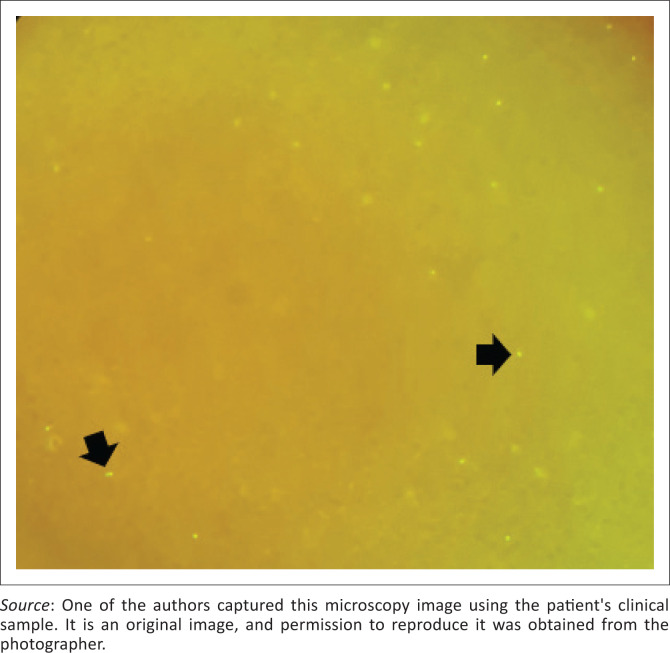 Figure 1
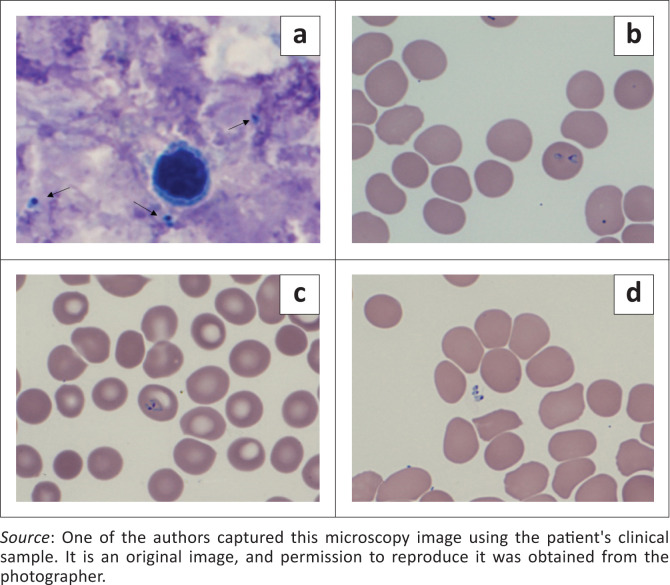 Figure 2
Peer Reviews
No public reviews on file for this paper yet. If you reviewed it on a platform where reviews are public (OpenReview, ICLR, NeurIPS, ICML), you can paste yours below so the community can read it here.
Videos
No videos yet. Explain this paper in a talk, walkthrough, or lecture? Add one.
Taxonomy
TopicsVector-borne infectious diseases · Malaria Research and Control · Mosquito-borne diseases and control