When the Stomach Takes a Vacation: The Unseen Battles of Gastroparesis
Beatriz R. Sousa, Teresa B Rodrigues, José Ribeiro

TL;DR
This paper discusses a case where a man with multiple health issues developed gastroparesis, highlighting the importance of early diagnosis to improve patient outcomes.
Contribution
The novelty lies in emphasizing the critical need for early detection and comprehensive evaluation of gastroparesis in complex patient cases.
Findings
The patient's gastroparesis was diagnosed through CT and endoscopy, revealing gastric distention and pyloric stenosis.
Despite treatment, the patient's death from aspiration highlights the risks of undiagnosed or untreated gastroparesis.
The case underscores the importance of timely diagnosis and management to reduce morbidity and mortality.
Abstract
Gastroparesis is a syndrome characterised by delayed gastric emptying that is usually idiopathic, diabetic, or iatrogenic. This underdiagnosed disease has a substantial influence on the quality of life of its patients. We present the case of an 86-year-old man with dementia, benign prostatic hyperplasia, and gastroesophageal reflux disease who developed symptoms of gastroparesis during a lengthy hospital stay. Computed tomography (CT) and upper digestive endoscopy demonstrated gastric distention and pyloric stenosis. Despite cautious treatment and eventual pyloric dilation, the patient died from aspiration due to refractory respiratory failure. This example emphasises the need for early detection and thorough examination of gastroparesis to optimise patient outcomes and reduce morbidity and mortality.
Genes, proteins, chemicals, diseases, species, mutations and cell lines named across the full text — each resolved to its canonical identifier and authoritative record.
Click any figure to enlarge with its caption.
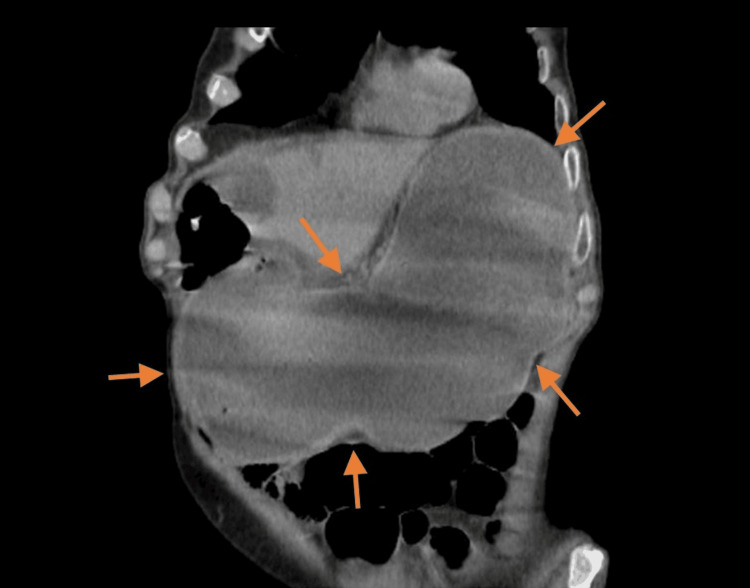 Figure 1
Peer Reviews
No public reviews on file for this paper yet. If you reviewed it on a platform where reviews are public (OpenReview, ICLR, NeurIPS, ICML), you can paste yours below so the community can read it here.
Videos
No videos yet. Explain this paper in a talk, walkthrough, or lecture? Add one.
Taxonomy
TopicsGastrointestinal motility and disorders · Diet and metabolism studies · Gastroesophageal reflux and treatments
Introduction
Gastroparesis is a syndrome of objectively delayed gastric emptying, with the majority of cases being idiopathic, diabetic, or iatrogenic [1, 2]. This clinical entity is underdiagnosed. Epidemiological studies conducted in the USA and the UK have revealed a prevalence ranging from 267.7 to 338.7 and 13.8 per 100,000 persons, respectively [2, 3].
Diagnosing gastroparesis in the geriatric population can be challenging due to the frequent presentation of non-specific symptoms when compared with younger age groups [4]. The investigation for the etiological cause must include haemoglobin, fasting glucose, serum total protein, albumin, and thyrotropin concentrations, as well as esophagogastroduodenoscopy (EGD), computed tomography (CT), and scintigraphy [1, 5].
In most cases, the cause of gastroparesis is persistent, requiring ongoing symptomatic care and resulting in a significant patient burden, with a negative correlation between symptom severity and patient quality of life, particularly in geriatric patients [5, 6].
Case presentation
An 86-year-old man with dementia, benign prostatic hyperplasia, and gastroesophageal reflux disease underwent prolonged hospitalisation attributable to social-related factors. Over the course of this extended stay, the patient developed symptoms of nausea, vomiting, early satiety, and abdominal bloating. A physical examination revealed significant distention and tenderness in the upper abdomen.
A high-volume stomach distention filled with fluid and food content was shown on CT (Figure 1), with an abnormal duodenal arch suggestive of a gastric outlet obstruction due to pyloric stenosis. Findings from the EGD indicated evidence of pyloric spasm, with a gastric biopsy that excluded neoplasia.
An abdominal CT scan shows gastric dilatation (arrows).
After a first attempt with a conservative approach, gastroscopy with pyloric dilatation and placement of a transpyloric tube was performed in response to persisting discomfort. During hospitalisation, the patient died due to aspiration with refractory respiratory failure.
Discussion
This case highlights the challenges faced in the diagnosis and management of gastroparesis in elderly patients. Gastroparesis may present additional complications due to a variety of factors, including inadequate symptom communication due to underlying cognitive impairments. Non-specific signs and symptoms of gastroparesis in the elderly, such as nausea, vomiting, early satiety, and abdominal distension, can be attributed to a variety of age-related disorders, such as constipation, creating diagnostic confusion. These difficulties emphasise the importance of having a high level of suspicion and doing a comprehensive evaluation of older patients who present with gastrointestinal problems.
Managing gastroparesis in the elderly requires a specialised approach that takes into consideration the population's specific needs and vulnerabilities, with a multidisciplinary team [7]. Conservative interventions such as dietary changes and prokinetic drugs may be used, taking into account pharmaceutical interactions and frailty [8]. A multidisciplinary team can personalise therapy regimens to improve patient outcomes and quality of life.
Conclusions
The authors have presented this case to highlight the underdiagnosis of gastroparesis and to emphasize the importance of identifying the cause and conducting an aetiological investigation. For prompt intervention, healthcare providers' awareness is essential. Due to the difficulties that older patients may have in communicating their symptoms, physicians’ assessments require closer attention to non-verbal communication. The difficulties this case brings emphasize how important it is for healthcare providers to continue being watchful when diagnosing gastroparesis in older patients, especially when there are coexisting diseases that could make diagnosis challenging. The only way to improve patients' quality of life and decrease mortality and morbidity is through a multidisciplinary approach.
The reference list from the paper itself. Each links out to its DOI / PubMed record.
- 1Gastroparesis Gastroenterology Camilleri M Sanders KM 688716220223471792410.1053/j.gastro.2021.10.028PMC 8678360 · doi ↗ · pubmed ↗
- 2Epidemiology and outcomes of gastroparesis, as documented in general practice records, in the United Kingdom Gut Ye Y Jiang B Manne S 6446537020213249382910.1136/gutjnl-2020-321277 PMC 7948194 · doi ↗ · pubmed ↗
- 3Epidemiology, etiology, and treatment of gastroparesis: real-world evidence from a large US national claims database Gastroenterology Ye Y Yin Y Huh SY Almansa C Bennett D Camilleri M 10912116220223462435510.1053/j.gastro.2021.09.064 · doi ↗ · pubmed ↗
- 4Gastroparesis in geriatrics population: a United States population study Am J Med Sci Saleem S Tarar ZI Aziz M Ishtiaq R Guzman Rojas P Abell TL 22623136520233652153210.1016/j.amjms.2022.12.003 · doi ↗ · pubmed ↗
- 5ACG clinical guideline: gastroparesis Am J Gastroenterol Camilleri M Kuo B Nguyen L 1197122011720223592649010.14309/ajg.0000000000001874 PMC 9373497 · doi ↗ · pubmed ↗
- 6The risk of mortality in geriatric patients with emergent gastroparesis is 7-fold greater than that in adult patients: an analysis of 27,000 patients Surg Technol Int Hirani R Smiley A Latifi L Latifi R 85954020223531300110.52198/22.STI.40.GS 1566 · doi ↗ · pubmed ↗
- 7Gastroparesis: a multidisciplinary approach to management Cureus Egboh SC Abere S 014202210.7759/cureus.21295 PMC 884656735186557 · doi ↗ · pubmed ↗
- 8Common GI drug interactions in the elderly Curr Treat Options Gastroenterol Kim M Dam A Green J 2923091220142503107010.1007/s 11938-014-0024-9 · doi ↗ · pubmed ↗