Transcription Factors behind MYB98 Regulation: What Does the Discovery of SaeM Suggest?
Prakash B. Adhikari, Xiaoyan Liu, Chen Huang, Nobutaka Mitsuda, Michitaka Notaguchi, Ryushiro Dora Kasahara

TL;DR
This study identifies key transcription factors involved in regulating the MYB98 gene, which is essential for pollen tube attraction in plants.
Contribution
The paper introduces a workflow to predict transcription factors regulating MYB98 and proposes a multi-TF regulatory model.
Findings
The SaeM element is crucial for synergid cell-specific expression of MYB98.
ANL2, GT-1, and their homologs are proposed as direct regulators of MYB98.
TCP15, TCP16, FRS9, and HB34 are likely master regulators of MYB98-related transcription factors.
Abstract
MYB98 is master regulator of the molecular network involved in pollen tube attraction. Until recently, it was unclear how this gene exhibits exclusively synergid cell-specific expression in ovule. Our recent study has established that a 16-bp-long SaeM element is crucial for its synergid cell-specific expression in ovule, and an 84-bp-long fragment harboring SaeM is sufficient to drive the process. In this study, we have developed a workflow to predict functional roles of potential transcription factors (TFs) putatively binding to the promoter region, taking MYB98 promoter as a test subject. After sequential assessment of co-expression pattern, network analysis, and potential master regulator identification, we have proposed a multi-TF model for MYB98 regulation. Our study suggests that ANL2, GT-1, and their respective homologs could be direct regulators of MYB98 and indicates that…
Genes, proteins, chemicals, diseases, species, mutations and cell lines named across the full text — each resolved to its canonical identifier and authoritative record.
Click any figure to enlarge with its caption.
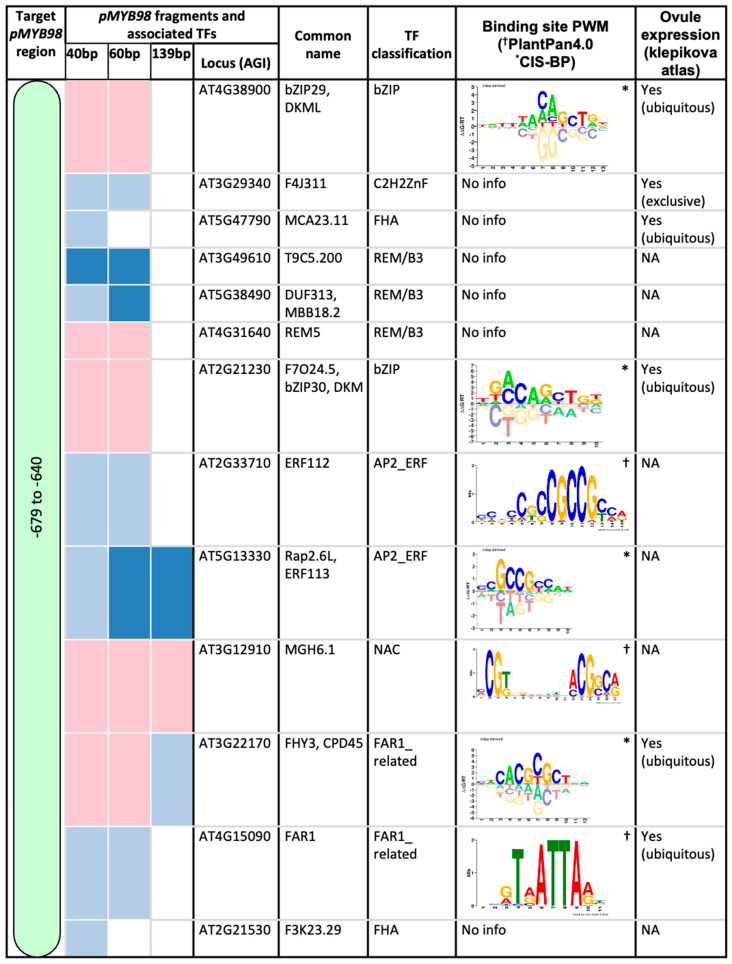 Figure 2
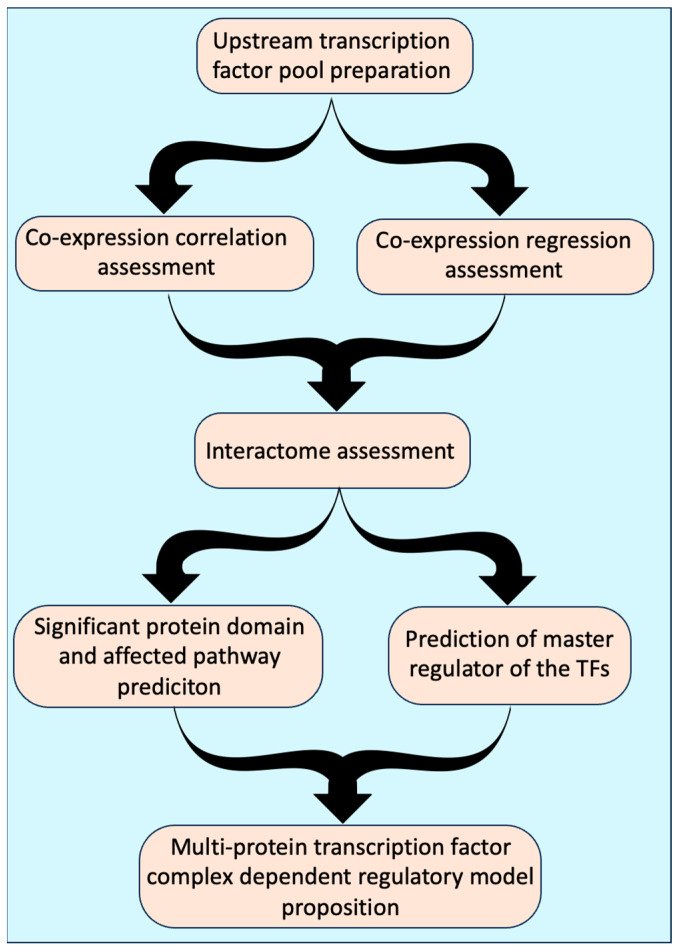 Figure 3
- —Chinese NSFC fund
- —Japanese Society for the Promotion of Science (JSPS)
Peer Reviews
No public reviews on file for this paper yet. If you reviewed it on a platform where reviews are public (OpenReview, ICLR, NeurIPS, ICML), you can paste yours below so the community can read it here.
Videos
No videos yet. Explain this paper in a talk, walkthrough, or lecture? Add one.
Taxonomy
TopicsPlant Reproductive Biology · Plant Molecular Biology Research · Plant and animal studies
1. Introduction
Gene regulation is tightly regulated in living organisms. Technological advancements and availability of a broader range of data in recent decades have allowed researchers to develop and evolve better if not novel tools and methods to make data-based hypotheses and relatively sound experimental designs. These tools and methods are expected to evolve and change with the advancement of techniques and expansion of available data resources. In this manuscript, we have prepared a simple workflow to formulate hypotheses on potential functional roles of transcription factors (TFs), taking yeast-one-hybridization (Y1H) assay-derived data as input. Although the workflow could be equally applicable to other species, the data analyzed in this study are from Arabidopsis unless stated otherwise. We used the developed workflow to assess potential roles of TFs behind MYB98, a gene encoding R2R3 MYB TF.
MYB98 is pivotal in regulating pollen tube attraction towards the ovule, a critical step in plant pollination and fertilization [1,2]. Synthesis of molecules, particularly cysteine-rich proteins directly involved in pollen tube attraction, depends on exclusive expression of MYB98 at synergid cells (SCs), the accessory but crucial female gametophyte component cells [3]. MYB98 is essential for proper filiform apparatus formation at the micropylar end of SC [2,3]. The functional state of this component cell is essential for secretion of pollen tube attractant molecules at the micropyle [3]. Most such molecular players act downstream of MYB98 and have long been discovered and studied [4,5,6]. However, the molecular players and the mechanism underlying the SC-specific expression of MYB98 itself had remained obscure until recently. Studies have reported that some TFs like central cell-specific AGL80 and CCG regulate MYB98 expression. The former represses MYB98 in the central cell [7], while the latter enhances its expression [8]. However, the mechanism behind the involvement of central cell-specific TFs in SC-specific MYB98 expression has largely remained a mystery. Moreover, no such regulators have been reported in the SC itself even almost two decades after MYB98 discovery [2].
Recently, we showed that MYB98 promoter (pMYB98) harbors a cis-element crucially important for its SC-specific expression [1]. Mutation within this 16 bp element, named SaeM (SC-specific activation element of MYB98), essentially led to complete loss of its SC-specific activation. We additionally demonstrated that an 84 bp pMYB98 cis-region harboring SaeM in the middle is sufficient to drive such exclusive expression. We showed that a homeodomain protein, ANL2, and its paralogs HDG1, ETD1, and HDG7 constitute binding potential to SaeM [1]. Studies have shown and suggested that crediting a specific expression pattern of a gene to particular TF might be misleading, as such a pattern could be the result of physical association and/or interaction among additional DNA-binding and non-binding TFs [9,10,11,12]. TFs’ interaction with each other brings changes to their structural configurations, thereby affecting DNA the binding efficiency of a thus-formed TF complex [13]. Here we have developed a workflow to sequentially carry out co-expression analysis, interactome analysis, and master regulator prediction for a gene-of-interest, and used it to propose a potential regulatory model behind spatial and temporal expression of MYB98.
2. Results
2.1. Transcription Factor Pool and Analysis Workflow Preparation
The SaeM element is positioned in the middle of a 191-bp-long functionally active pMYB98 region (Figure 1a). Among 23 TFs derived from our yeast-one-hybridization (Y1H) assay carried out using fragments within this region, the majority localize to chr2 and chr4 (Figure 1b,c), two Arabidopsis chromosomes sharing high levels of similarity [14,15]. The proximity of TFs to their target gene is linked to their efficiency in finding a binding site in the target genes’ promoter as suggested by a study of prokaryotes [16]. Whether a similar case applied to MYB98 regulators in the distant past is likely but remains unclear.
Several of the Y1H assay-derived TFs were common across all pMYB98 sub-fragments used in current study (Figure 1b and Figure 2), suggesting direct or indirect association with the shortest fragment. This group includes TFs with REM/B3 (3), bZIP (2), AP2/ERF (2), FHA (2), FAR-related (2), NAC (1), and C2H2 zinc finger (1) domains. Only one TF (GAL1) was common between the TF pools of 60 bp and 139 bp fragments (Figure 1b and Figure 2). TFs unique to the 60-bp-derived pool or present in both the 60 bp and 139 bp pools are likely associated with the 3′-region of the 60 bp fragment not overlapping with its shorter 40 bp counterpart, i.e., −640 bp to −620 bp. This subset includes TFs with bZIP (4), ZF_HD (2), GeBP (1), and C2H2 zinc finger (1) domains. Among the three, the 139-bp-derived pool contains the smallest number of TFs (6 in total), with only two (both with HD domain) unique to it as compared to other fragment-derived pools, suggesting association with the 3′-region of the 139 bp fragment not overlapping with other fragments, i.e., −620 to −541 bp (Figure 1b and Figure 2). While some studies suggest repressive or transactivation roles for some of the Y1H assay-derived TFs, using them as a sole measure to predict TFs’ role in MYB98 regulation seemed a little far-fetched. Hence, we developed a simple workflow for this purpose, considering co-expression and potential physical associations of TFs while predicting their functional roles (Figure 3).
In the in vivo reporter expression assay, we observed that the latter region of the functionally active 191 bp pMYB98 region confers a repressive effect [1]. Since this fragment was not used in the Y1H assay, we checked available DNA affinity purification sequencing (DAP-Seq) data for potential TFs binding within this region (i.e., −550 bp to −510 bp). This region harbors a GT1CONSENSUS cis-element (GRWAAW) [17] in reverse orientation and potential RAV1 binding region (CAACAaCACCTa) (Figure 2) which reportedly binds by recognizing a bipartite DNA sequence composed of CAACA and CACCTG CACCTG as reported in Arabidopsis [18]. Interestingly, an additional potential GT-1 recognition motif overlaps with the SaeM 5′ region [1]. Analysis of DAP-seq data suggested potential TFs binding within the functionally active 191 bp promoter fragment including members with WRKY (9), ZF-HD (3), and HD (2) domains. TFs from all the aforementioned analyses were combined into a single pool (38 TFs in total). Based on an earlier assessment [1], we included TOPLESS (TPL), an EAR-motif binding TF with potential to interact with ANL2 and its homologs as well as MYB98 itself (as positive control), AGL80 (as negative control), and a random MYB (MYB63) in the TF pool (42 TFs in total) for downstream analysis following the aforementioned workflow (Figure 3).
Transcription factors (TFs) derived from Y1H experiment. Far-left column indicates potential pMYB98 regions targeted by associated TFs. Color coding in subsequent columns denotes the strengths of TF-binding affinity to respective pMYB98 fragments used in Y1H experiment (red = strong; dark blue = weak; light blue = very weak) (refer to Figure 1a). † PlantPan4.0 [19]-derived, * CIS-BP [20]-derived; ovule expression data were derived from the klepikova atlas [21].
Workflow of regulome assessment and regulatory complex prediction for MYB98.
2.2. Co-Expression Potential: An Initial Clue to TF Functionality
Our initial assumption posited that the co-expression potential of TFs might indicate their stimulatory or antagonistic effects. The ATTED-II database [22] was utilized for in silico analysis. It revealed that at least 30 TFs exhibit varying levels of co-expression potential (Figure 4a). Notably, however, MYB98 and AGL80 were missing from the co-expression matrix. Moreover, none of the TFs were among the top 2000 MYB98 co-expressed genes retrieved from the eFP browser [21]. Consequently, we examined the expression correlation of each TF with MYB98 individually. Although none of the TFs had an R^2^-value near 0.5, they showed slightly positive or negative correlation with MYB98 (Figure S1).
It is generally accepted that positive and negative correlations can imply respective stimulatory and inhibitory roles of TFs to their target gene; precise conclusions often depend on data standardization and narrowing down to the tissue level. In the absence of such micro-tissue-level expression data, co-expression and correlation/regression analyses so far merely suggest that TFs with a positive expression-correlation to MYB98 are at least expressed in ovules. Yet a TF could act as a repressor if expressed in MYB98 non-domain (non-SC) ovule tissues. AGL80, a known repressor of MYB98 in the central cell of the ovule [7], is one such example, exhibiting the highest positive expression correlation to MYB98 (Figure S1).
Assuming that micro-tissue-level single-cell expression data might yield more reliable insights, we evaluated the expression levels of TFs in FG component cells (data from Song, et al. [23]). The results demonstrated that AGL80 and MYB98 are not co-expressed; the former is exclusively expressed in the central cell, while the latter is specifically expressed in SCs (Figure 4b), aligning with previous findings by Zhang et al. [7]. The plot indicates that TF genes like TCP16 and WRKY71 show MYB98-like SC-specific expression, while roughly 30 other TFs analyzed show little to no expression at SC (Figure 4b), suggesting their potential negative role, if any, in MYB98 expression.
2.3. Network Analysis and Potential Physical Association Determination
Through Y1H assays and in silico analysis, we identified a group of TFs potentially central to MYB98 regulation, and the co-expression assessment suggested their possible functional roles. However, fragments used for the Y1H assay do not encompass all sites recognized by TFs in the pool (Figure 2). Therefore, we postulated involvement of intermediary TFs in facilitating their interaction with pMYB98. Under this premise, we conducted network analysis to identify potentially associated intermediary TFs using IntAct [24] (Figure 5). Since some of the TFs in the initial pool, such as ANL2 and HDG1, possess EAR motifs, we included TPL, a known EAR-dependent gene regulation mediator [25,26], in the network assessment. It predicted potential intermediary partners with physical associations between TFs. The complete network also reveals additional TFs potentially physically associated with the initial pool TFs (Figure S2). The majority of TFs in the network shown in Figure 5 are associated with plant hormone signal transduction, with ZH-HD_dimer and TCP domains being the most prevalent (Figure 6).
Downstream assessment of network-analysis-derived intermediary TFs containing pool using TF2Network [27] suggests that four TFs—TCP15, TCP16, FRS9, and HB34—potentially act as master regulators involved in the regulation of the majority of the TFs in the pool (Figure 7).
3. Discussion
3.1. Workflow-Dependent Functional Role Assignment to Putative Upstream TFs
Predictions made in this study are partially supported by earlier experimental studies. Examples include AGL80’s repressive role on MYB98 [7]; WRKY71’s transactivation role on genes like RAX, FT, and LFY [28,29]; and the antagonistic role of GeBP/GeBPL on negative regulators of ARR genes [30]. Since a transactivator of one gene can have a repressive effect on others, targeted studies are essential to confirm roles of the mentioned TFs on MYB98 specifically. Nevertheless, a general understanding of potential functional roles of putative upstream TFs should aid in designing further studies. Our study shows that tissue-specific and single-cell expression data offer more precise predictions; evaluating multi-time-point expression data could greatly improve prediction reliability in the temporal dimension as well. This approach would allow screening of genes conferring positive effects from non-domain tissues of the gene-of-target. According to the study by Li et al. [8], such TF genes for MYB98 include CCG and CBP1. They are expressed in the central cell, and a defect of at least CCG leads to reduced MYB98 and its downstream gene expression at SCs.
3.2. Potential Multi-TF Regulatory Model of MYB98 Expression
Overall analyses suggest that some TFs may bind directly to the pMYB98 region used for the Y1H assay, while others could regulate MYB98 expression indirectly. In conclusion, we propose a multi-TF regulatory model, which includes potential TFs directly bound to pMYB98 (ZHD5, RAV1, bZIP29, ANL2/HDG1, GT-1, MYB98, and ERF112), and those may physically associate to them (Figure 8). This model suggests direct or indirect involvement of TFs in MYB98 regulation. Temporal and spatial expression of MYB98 is likely influenced by the interplay between these repressors and transactivators. However, comprehensive experimental data are needed to draw such a conclusion.
3.3. Potential TFs on Conferring Tissue Specificity to MYB98
Our earlier study showed that SaeM is crucial and the 84-bp pMYB98 fragment harboring SaeM in the middle is sufficient to drive SC-specific gene expression [1]. We discussed that it constitutes ANL2 and its homologs HDG1, HDG7, and EDT1 recognition motif at its 3′-end. Multiple potential ANL2 binding sites exist both downstream and upstream of the 84 bp promoter region. Notably, ANL2 and HDG1 harbor potential EAR-motifs (LxLxL) (see Adhikari, et al. [1]), recognized by TOPLESS (TPL) or TPL-related proteins (TPR) or SAP18, which interact with chromatin-associated histone deacetylase (e.g., HDA19) to confer their repressive effect [25,26]. Analysis revealed relatively low co-expression patterns of ANL2 and HDG1 with MYB98 in FG component cells, suggesting their repressive role in MYB98 expression. Preliminary analysis indicated that ANL2 overexpression alone does not affect seed set—a proxy for normal MYB98 expression and ovule function. Further investigation of shorter ANL2 splice variant, which constitutes an additional EAR motif near its C-terminus, as well as of ANL2 homologs may offer clearer insights.
In addition to the ANL2-binding motif, the SaeM additionally harbors a potential GT-1 binding site (GT-element BOX III) at its 5′-end [1]. Other potential GT-1 binding sites downstream could be implicated in suppressing both overall and SC-specific reporter expression. GT elements, conserved across various plant species, reportedly determine tissue specificity of target genes by either activating or repressing gene expression depending on whether the GT factors are bound [17,31]. Our assessment indicates that GT-1, being non-SC-specific, might play a repressive role in MYB98 expression. Confirmatory studies are needed to establish such a role of GT-1.
3.4. Limitations of Study
This study focuses on a workflow to analyze a pool of TFs potentially regulating the gene of interest (MYB98). TFs were identified using in vitro and in silico methods, with no direct validations from in vivo binding assays. Network analysis suggests potential physical associations of intermediary TFs, which were not identified in the Y1H assay. Wet lab experiments are necessary to confirm their interactions.
Genes such as MYB63, not directly linked to MYB98 expression, may also exhibit expression differences between the MYB98 domain and non-domain tissues. Such disparities may not necessarily imply a regulatory impact on MYB98 expression.
Some genes participate in their own regulation through feedback loops. Apparently, pMYB98 also constitutes a potential binding element (GTAACNT, [3]) for itself, yet the significance of this feedback in MYB98 regulation remains unclear. Since self-to-self expression correlation would always remain high irrespective of any kind of regulatory feedback loop, the current approach is insufficient to ascertain such an effect.
4. Materials and Methods
4.1. TF Pool Preparation
The initial pool of TFs was derived from the Y1H assay carried out during our earlier reported study [1]. Their putative binding sites were retrieved from the PlantPan 4.0 [19] and the CIS-BP database [20]. Additional TFs were added based on the DAP-seq data available at the Plant Cistrome Database [32].
4.2. Bioinformatics Analysis
The ATTED-II database (Arabidopsis) [19] was used for the co-expression analysis of the TFs; their network analysis was carried out using IntAct [24]; enrichment was assessed using eggNOG-mapper [33]; and potential master-regulators were identified using TF2Network [27].
5. Conclusions
Overall, the present study has developed a practical workflow to assign potential functions to a pool of TFs potentially regulating the expression of target gene (MYB98). Since MYB98 is involved in conferring upon SCs the potential to attract PT, which is normally followed by SC burst; and since SC burst with no subsequent fertilization still leads to an increase in ovule size [34,35], a deeper understanding of its regulators could contribute to fertilization and apomixis research in the long run. The precision of current workflow-assisted TF functional role prediction could be greatly enhanced with access to extensive micro-tissue level or single-cell-specific expression data. The availability of multi-time-point expression data also promises to refine these predictions in a temporal dimension. For now, our predictions, based on limited datasets, at least serve as a preliminary guide for experimental design.
The reference list from the paper itself. Each links out to its DOI / PubMed record.
- 1Adhikari P.B. Zhu S. Liu X. Huang C. Xie L. Wu X. He J. Mitsuda N. Peters B. Brownfield L. Discovery of a cis-regulatory element Sae M involved in dynamic regulation of synergid-specific MYB 98Front. Plant Sci.202314117705810.3389/fpls.2023.117705837223808 PMC 10200956 · doi ↗ · pubmed ↗
- 2Kasahara R.D. Portereiko M.F. Sandaklie Nikolova L. Rabiger D.S. Drews G.N. MYB 98 is required for pollen tube guidance and synergid cell differentiation in Arabidopsis Plant Cell 2005172981299210.1105/tpc.105.03460316214903 PMC 1276024 · doi ↗ · pubmed ↗
- 3Punwani J.A. Rabiger D.S. Lloyd A. Drews G.N. The MYB 98 subcircuit of the synergid gene regulatory network includes genes directly and indirectly regulated by MYB 98Plant J.20085540641410.1111/j.1365-313X.2008.03514.x 18410484 · doi ↗ · pubmed ↗
- 4Punwani J.A. Rabiger D.S. Drews G.N. MYB 98 positively regulates a battery of synergid-expressed genes encoding filiform apparatus–localized proteins Plant Cell 2007192557256810.1105/tpc.107.05207617693534 PMC 2002610 · doi ↗ · pubmed ↗
- 5Okuda S. Tsutsui H. Shiina K. Sprunck S. Takeuchi H. Yui R. Kasahara R.D. Hamamura Y. Mizukami A. Susaki D. Defensin-like polypeptide LUR Es are pollen tube attractants secreted from synergid cells Nature 200945835710.1038/nature 0788219295610 · doi ↗ · pubmed ↗
- 6Takeuchi H. Higashiyama T. Tip-localized receptors control pollen tube growth and LURE sensing in Arabidopsis Nature 201653124510.1038/nature 1741326961657 · doi ↗ · pubmed ↗
- 7Zhang M.X. Zhu S.S. Xu Y.C. Guo Y.L. Yang W.C. Li H.J. Transcriptional repression specifies the central cell for double fertilization Proc. Natl. Acad. Sci. USA 20201176231623610.1073/pnas.190946511732132210 PMC 7084083 · doi ↗ · pubmed ↗
- 8Li H.J. Zhu S.S. Zhang M.X. Wang T. Liang L. Xue Y. Shi D.Q. Liu J. Yang W.C. Arabidopsis CBP 1 is a novel regulator of transcription initiation in central cell-mediated pollen tube guidance Plant Cell 2015272880289310.1105/tpc.15.0037026462908 PMC 4682316 · doi ↗ · pubmed ↗