Identification of Vernonia patula Merr. and Its Similar Varieties Based on a Combination of HPLC Fingerprinting and Chemical Pattern Recognition
Wen Liu, Liyuan Huang, Jiashan Zhu, Liwen Lu, Xiaoling Su, Xiaotao Hou, Zeen Xiao

TL;DR
This study uses chemical analysis to distinguish the traditional medicine Vernonia patula from similar plant varieties.
Contribution
A novel method combining HPLC fingerprinting and chemical pattern recognition is introduced for accurate plant identification.
Findings
HPLC fingerprints showed high similarity within each plant variety but low similarity between varieties.
Isochlorogenic acid A and C were unique to Vernonia patula, while preconene II was found in similar varieties.
Cluster analysis and PLS-DA confirmed distinct groupings of the four plant varieties.
Abstract
Vernonia patula Merr. (VP) is a traditional medicine used by the Zhuang and Yao people, known for its therapeutic properties in treating anemopyretic cold and other diseases. Distinguishing VP from similar varieties such as Praxelis clematidea (PC), Ageratum conyzoides L. (AC) and Ageratum houstonianum Mill (AH) was challenging due to their similar traits and plant morphology. The HPLC fingerprints of 40 batches of VP and three similar varieties were established. SPSS 20.0 and SIMCA-P 13.0 were used to statistically analyze the chromatographic peak areas of 37 components. The results showed that the similarity of the HPLC fingerprints for each of the four varieties was >0.9, while the similarity between the control chromatogram of VP and its similar varieties was <0.678. Cluster analysis and partial least squares discriminant analysis provided consistent results, indicating that all…
Genes, proteins, chemicals, diseases, species, mutations and cell lines named across the full text — each resolved to its canonical identifier and authoritative record.
Click any figure to enlarge with its caption.
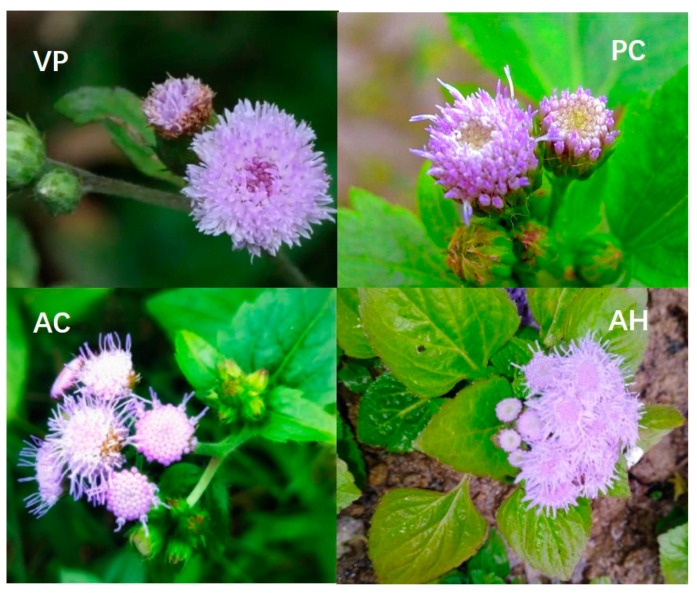 Figure 1
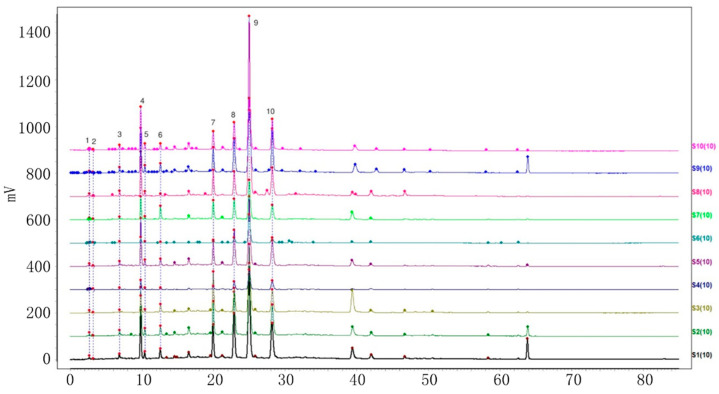 Figure 2
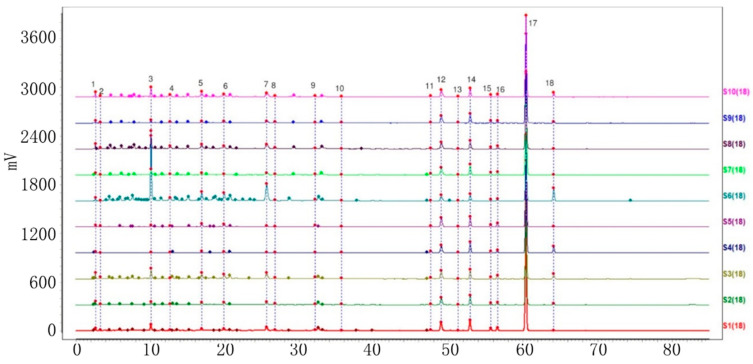 Figure 3
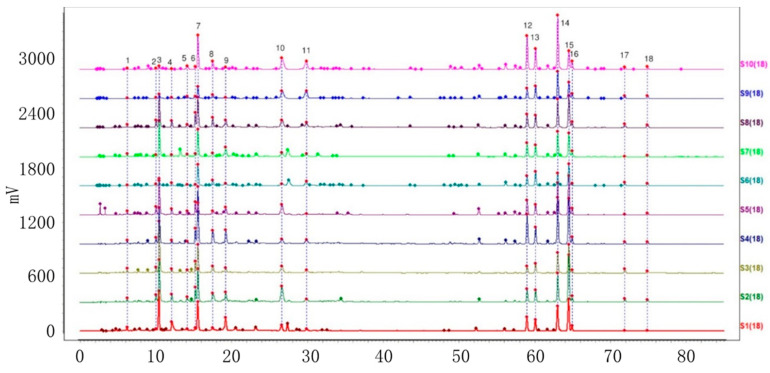 Figure 4
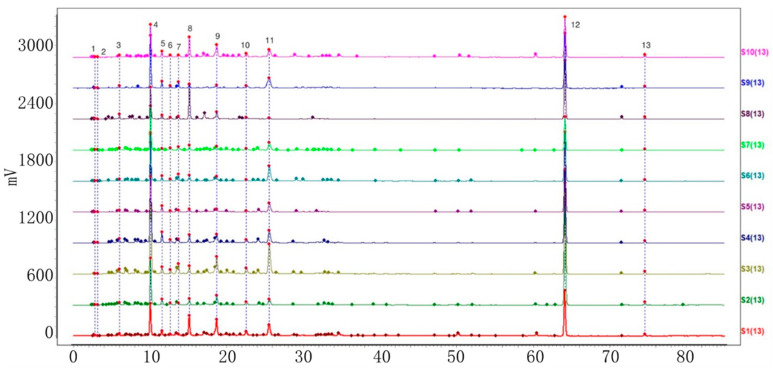 Figure 5
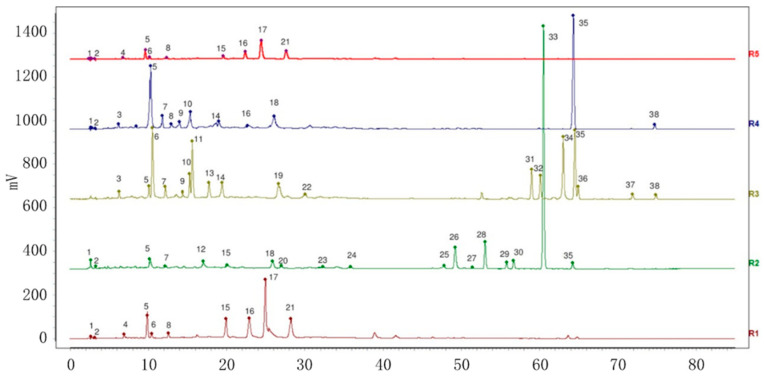 Figure 6
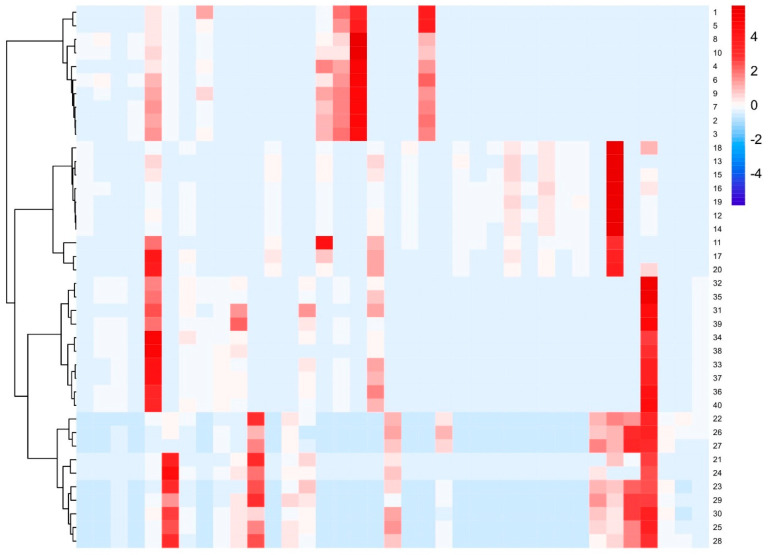 Figure 7
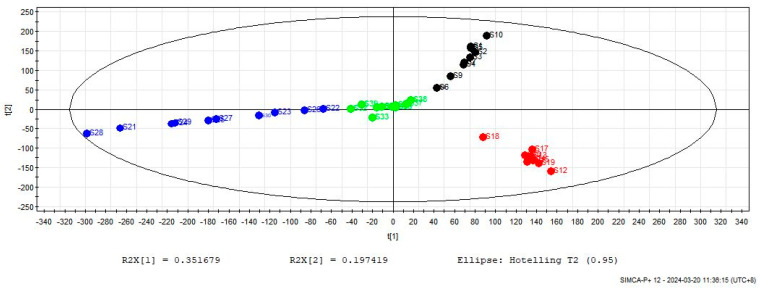 Figure 8
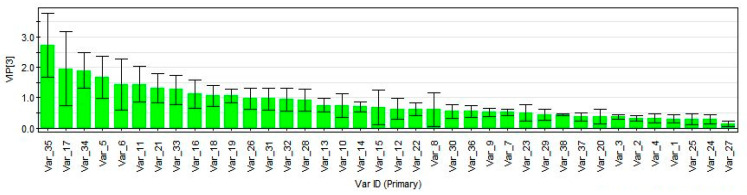 Figure 9
 Figure 10
Peer Reviews
No public reviews on file for this paper yet. If you reviewed it on a platform where reviews are public (OpenReview, ICLR, NeurIPS, ICML), you can paste yours below so the community can read it here.
Videos
No videos yet. Explain this paper in a talk, walkthrough, or lecture? Add one.
Taxonomy
TopicsPhytochemistry and Biological Activities · Natural product bioactivities and synthesis · Essential Oils and Antimicrobial Activity