Physiological and Proteomic Analyses of mtn1 Mutant Reveal Key Players in Centipedegrass Tiller Development
Chenming Xie, Rongrong Chen, Qixue Sun, Dongli Hao, Junqin Zong, Hailin Guo, Jianxiu Liu, Ling Li

TL;DR
This study identifies key proteins and metabolic processes involved in increased tillering in a centipedegrass mutant.
Contribution
The study reveals novel insights into the proteomic and physiological mechanisms driving tiller development in clonal plants.
Findings
The mtn1 mutant showed a 29.03% and 27.89% increase in first and secondary tiller numbers compared to the wild type.
Differential accumulation of 438 and 589 proteins in tiller buds and stem nodes was observed in the mtn1 mutant.
Sucrose and starch metabolism, along with plant hormone signaling, were enriched in the mutant, suggesting their regulatory roles in tillering.
Abstract
Tillering directly determines the seed production and propagation capacity of clonal plants. However, the molecular mechanisms involved in the tiller development of clonal plants are still not fully understood. In this study, we conducted a proteome comparison between the tiller buds and stem node of a multiple-tiller mutant mtn1 (more tillering number 1) and a wild type of centipedegrass. The results showed significant increases of 29.03% and 27.89% in the first and secondary tiller numbers, respectively, in the mtn1 mutant compared to the wild type. The photosynthetic rate increased by 31.44%, while the starch, soluble sugar, and sucrose contents in the tiller buds and stem node showed increases of 13.79%, 39.10%, 97.64%, 37.97%, 55.64%, and 7.68%, respectively, compared to the wild type. Two groups comprising 438 and 589 protein species, respectively, were differentially accumulated…
Genes, proteins, chemicals, diseases, species, mutations and cell lines named across the full text — each resolved to its canonical identifier and authoritative record.
Click any figure to enlarge with its caption.
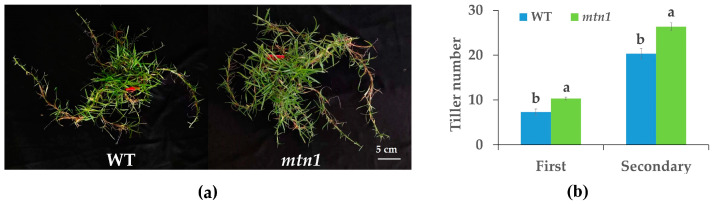 Figure 1
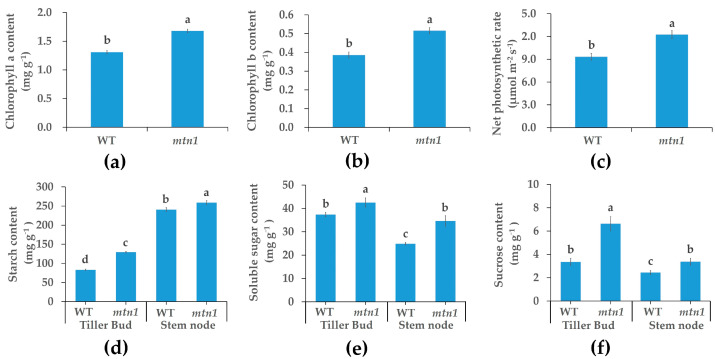 Figure 2
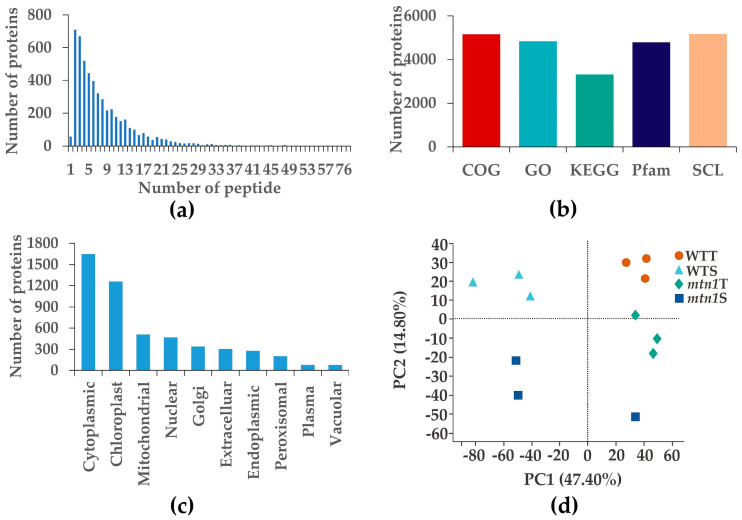 Figure 3
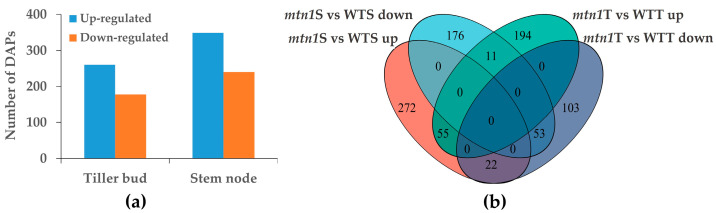 Figure 4
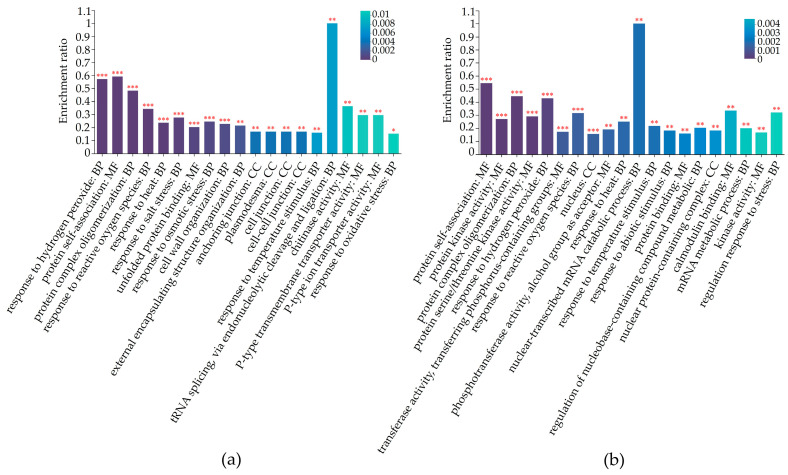 Figure 5
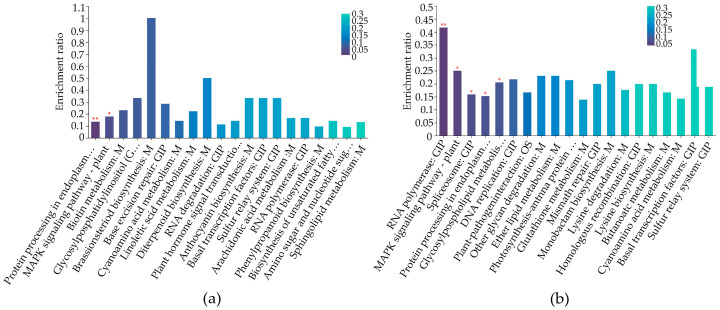 Figure 6
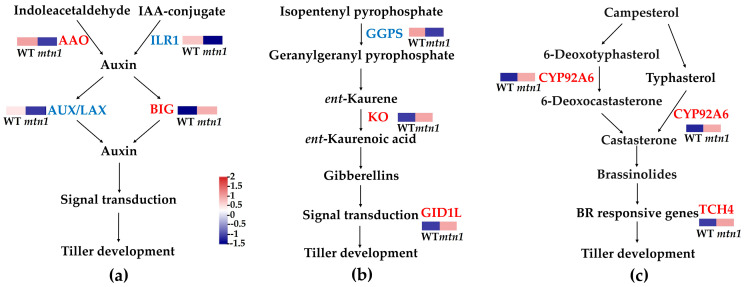 Figure 7
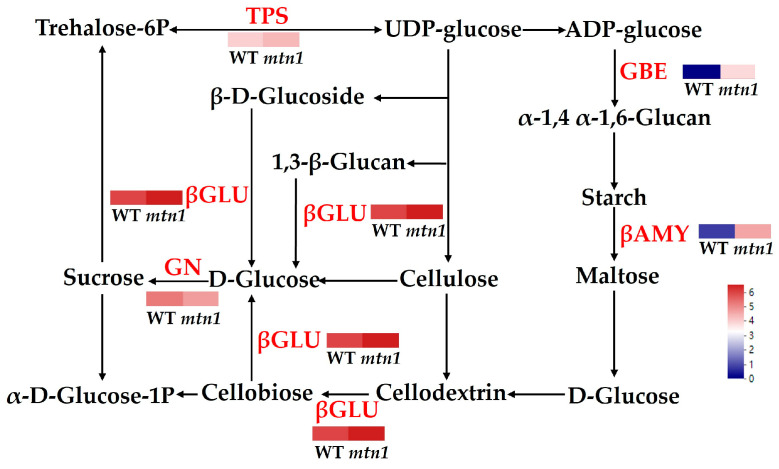 Figure 8
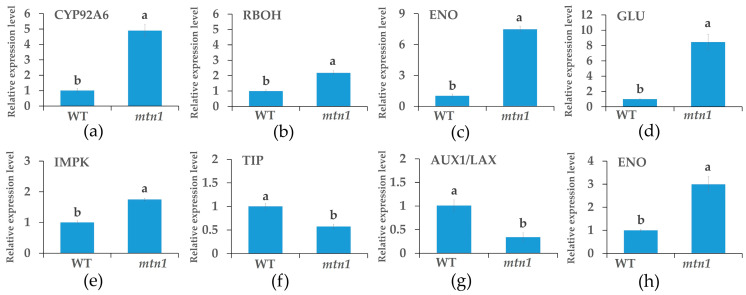 Figure 9
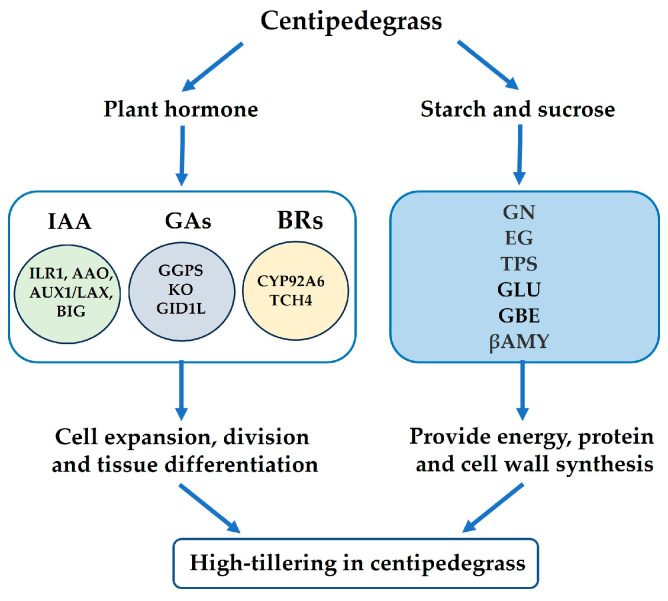 Figure 10
Peer Reviews
No public reviews on file for this paper yet. If you reviewed it on a platform where reviews are public (OpenReview, ICLR, NeurIPS, ICML), you can paste yours below so the community can read it here.
Videos
No videos yet. Explain this paper in a talk, walkthrough, or lecture? Add one.
Taxonomy
TopicsPlant Molecular Biology Research · Plant Reproductive Biology · Plant nutrient uptake and metabolism