Determining the Relationship between Delivery Parameters and Ablation Distribution for Novel Gel Ethanol Percutaneous Therapy in Ex Vivo Swine Liver
Erika Chelales, Katriana von Windheim, Arshbir Singh Banipal, Elizabeth Siebeneck, Claire Benham, Corrine A. Nief, Brian Crouch, Jeffrey I. Everitt, Alan Alper Sag, David F. Katz, Nirmala Ramanujam

TL;DR
This study examines how different injection parameters affect the performance of a new gel ethanol formulation in a swine liver model for ablation therapy.
Contribution
The paper introduces a novel evaluation of injection parameters for gel ethanol in a large animal model, providing insights for human applications.
Findings
Higher ECE concentration and smaller needle diameter significantly increased injection force and variability.
12% ECE achieved better depot volume and retention compared to 6% ECE across all infusion volumes.
Needle gauge and infusion rate had minimal impact on depot volume and retention but affected shape variability.
Abstract
Ethyl cellulose–ethanol (ECE) is emerging as a promising formulation for ablative injections, with more controllable injection distributions than those from traditional liquid ethanol. This study evaluates the influence of salient injection parameters on forces needed for infusion, depot volume, retention, and shape in a large animal model relevant to human applications. Experiments were conducted to investigate how infusion volume (0.5 mL to 2.5 mL), ECE concentration (6% or 12%), needle gauge (22 G or 27 G), and infusion rate (10 mL/h) impacted the force of infusion into air using a load cell. These parameters, with the addition of manual infusion, were investigated to elucidate their influence on depot volume, retention, and shape (aspect ratio), measured using CT imaging, in an ex vivo swine liver model. Force during injection increased significantly for 12% compared to 6% ECE and…
Genes, proteins, chemicals, diseases, species, mutations and cell lines named across the full text — each resolved to its canonical identifier and authoritative record.
Click any figure to enlarge with its caption.
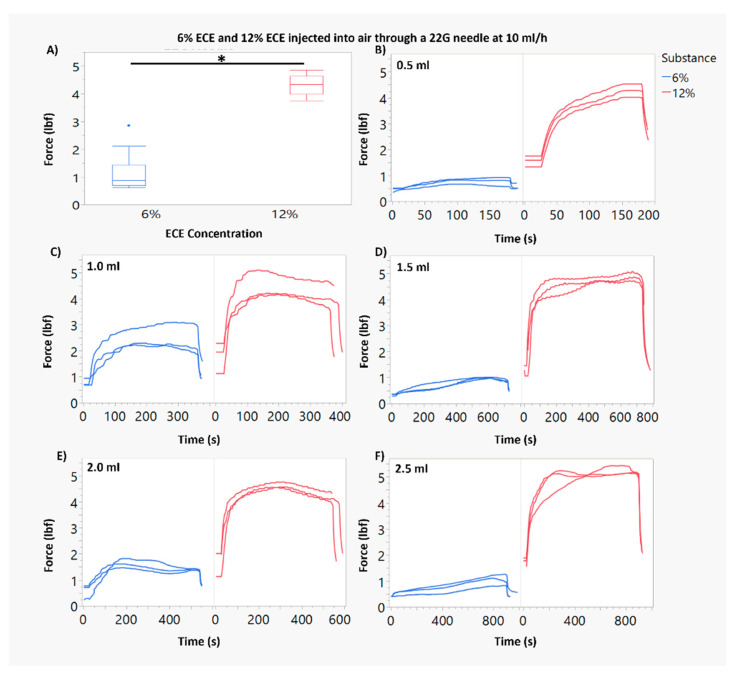 Figure 1
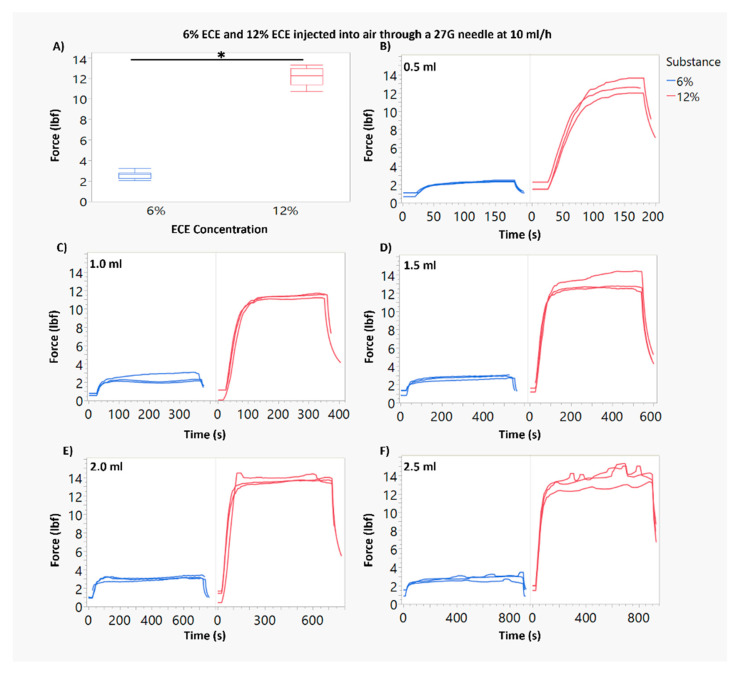 Figure 2
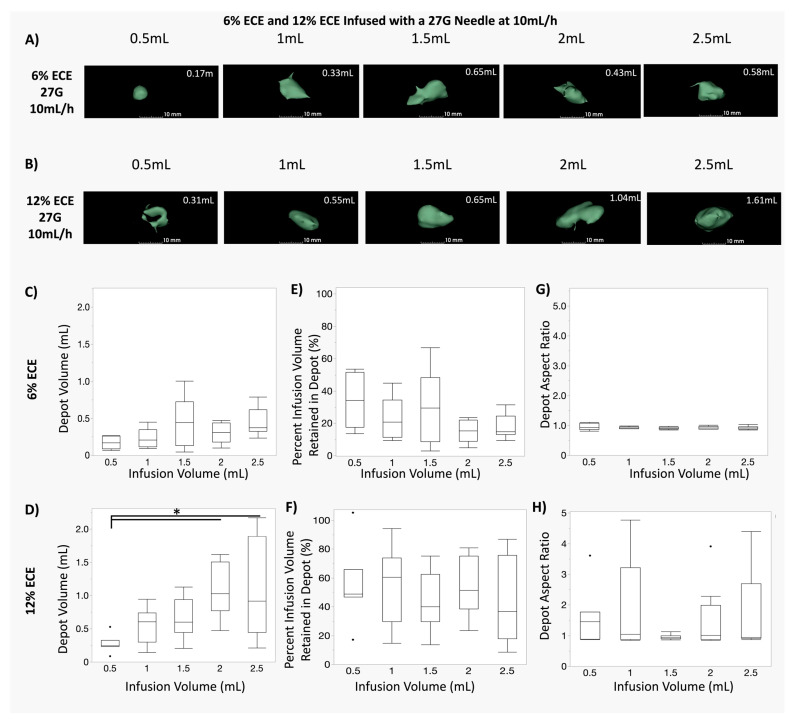 Figure 3
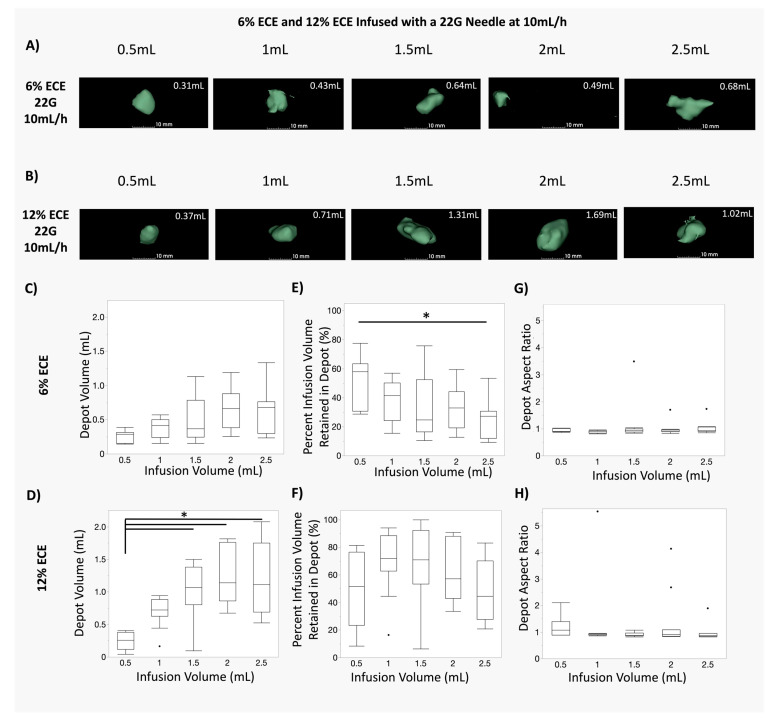 Figure 4
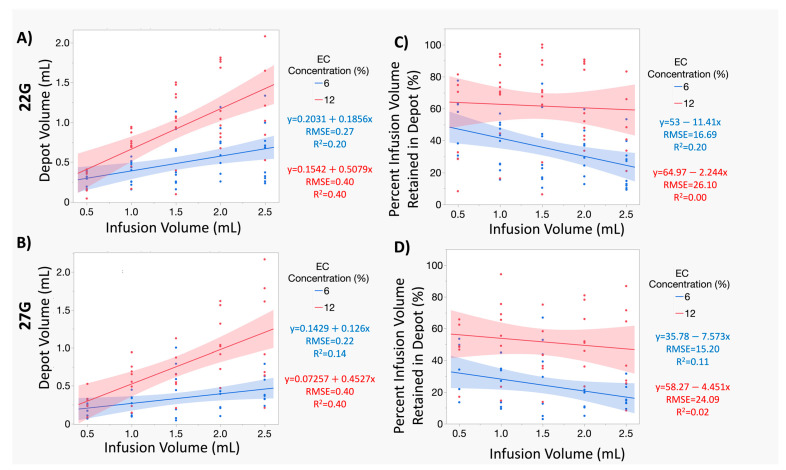 Figure 5
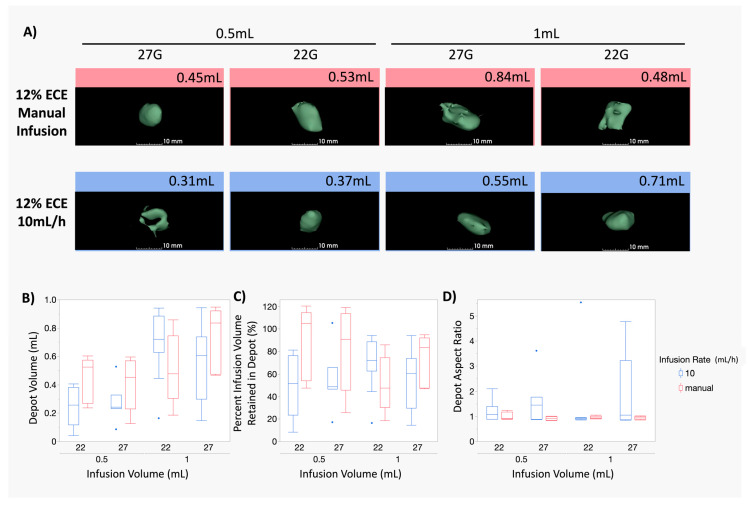 Figure 6
Peer Reviews
No public reviews on file for this paper yet. If you reviewed it on a platform where reviews are public (OpenReview, ICLR, NeurIPS, ICML), you can paste yours below so the community can read it here.
Videos
No videos yet. Explain this paper in a talk, walkthrough, or lecture? Add one.
Taxonomy
TopicsOrgan Transplantation Techniques and Outcomes · Liver Disease and Transplantation · Hepatocellular Carcinoma Treatment and Prognosis