Bacterial Chaperone Domain Insertions Convert Human FKBP12 into an Excellent Protein-Folding Catalyst—A Structural and Functional Analysis
Gabriel Žoldák, Thomas A. Knappe, Anne-Juliane Geitner, Christian Scholz, Holger Dobbek, Franz X. Schmid, Roman P. Jakob

TL;DR
Adding bacterial chaperone domains to human FKBP12 significantly boosts its ability to help proteins fold correctly.
Contribution
Inserting chaperone domains from bacteria into FKBP12 enhances its folding activity and structural stability.
Findings
Chaperone domain insertions from E. coli and Thermococcus sp. increased FKBP12's folding activity.
Crystal structures showed the inserted domains did not disrupt FKBP12's or their own structures.
The domain orientations suggest a mechanism for transferring substrate proteins between domains.
Abstract
Many folding enzymes use separate domains for the binding of substrate proteins and for the catalysis of slow folding reactions such as prolyl isomerization. FKBP12 is a small prolyl isomerase without a chaperone domain. Its folding activity is low, but it could be increased by inserting the chaperone domain from the homolog SlyD of E. coli near the prolyl isomerase active site. We inserted two other chaperone domains into human FKBP12: the chaperone domain of SlpA from E. coli, and the chaperone domain of SlyD from Thermococcus sp. Both stabilized FKBP12 and greatly increased its folding activity. The insertion of these chaperone domains had no influence on the FKBP12 and the chaperone domain structure, as revealed by two crystal structures of the chimeric proteins. The relative domain orientations differ in the two crystal structures, presumably representing snapshots of a more open…
Genes, proteins, chemicals, diseases, species, mutations and cell lines named across the full text — each resolved to its canonical identifier and authoritative record.
Click any figure to enlarge with its caption.
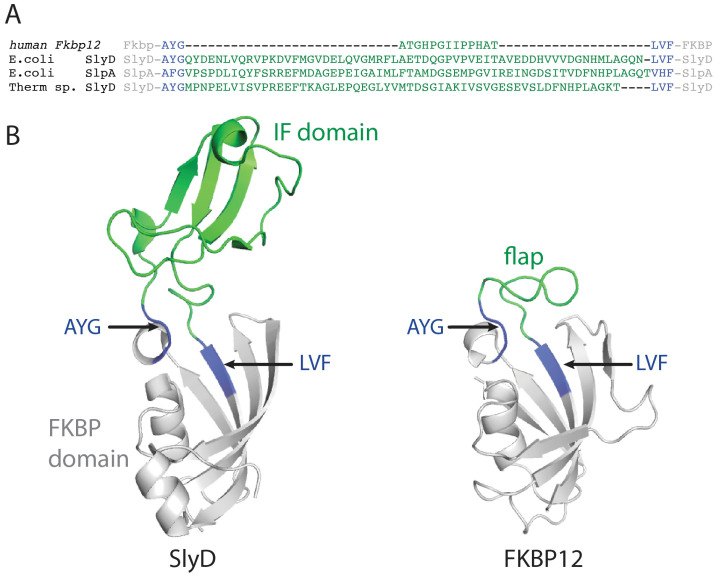 Figure 1
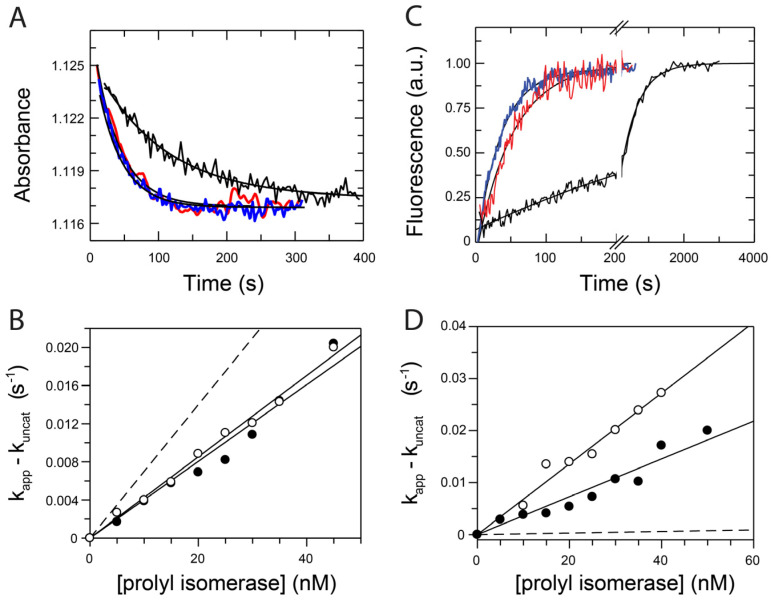 Figure 2
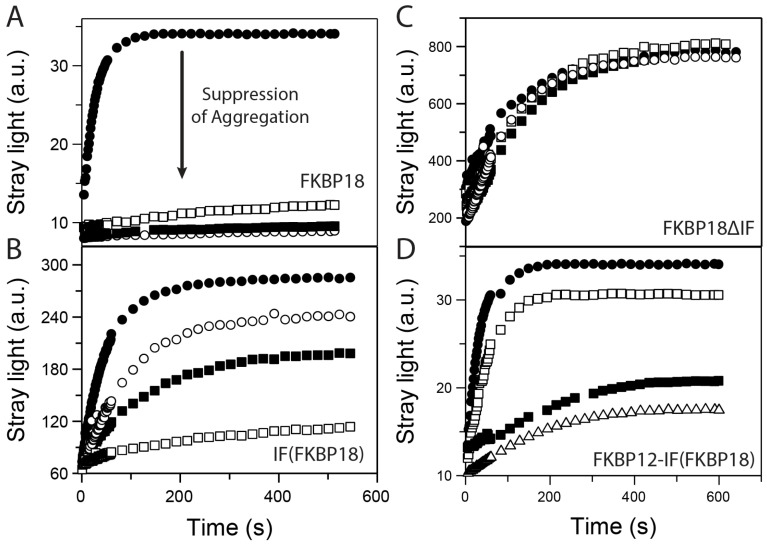 Figure 3
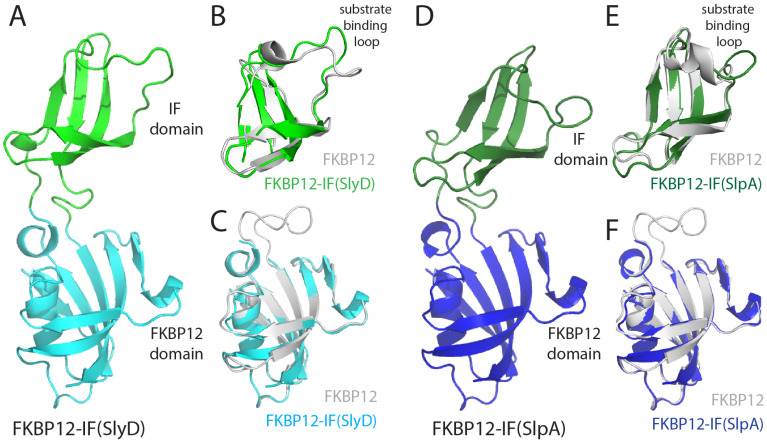 Figure 4
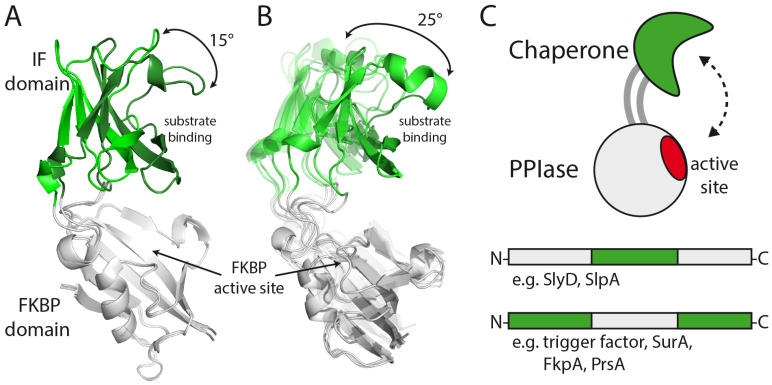 Figure 5
Peer Reviews
No public reviews on file for this paper yet. If you reviewed it on a platform where reviews are public (OpenReview, ICLR, NeurIPS, ICML), you can paste yours below so the community can read it here.
Videos
No videos yet. Explain this paper in a talk, walkthrough, or lecture? Add one.
Taxonomy
TopicsSignaling Pathways in Disease · Enzyme Structure and Function · Toxin Mechanisms and Immunotoxins