Nickel-Catalyzed Three-Component Unsymmetrical Bis-Allylation of Alkynes with Alkenes: A Density Functional Theory Study
Tao Yu, Jingxuan Zhang, Guo Liu, Liangfei Duan, Kun V. Tian, Gregory A. Chass, Weihua Mu

TL;DR
This study uses computational methods to understand how a nickel catalyst helps create complex chemical structures from alkynes and alkenes.
Contribution
The paper provides a detailed DFT-based mechanistic analysis of a nickel-catalyzed three-component reaction for bis-allylation of alkynes.
Findings
The reaction proceeds through five sequential steps, with oxidative addition and reductive elimination as key steps.
The electrophilic/nucleophilic properties of substrates were predicted using Hirshfeld charges.
The third component and tBuOK additive are crucial for reaction efficiency and catalyst regeneration.
Abstract
Density functional theory (DFT) characterizations were employed to resolve the structural and energetic aspects and product selectivities along the mechanistic reaction paths of the nickel-catalyzed three-component unsymmetrical bis-allylation of alkynes with alkenes. Our putative mechanism initiated with the in situ generation of the active catalytic species [Ni(0)L2] (L = NHC) from its precursors [Ni(COD)2, NHC·HCl] to activate the alkyne and alkene substrates to form the final skipped trienes. This proceeds via the following five sequential steps: oxidative addition (OA), β-F elimination, ring-opening complexation, C-B cleavage and reductive elimination (RE). Both the OA and RE steps (with respective free energy barriers of 24.2 and 24.8 kcal·mol−1) contribute to the observed reaction rates, with the former being the selectivity-controlling step of the entire chemical transformation.…
Genes, proteins, chemicals, diseases, species, mutations and cell lines named across the full text — each resolved to its canonical identifier and authoritative record.
Click any figure to enlarge with its caption.
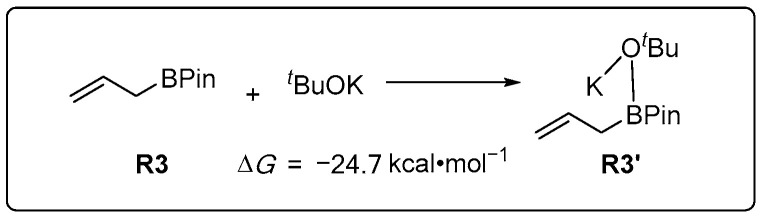 Figure 1
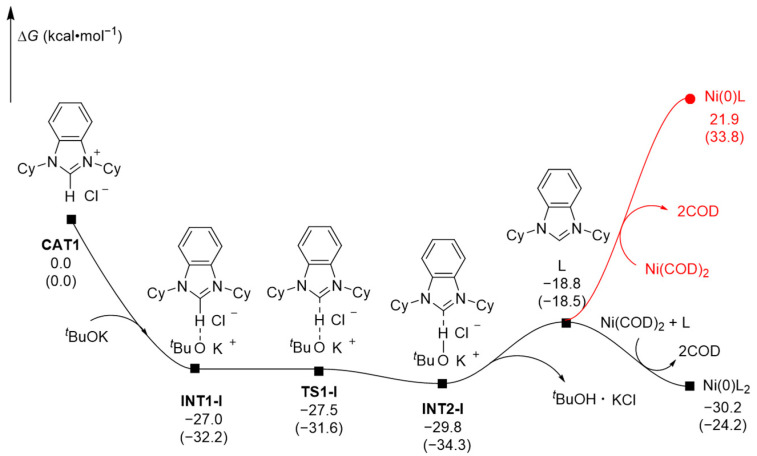 Figure 2
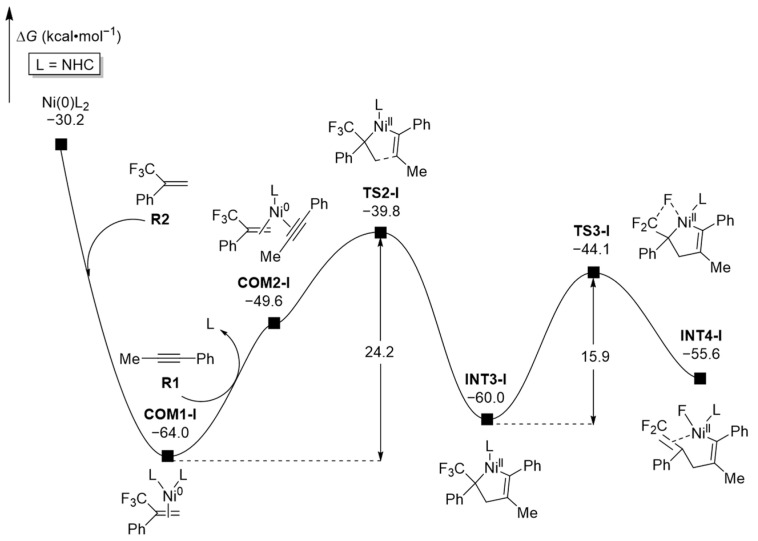 Figure 3
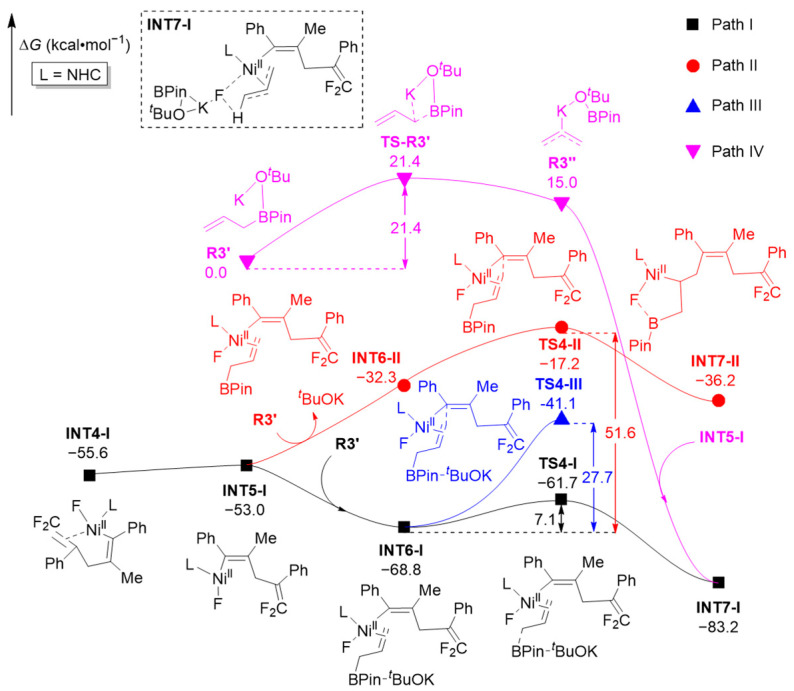 Figure 4
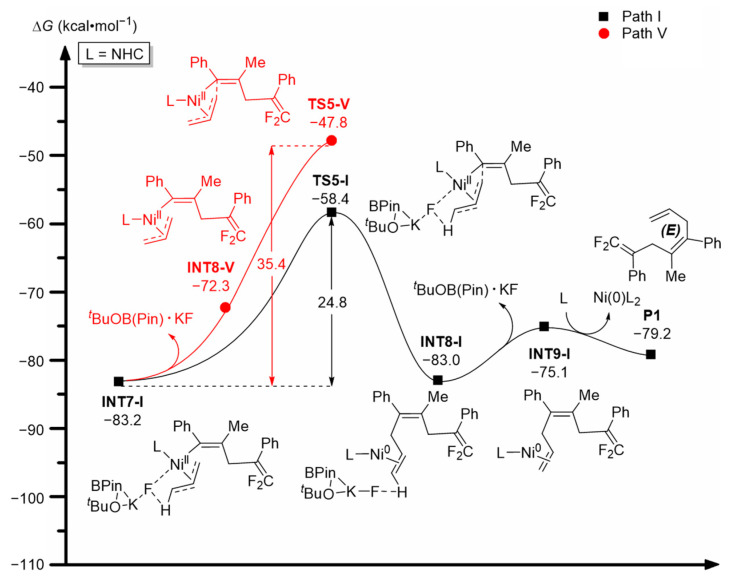 Figure 5
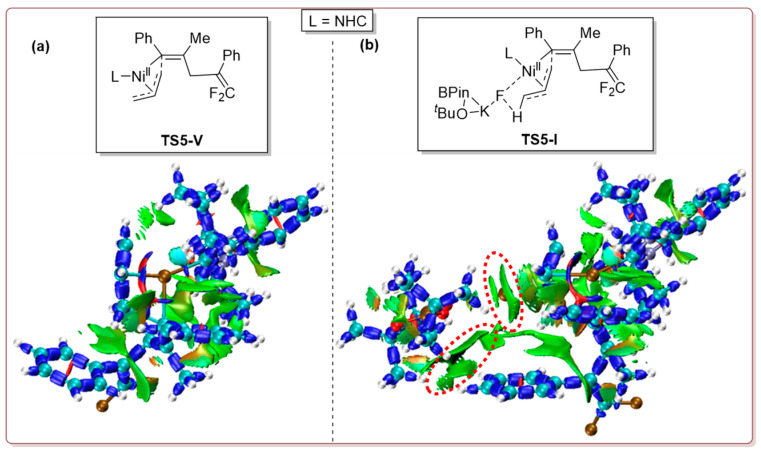 Figure 6
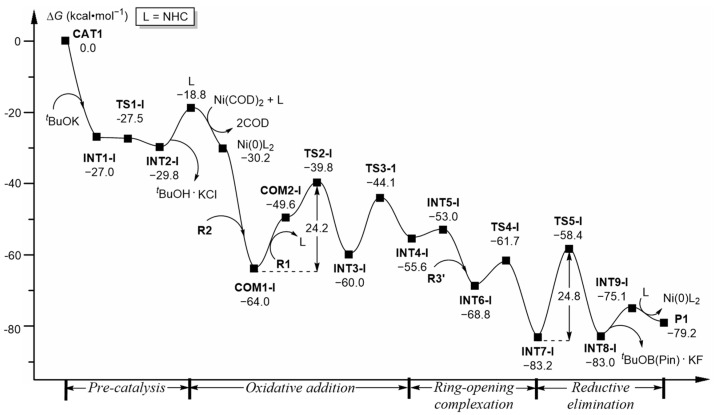 Figure 7
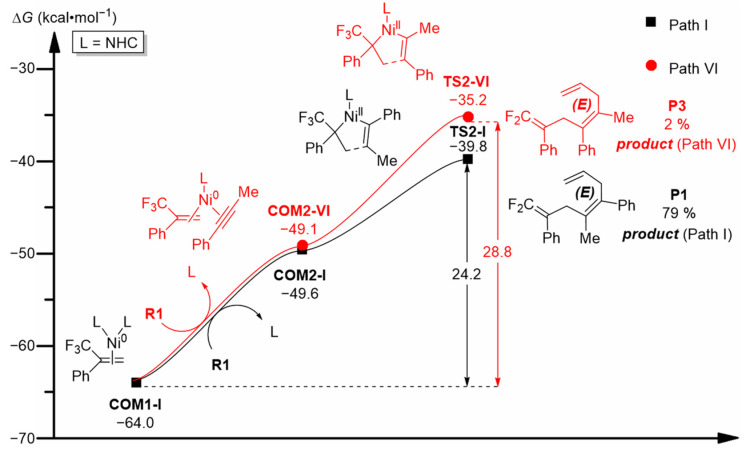 Figure 8
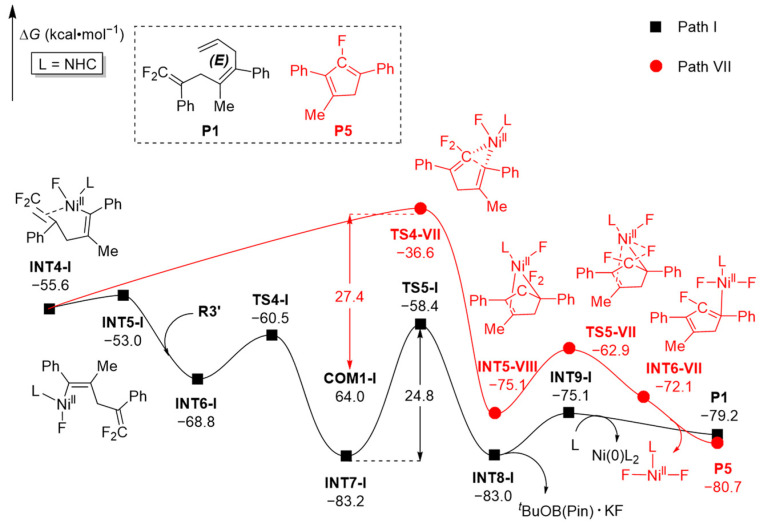 Figure 9
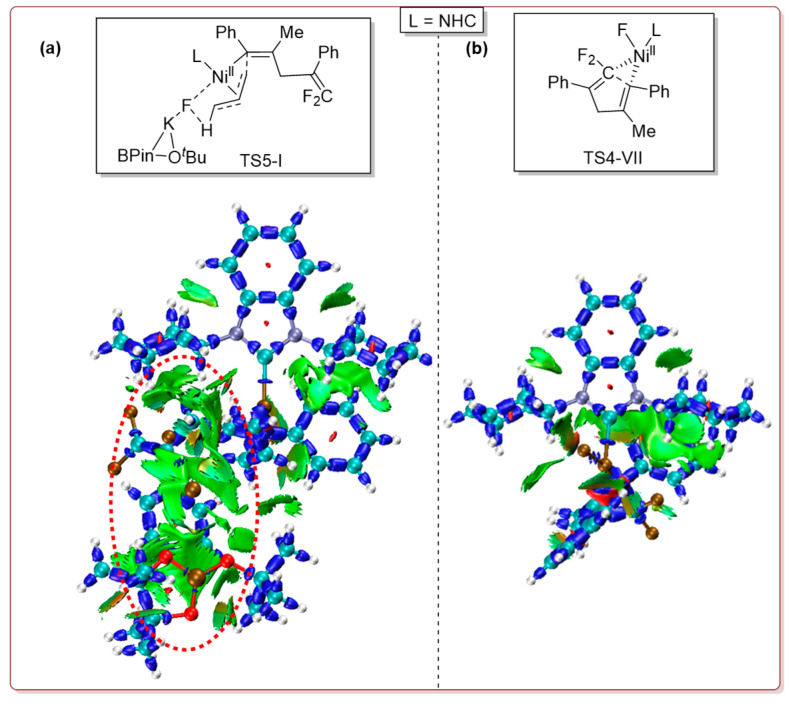 Figure 10
 Figure 11
 Figure 12
 Figure 13
 Figure 14
 Figure 15
 Figure 16
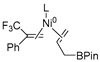 Figure 17
 Figure 18
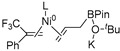 Figure 19
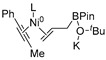 Figure 20
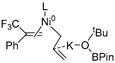 Figure 21
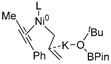 Figure 22
 Figure 23
 Figure 24
 Figure 25
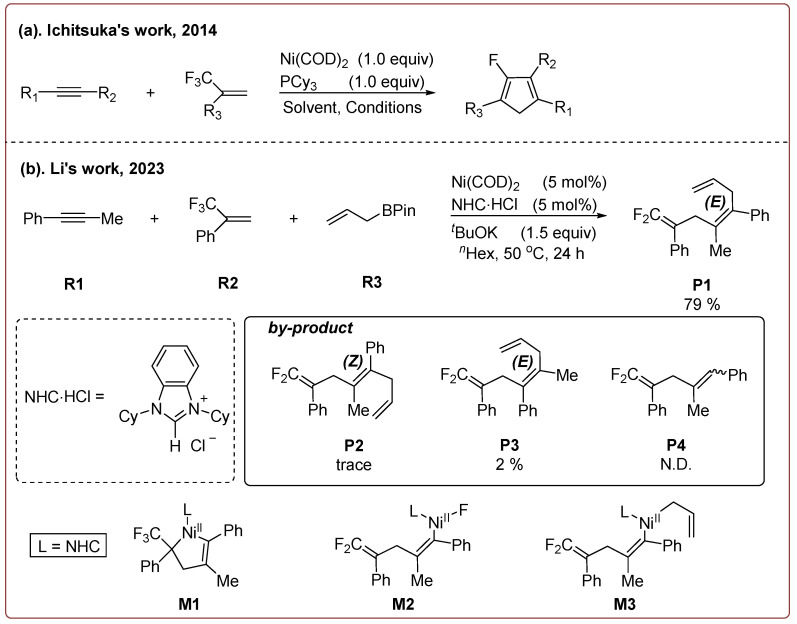 Figure 26
Peer Reviews
No public reviews on file for this paper yet. If you reviewed it on a platform where reviews are public (OpenReview, ICLR, NeurIPS, ICML), you can paste yours below so the community can read it here.
Videos
No videos yet. Explain this paper in a talk, walkthrough, or lecture? Add one.
Taxonomy
TopicsCatalytic C–H Functionalization Methods · Catalytic Cross-Coupling Reactions · Asymmetric Hydrogenation and Catalysis