Conventional Cytogenetic Analysis and Array CGH + SNP Identify Essential Thrombocythemia and Prefibrotic Primary Myelofibrosis Patients Who Are at Risk for Disease Progression
Joseph Tripodi, Ronald Hoffman, Douglas Tremblay, Daiva Ahire, John Mascarenhas, Marina Kremyanskaya, Vesna Najfeld

TL;DR
This study shows that combining two genomic analysis methods can identify patients with blood disorders who are more likely to experience disease progression.
Contribution
The study demonstrates that combining conventional cytogenetics with array CGH + SNP improves detection of genomic abnormalities linked to disease progression in Ph-MPN patients.
Findings
Genomic alterations were detected in 36% of patients with essential thrombocythemia or prefibrotic primary myelofibrosis.
Patients who progressed had a 68% chance of having abnormal genomic findings detected by either method.
Cytogenetically normal patients with abnormal aCGH + SNP results had shorter progression-free survival.
Abstract
The Philadelphia chromosome-negative myeloproliferative neoplasms (Ph-MPNs) are a heterogeneous group of clonal hematopoietic malignancies that include polycythemia vera (PV), essential thrombocythemia (ET), and the prefibrotic form of primary myelofibrosis (prePMF). In this study, we retrospectively reviewed the karyotypes from conventional cytogenetics (CC) and array Comparative Genomic Hybridization + Single Nucleotide Polymorphism (aCGH + SNP) in patients with ET or prePMF to determine whether the combined analysis of both methodologies can identify patients who may be at a higher risk of disease progression. We performed a comprehensive genomic review on 169 patients with a clinical diagnosis of ET (154 patients) or prePMF (15 patients). Genomic alterations detected by CC or array-CGH + SNP were detected in 36% of patients. In patients who progressed, 68% had an abnormal genomic…
Genes, proteins, chemicals, diseases, species, mutations and cell lines named across the full text — each resolved to its canonical identifier and authoritative record.
Click any figure to enlarge with its caption.
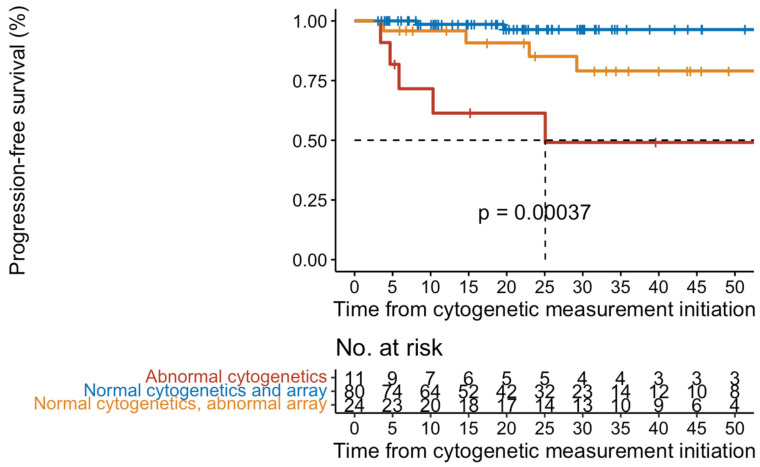 Figure 1
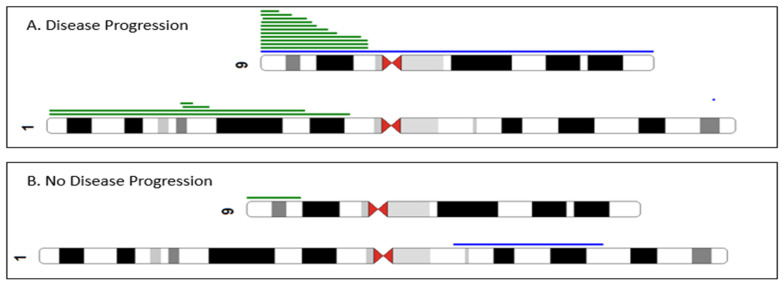 Figure 2
Peer Reviews
No public reviews on file for this paper yet. If you reviewed it on a platform where reviews are public (OpenReview, ICLR, NeurIPS, ICML), you can paste yours below so the community can read it here.
Videos
No videos yet. Explain this paper in a talk, walkthrough, or lecture? Add one.
Taxonomy
TopicsMyeloproliferative Neoplasms: Diagnosis and Treatment · Kruppel-like factors research · Acute Myeloid Leukemia Research