Increased Pituitary Fluorine-18-Fluorodeoxyglucose Uptake in Patients with Differentiated Thyroid Cancer in Hypothyroidism versus under Recombinant Human Thyroid-Stimulating Hormone Stimulation
Xinyi Shi, Ilaria Giordani, Marie Nicod Lalonde, Gerasimos P. Sykiotis

TL;DR
This study shows that pituitary hypermetabolism seen in thyroid cancer patients on PET scans is often a normal response to low thyroid hormone levels, not a sign of disease.
Contribution
The study demonstrates that pituitary hypermetabolism in thyroid cancer patients is a physiological response to hypothyroidism, not a pathological condition.
Findings
Pituitary SUVmax and SUVratio were significantly higher in patients under thyroid hormone withdrawal compared to those under rhTSH stimulation.
A positive correlation between serum TSH levels and pituitary SUVmax was observed only in the thyroid hormone withdrawal group.
Pituitary hypermetabolism was more prevalent in the thyroid hormone withdrawal group (62.5%) than in the rhTSH group (23.5%).
Abstract
The incidental pituitary hypermetabolism on 18F-FDG PET/CT should be further evaluated for discriminating between pathologic and physiologic uptake, but a recent study suggests that pituitary hypermetabolism is common in patients with differentiated thyroid carcinoma (DTC) undergoing thyroid hormone withdrawal (THW). The aim of this retrospective study was to compare pituitary metabolism in patients with DTC undergoing 18F-FDG PET/CT under THW versus recombinant human thyroid-stimulating hormone (rhTSH) stimulation. We confirmed a higher pituitary SUVmax and SUVratio with a higher prevalence of pituitary hypermetabolism in the THW group compared to the rhTSH group. A positive correlation between serum TSH levels and pituitary SUVmax was observed only in the THW group. The present findings support the hypothesis that pituitary hypermetabolism on 18F-FDG PET/CT in patients with DTC…
Genes, proteins, chemicals, diseases, species, mutations and cell lines named across the full text — each resolved to its canonical identifier and authoritative record.
Click any figure to enlarge with its caption.
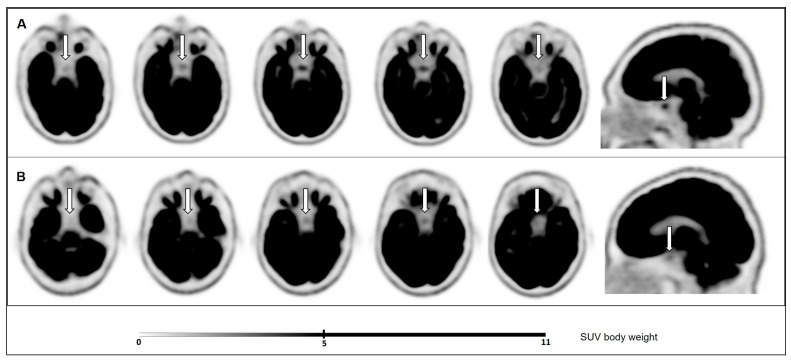 Figure 1
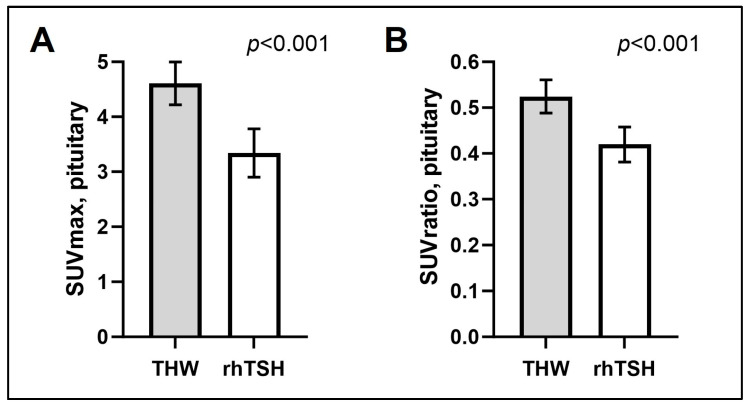 Figure 2
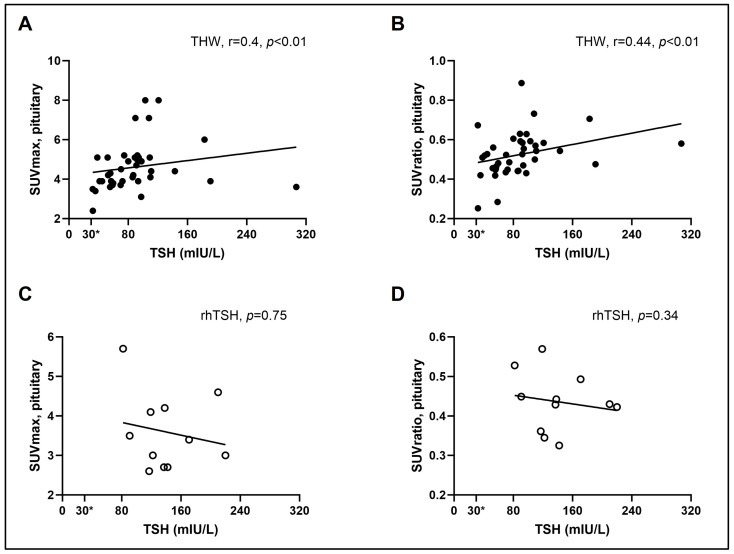 Figure 3
Peer Reviews
No public reviews on file for this paper yet. If you reviewed it on a platform where reviews are public (OpenReview, ICLR, NeurIPS, ICML), you can paste yours below so the community can read it here.
Videos
No videos yet. Explain this paper in a talk, walkthrough, or lecture? Add one.
Taxonomy
TopicsPituitary Gland Disorders and Treatments · Thyroid Cancer Diagnosis and Treatment · Thyroid Disorders and Treatments