Improved Metastatic-Free Survival after Systematic Re-Excision Following Complete Macroscopic Unplanned Excision of Limb or Trunk Soft Tissue Sarcoma
Francois Gouin, Audrey Michot, Mehrdad Jafari, Charles Honoré, Jean Camille Mattei, Alexandre Rochwerger, Mickael Ropars, Dimitri Tzanis, Philippe Anract, Sébastien Carrere, Dimitri Gangloff, Agnès Ducoulombier, Céleste Lebbe, Jérôme Guiramand, Denis Waast, Frédéric Marchal

TL;DR
Re-excising soft tissue sarcomas after initial unplanned surgery improves metastatic-free survival in most patients, except those over 70 or with large tumors.
Contribution
The study identifies re-excision as an independent favorable factor for metastatic-free survival in specific patient subgroups.
Findings
Re-excision (RE) is an independent favorable factor for metastatic-free survival (MFS) with a hazard ratio of 0.7.
Patients over 70 years and those with tumors larger than 10 cm do not benefit from re-excision in terms of MFS.
R1 initial resection is associated with better MFS than R0 initial resection.
Abstract
The quality of resection after unplanned excision of soft tissue sarcoma (STS) performed outside of a reference center or at second resection potentially impacts local and metastatic recurrence and survival. The French cohort NETSARC prospectively collected data from patients with unplanned excision outside reference centers from 2010 to 2019 and reported survival in patients reexcised (RE) or not (No-RE). Patients who would most benefit from RE need to be identified. A total of 2371 patients had unplanned excision for STS outside reference centers, including 1692 patients with no multidisciplinary board review (RE: 913; No-RE: 779). Discrepancies in RE/No-RE subgroups were observed regarding age, tumor site, size, depth, grade and histotype. R0 final resection associated with better MFS; R1 initial resection showed better MFS than R0 initial resection. The study identified RE as an…
Genes, proteins, chemicals, diseases, species, mutations and cell lines named across the full text — each resolved to its canonical identifier and authoritative record.
Click any figure to enlarge with its caption.
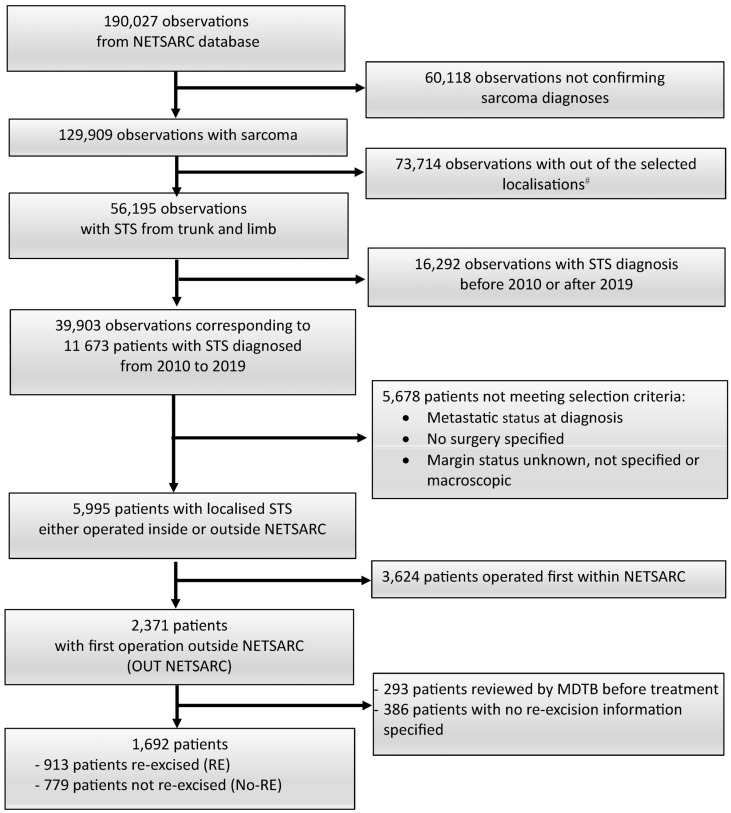 Figure 1
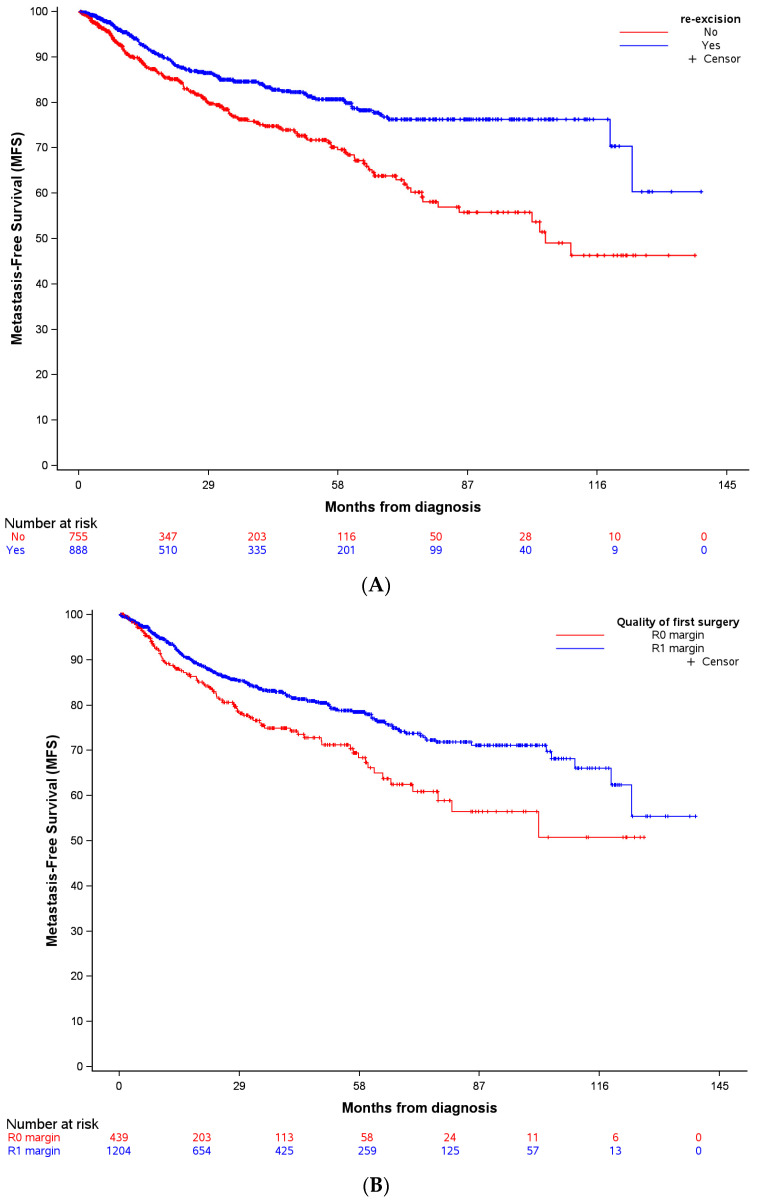 Figure 2
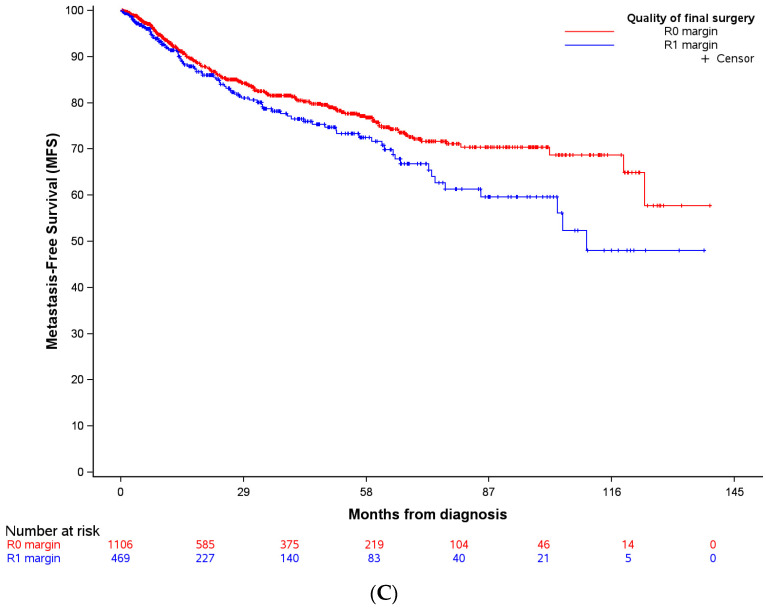 Figure 3
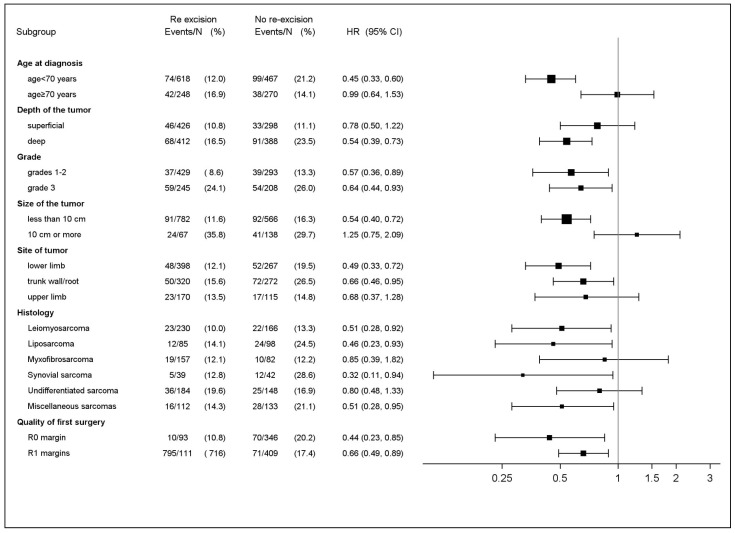 Figure 4
Peer Reviews
No public reviews on file for this paper yet. If you reviewed it on a platform where reviews are public (OpenReview, ICLR, NeurIPS, ICML), you can paste yours below so the community can read it here.
Videos
No videos yet. Explain this paper in a talk, walkthrough, or lecture? Add one.
Taxonomy
TopicsComparative Literary Analysis and Criticism · Media, Journalism, and Communication History · Spanish Culture and Identity