Delineating morbidity patterns in preterm infants at near-term age using a data-driven approach
Octavia-Andreea Ciora, Tanja Seegmüller, Johannes S. Fischer, Theresa Wirth, Friederike Häfner, Sophia Stoecklein, Andreas W. Flemmer, Kai Förster, Alida Kindt, Dirk Bassler, Christian F. Poets, Narges Ahmidi, Anne Hilgendorff

TL;DR
This study uses a data-driven approach to identify and characterize patterns of health issues in preterm infants near term age, revealing complex relationships between conditions like BPD and ROP.
Contribution
The study introduces a novel data-driven method to delineate morbidity profiles in preterm infants, capturing both pairwise and collective co-occurrence patterns.
Findings
BPD and ROP show the highest pairwise correlation, followed by BPD and PH as well as BPD and mild cardiac defects.
BPD has limited capacity to discriminate morbidity occurrence despite its prevalence and clinical significance.
Machine learning identified distinct clusters of infants with similar morbidity profiles in both cohorts.
Abstract
Long-term survival after premature birth is significantly determined by development of morbidities, primarily affecting the cardio-respiratory or central nervous system. Existing studies are limited to pairwise morbidity associations, thereby lacking a holistic understanding of morbidity co-occurrence and respective risk profiles. Our study, for the first time, aimed at delineating and characterizing morbidity profiles at near-term age and investigated the most prevalent morbidities in preterm infants: bronchopulmonary dysplasia (BPD), pulmonary hypertension (PH), mild cardiac defects, perinatal brain pathology and retinopathy of prematurity (ROP). For analysis, we employed two independent, prospective cohorts, comprising a total of 530 very preterm infants: AIRR (“Attention to Infants at Respiratory Risks”) and NEuroSIS (“Neonatal European Study of Inhaled Steroids”). Using a…
Genes, proteins, chemicals, diseases, species, mutations and cell lines named across the full text — each resolved to its canonical identifier and authoritative record.
Click any figure to enlarge with its caption.
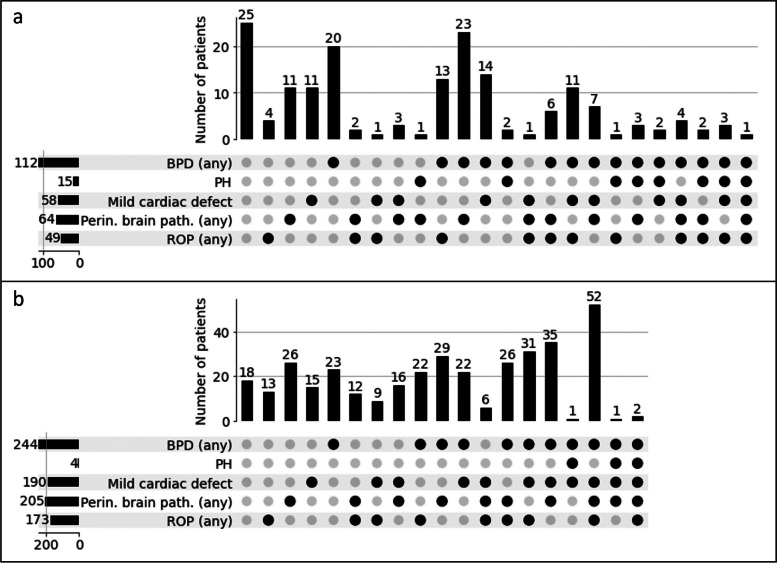 Figure 1
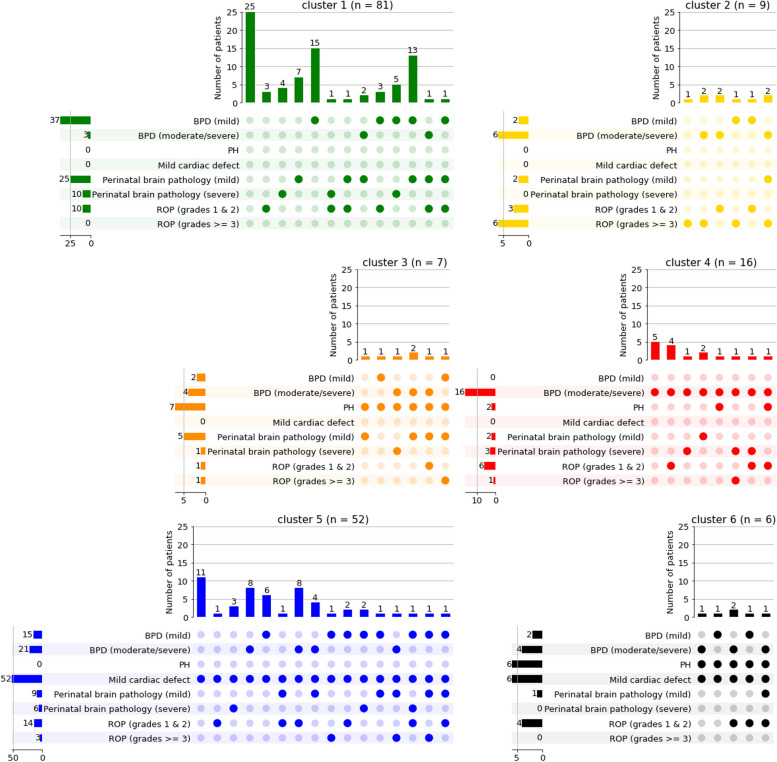 Figure 2
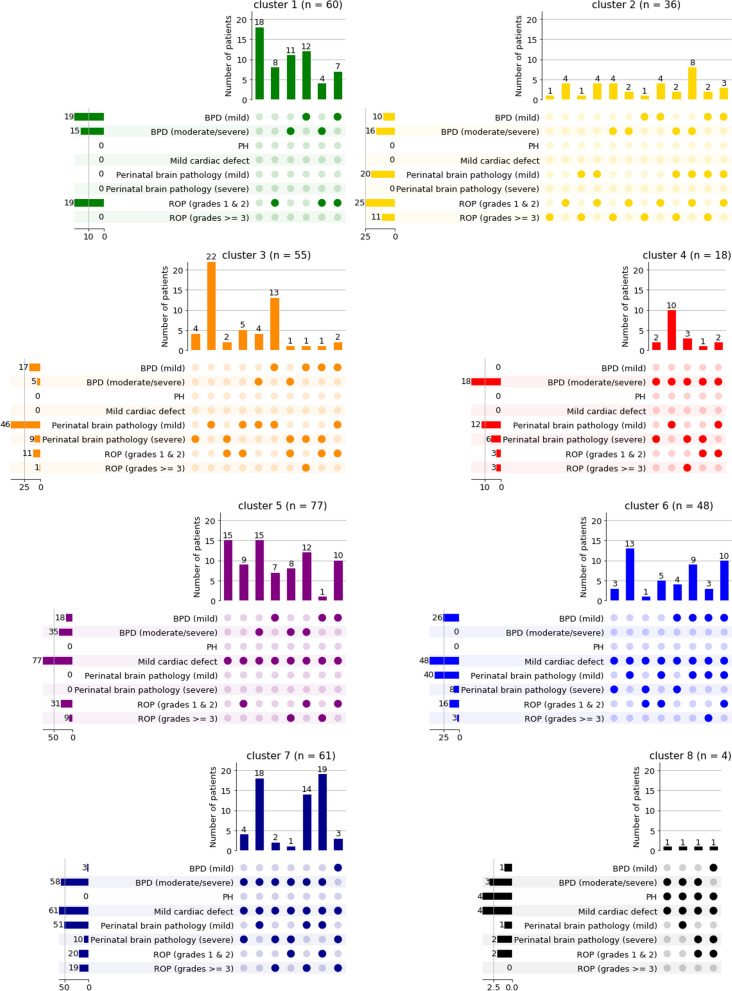 Figure 3
Peer Reviews
No public reviews on file for this paper yet. If you reviewed it on a platform where reviews are public (OpenReview, ICLR, NeurIPS, ICML), you can paste yours below so the community can read it here.
Videos
No videos yet. Explain this paper in a talk, walkthrough, or lecture? Add one.
Taxonomy
TopicsHallucinations in medical conditions · History of Medical Practice · Neurology and Historical Studies