Initial Primer Synthesis of a DNA Primase Monitored by Real-Time NMR Spectroscopy
Pengzhi Wu, Johannes Zehnder, Nina Schröder, Pascal E. W. Blümmel, Loïc Salmon, Fred. F. Damberger, Georg Lipps, Frédéric H.-T. Allain, Thomas Wiegand

TL;DR
Scientists used NMR to study how a DNA primase enzyme starts DNA replication by forming a short primer.
Contribution
The study introduces real-time NMR methods to observe the initial steps of primer synthesis by an archaeal primase.
Findings
The helix-bundle domain positions substrates before transferring them to the catalytic domain.
Solid-state NMR can monitor dinucleotide formation kinetics similarly to solution-state NMR.
Conformational changes in the enzyme during primer synthesis are detected using high-frequency NMR.
Abstract
Primases are crucial enzymes for DNA replication, as they synthesize a short primer required for initiating DNA replication. We herein present time-resolved nuclear magnetic resonance (NMR) spectroscopy in solution and in the solid state to study the initial dinucleotide formation reaction of archaeal pRN1 primase. Our findings show that the helix-bundle domain (HBD) of pRN1 primase prepares the two substrates and then hands them over to the catalytic domain to initiate the reaction. By using nucleotide triphosphate analogues, the reaction is substantially slowed down, allowing us to study the initial dinucleotide formation in real time. We show that the sedimented protein–DNA complex remains active in the solid-state NMR rotor and that time-resolved 31P-detected cross-polarization experiments allow monitoring the kinetics of dinucleotide formation. The kinetics in the sedimented…
Genes, proteins, chemicals, diseases, species, mutations and cell lines named across the full text — each resolved to its canonical identifier and authoritative record.
Click any figure to enlarge with its caption.
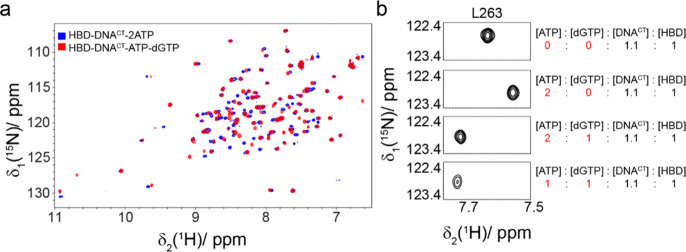 Figure 1
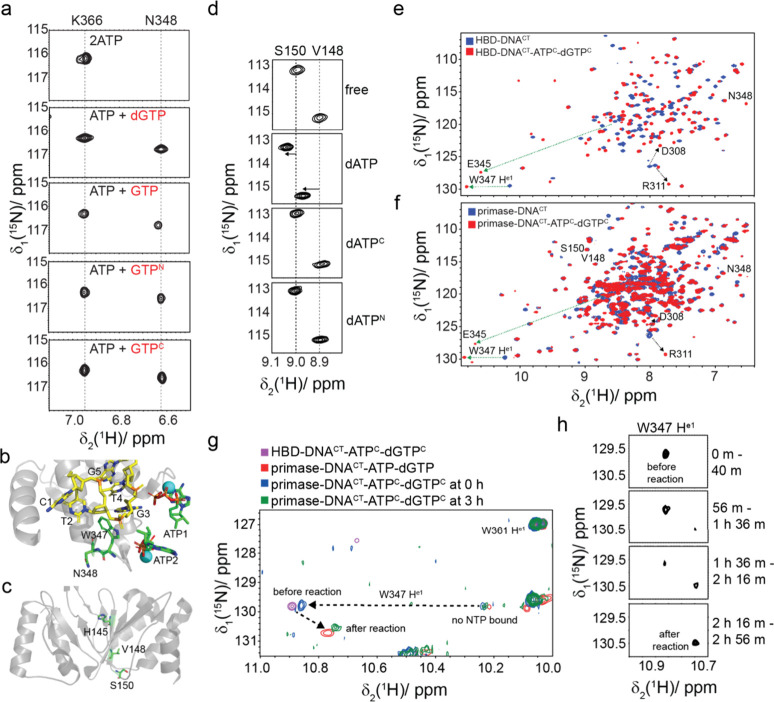 Figure 2
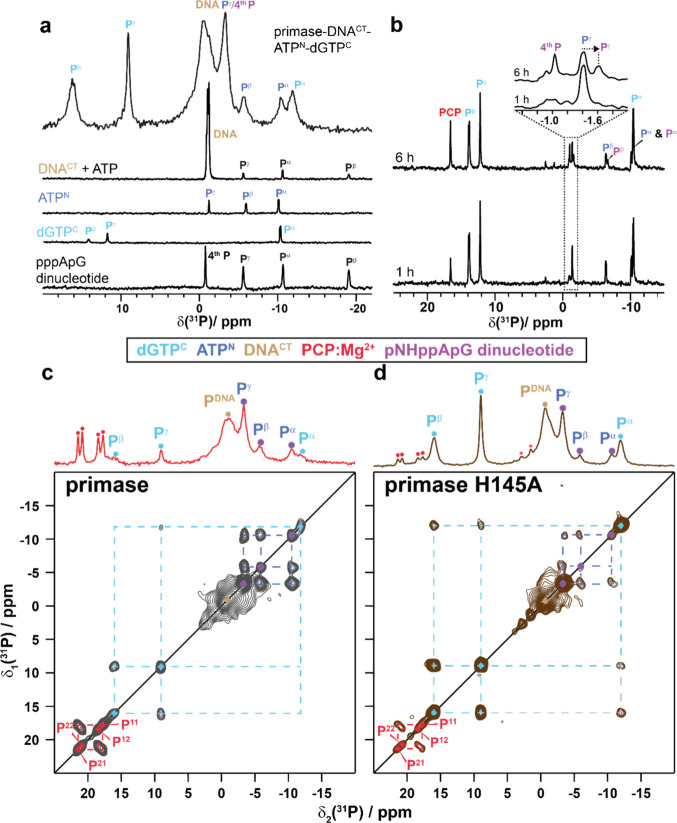 Figure 3
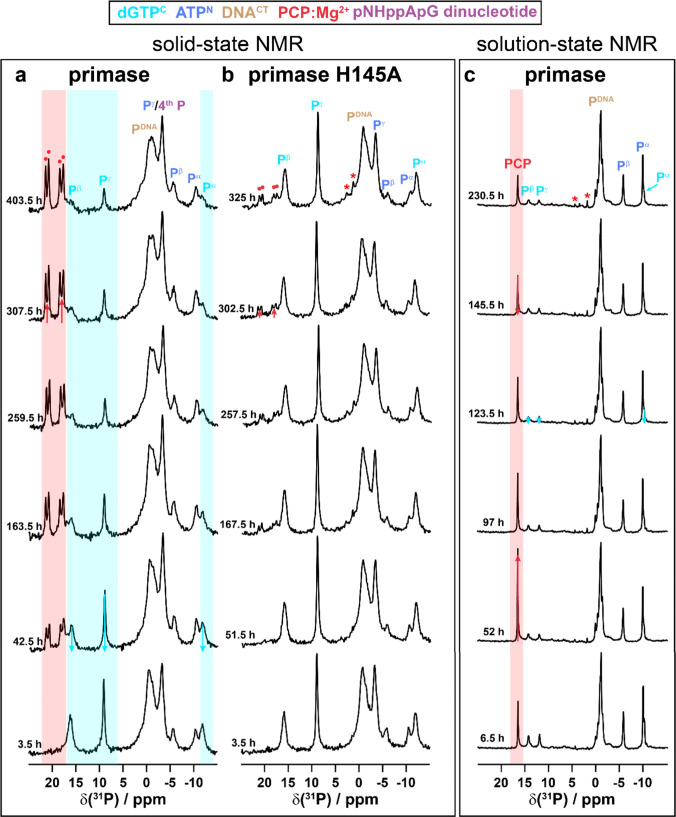 Figure 4
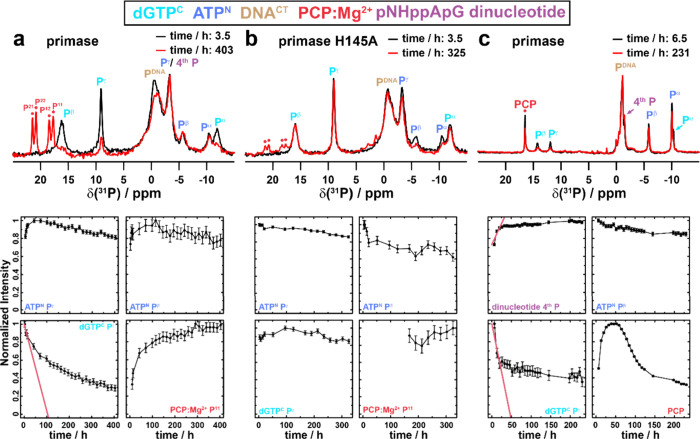 Figure 5
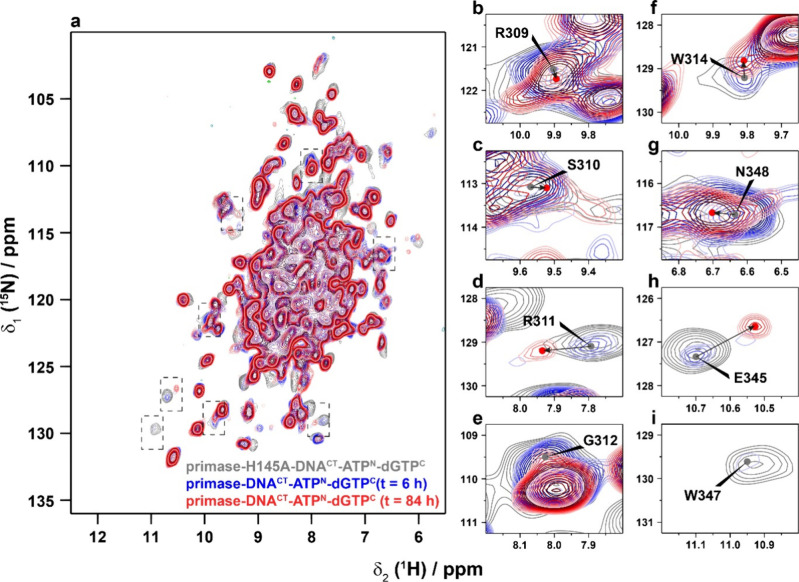 Figure 6
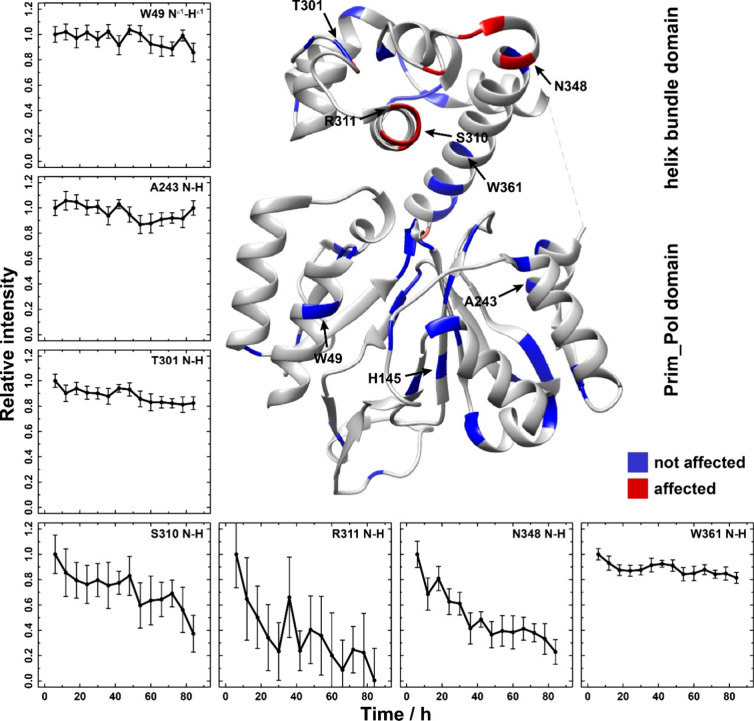 Figure 7
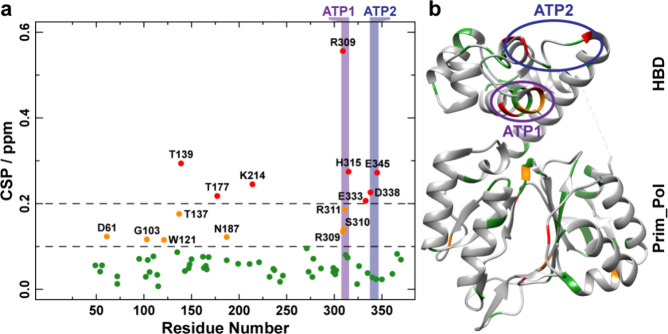 Figure 8
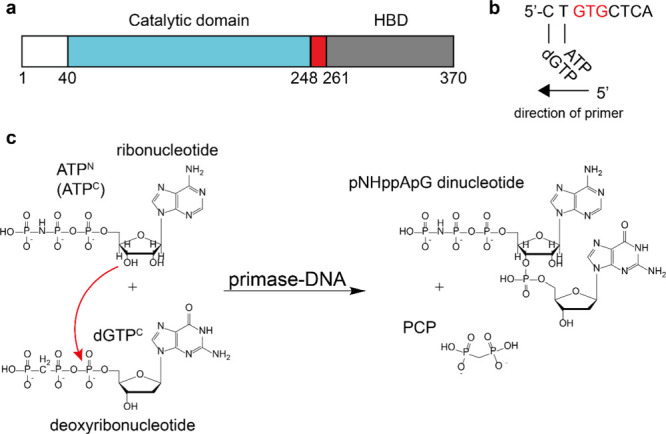 Figure 9
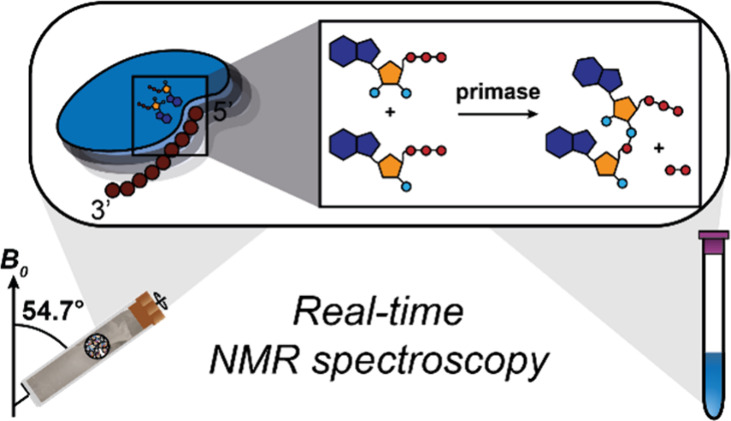 Figure 10
Peer Reviews
No public reviews on file for this paper yet. If you reviewed it on a platform where reviews are public (OpenReview, ICLR, NeurIPS, ICML), you can paste yours below so the community can read it here.
Videos
No videos yet. Explain this paper in a talk, walkthrough, or lecture? Add one.
Taxonomy
TopicsAdvanced NMR Techniques and Applications · DNA and Nucleic Acid Chemistry · Enzyme Structure and Function