Comparative analysis of linear- and circular-stapled gastrojejunostomies in Roux-en-Y gastric bypass: a focus on postoperative morbidity using the comprehensive complication index
Floni Sadiku, Daniela Alceste, Michele Serra, Stefanie Josefine Hehl, Daniel Gero, Andreas Thalheimer, Marco Bueter, Jeannette Widmer

TL;DR
This study compares two surgical techniques for gastric bypass and finds that the linear-stapled method results in fewer complications than the circular-stapled method.
Contribution
The study provides a comparative analysis of postoperative morbidity between two anastomosis techniques in gastric bypass surgery.
Findings
The linear-stapled group had lower complication index scores than the circular-stapled group.
The linear-stapled technique was associated with lower CRP levels and opioid use post-surgery.
The circular-stapled group experienced more internal herniations in the first 24 months.
Abstract
The linear-stapled (LSA) and the circular-stapled anastomosis (CSA) are the two most commonly performed techniques for the gastrojejunostomy (GJ) during laparoscopic Roux-en-Y gastric bypass (RYGB). This study compared the outcome after both techniques with special focus on postoperative morbidity using the comprehensive complication index (CCI). Five hundred eighty-eight patients operated between 01/2010 and 12/2019 were included in the final analysis and divided in two cohorts according to the surgical technique of the GJ (LSA (n = 290) or CSA (n = 298)). Before 09/2016, the CSA was exclusively performed for the GJ, while after 09/2016, the LSA was solely used. The mean CCI for patients with Clavien-Dindo complication grade ≥ 2 within the first 90 days after RYGB was 31 ± 9.1 in the CSA and 25.7 ± 6.8 in the LSA group (p < 0.001), both values still below the previously published…
Genes, proteins, chemicals, diseases, species, mutations and cell lines named across the full text — each resolved to its canonical identifier and authoritative record.
Click any figure to enlarge with its caption.
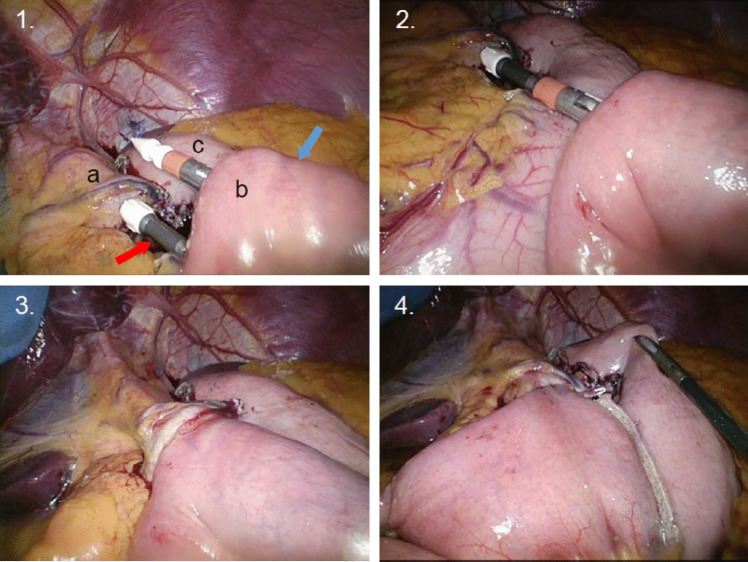 Figure 1
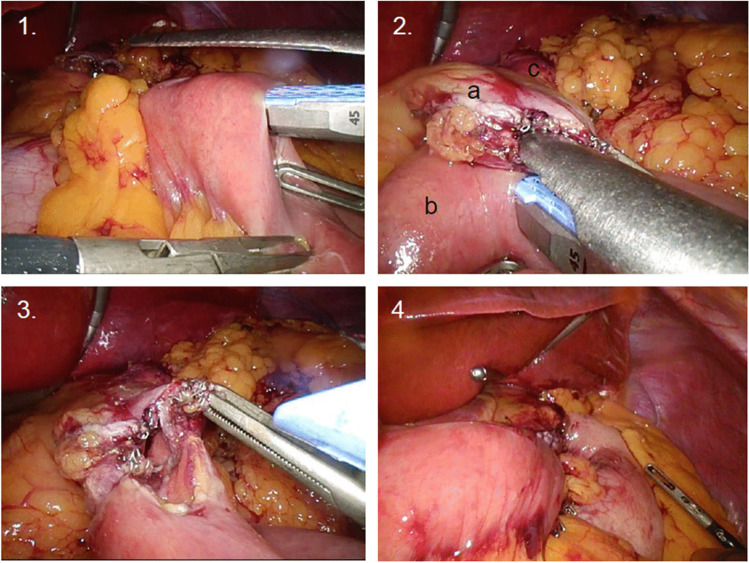 Figure 2
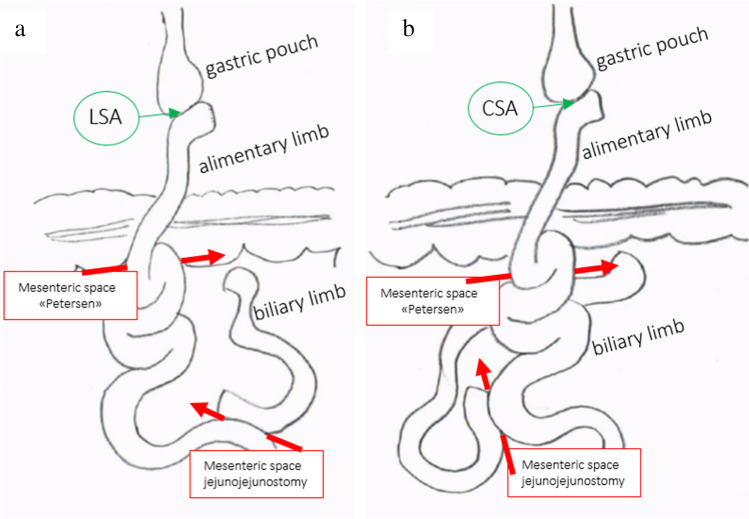 Figure 3
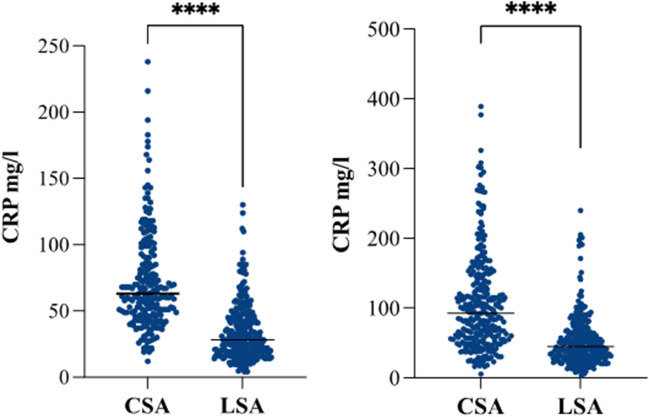 Figure 4
Peer Reviews
No public reviews on file for this paper yet. If you reviewed it on a platform where reviews are public (OpenReview, ICLR, NeurIPS, ICML), you can paste yours below so the community can read it here.
Videos
No videos yet. Explain this paper in a talk, walkthrough, or lecture? Add one.
Taxonomy
TopicsEsophageal and GI Pathology · Bariatric Surgery and Outcomes · Gastric Cancer Management and Outcomes