History of Eugenics in Otorhinolaryngology: Ernst Rüdin and the International Eugenics Network
Beato Suwa

TL;DR
This paper explores the role of Ernst Rüdin in the eugenics movement and his connections to other scientists, including those involved in Nazi-era medical research.
Contribution
The paper reveals new connections between eugenics groups in Munich, Frankfurt, and New York, and their influence on otorhinolaryngology.
Findings
Eugenics groups in Munich, Frankfurt, and New York influenced each other in otorhinolaryngology.
Josef Mengele's early work on orofacial clefts influenced later studies, despite his later involvement in Nazi medical crimes.
Abstract
Introduction The early geneticist and psychiatrist Ernst Rüdin (1874–1952) became one of the key figures in the eugenics movement and in the German health system of the Nazi era. His connections in the international eugenics network have played an important role in the history of eugenics. Objective To discuss the connections between Ernst Rüdin's scientific group in Munich and Otmar von Verschuer's group in Frankfurt during the Nazi era. Methods Otorhinolaryngological materials from Ernst Rüdin's former private library are presented, and they show Rüdin's deep involvement in the international eugenics network. These materials provide insights into early medical genetics in otorhinolaryngology. Results One result of the present study is that eugenics groups from Munich, Frankfurt, and New York certainly influenced one another in the field of otorhinolaryngology. Karlheinz…
Genes, proteins, chemicals, diseases, species, mutations and cell lines named across the full text — each resolved to its canonical identifier and authoritative record.
Click any figure to enlarge with its caption.
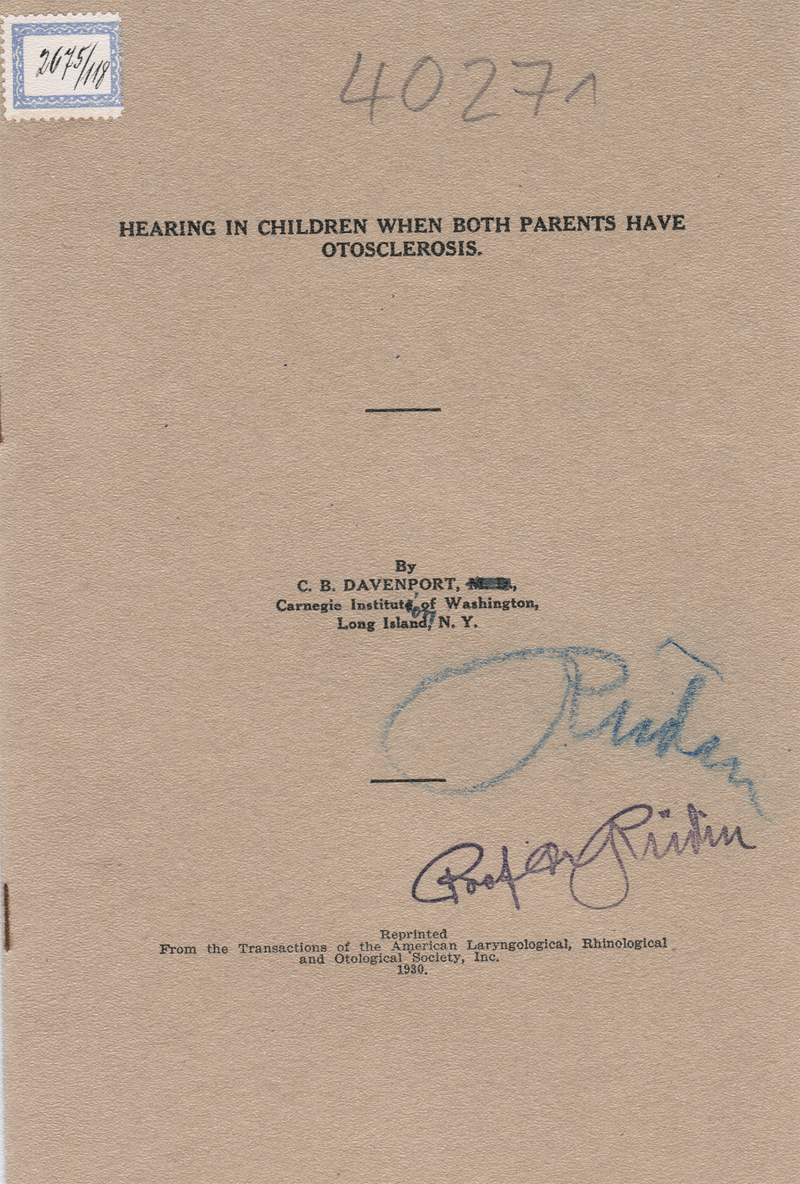 Figure 1
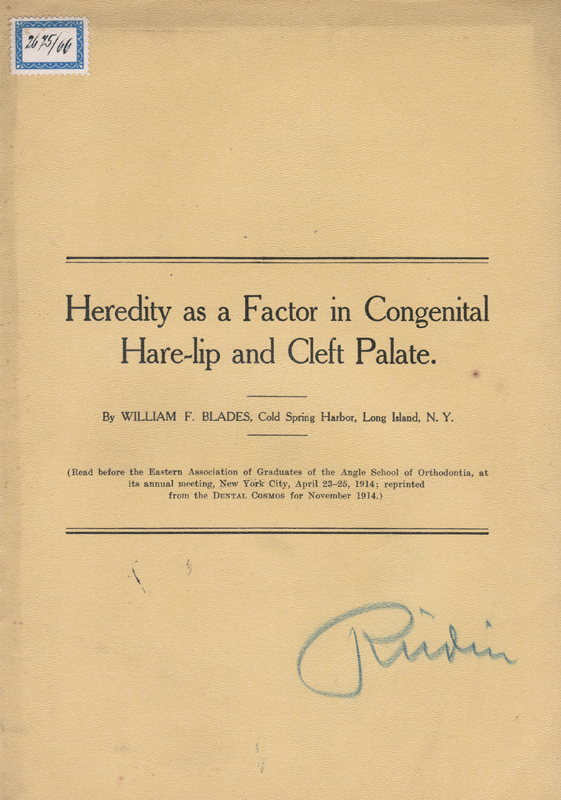 Figure 2
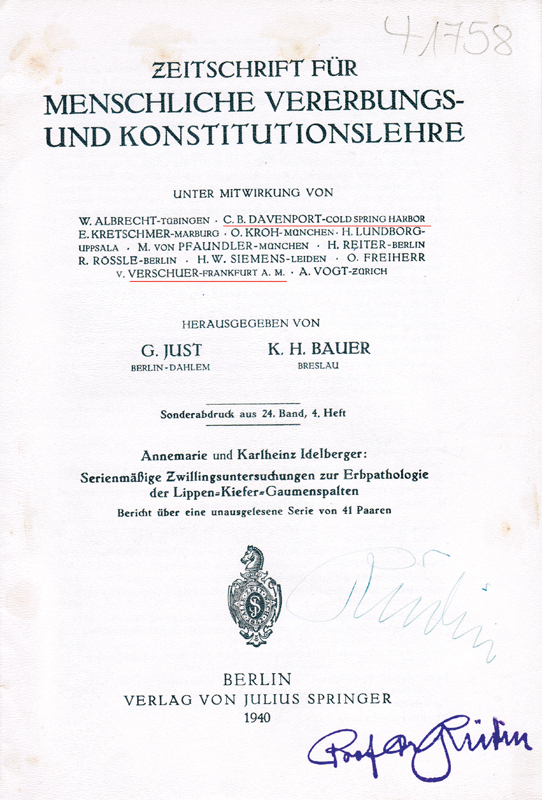 Figure 3
Peer Reviews
No public reviews on file for this paper yet. If you reviewed it on a platform where reviews are public (OpenReview, ICLR, NeurIPS, ICML), you can paste yours below so the community can read it here.
Videos
No videos yet. Explain this paper in a talk, walkthrough, or lecture? Add one.
Taxonomy
TopicsMedical History and Research