Genome sequence and annotation of Arthrobacter globiformis phage Ruchi (AS1) isolated from soil in Lumpkin County, Georgia
Brooke Tatum, Payton Murray, Claire Bicknell, Shane A. Webb, Alison Kanak

TL;DR
This paper presents the genome sequence and annotation of a new soil-isolated bacteriophage called Ruchi, which infects Arthrobacter globiformis.
Contribution
The study provides a detailed genome analysis of a newly discovered phage and its evolutionary relationship to another phage in the same subcluster.
Findings
Ruchi has a 38,571 bp genome with 67.7% GC content.
The genome contains 64 predicted reading frames and no tRNA genes.
Ruchi is evolutionarily related to the AS1 phage Basilisk.
Abstract
Ruchi, a temperate, AS1 subcluster bacteriophage isolated in Lumpkin County, Georgia using host Arthrobacter globiformis, possesses a genome of 38,571 bp and 67.7% GC. Annotation of this virus revealed 64 predicted reading frames, no predicted tRNA genes, and a close evolutionary relationship to AS1 phage Basilisk.
Genes, proteins, chemicals, diseases, species, mutations and cell lines named across the full text — each resolved to its canonical identifier and authoritative record.
Click any figure to enlarge with its caption.
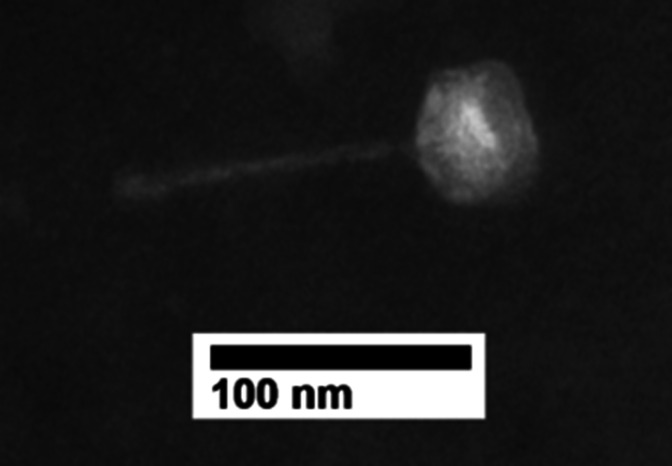 Fig 1
Fig 1- —University of North Georgia Department of Biology
- —University of North Georgia Honors Program
Peer Reviews
No public reviews on file for this paper yet. If you reviewed it on a platform where reviews are public (OpenReview, ICLR, NeurIPS, ICML), you can paste yours below so the community can read it here.
Videos
No videos yet. Explain this paper in a talk, walkthrough, or lecture? Add one.
Taxonomy
TopicsBacteriophages and microbial interactions · Plant Virus Research Studies · Genomics and Phylogenetic Studies
ANNOUNCEMENT
Phage therapy presents an alternative approach to the treatment of multidrug-resistant bacterial infections (1–3). A thorough understanding of phage diversity and evolution is therefore paramount. Here, we contribute to this knowledge with the annotated genome of Ruchi, a temperate AS1 subcluster bacteriophage propagated on Arthrobacter globiformis.
Ruchi was isolated in August 2022 from topsoil from the Pine Valley Recreation Center in Lumpkin County, Georgia (34.51N, 84.06W). Lab methods followed the SEA-PHAGES protocol (4). LB medium was mixed with soil and incubated at 30°C for 1 hour. Supernatant was then sterilized using 0.22 µm filtration. Phage presence was confirmed and purified by standard plaque assay using A. globiformis B-2979 and amplified to high titer via flooding of a web plate. A Wizard DNA extraction kit (Promega) was used on 6.7e−9 pfu/mL lysate to obtain 122.2 ng/µL genomic DNA. A NEBNext Ultra II FS kit was used for sequencing library construction. Illumina MiSeq sequencing yielded ~3,914× coverage from 1.1 million 150-bp single-end reads. Genome assembly used Newbler 2.9 (default settings), and the accuracy and completeness of the assembly were evaluated with Consed 29 (5). Ruchi has siphovirus morphology (Fig. 1) and is likely temperate based on plaque morphology and the presence of a tyrosine integrase gene.
TEM image of phage Ruchi. Lysate was stained using the drop method with phosphotungstic acid. The image was obtained using a JEM-1011 TEM (JOEL, Inc., Tokyo, Japan) at the University of Georgia Electron Microscope Laboratory. Head diameter is ca 44 nm, and tail length is ca 117 nm.
DNA Master 5.23.6 (6), Glimmer 3.02 (7), GeneMark 3.26 (8), BLAST (9, 10), HHPred 2.08 (11), Phamerator 505 (12), tRNAscan SE 2.0 (13), Aragorn (14), and DeepTMHMM 1.0.24 (15) were used for genome annotation (all using default parameters). DNA Master provided first-pass analysis of open reading frames (ORFs), gaps, and ribosomal binding sites. Subsequent homology assessment using BLASTp (16) (Genbank nr database), HHPred (default pdb database; UniRef30), and Phamerator refined the annotation. Gaps larger than 25 bp were assessed for additional genes. An e value <10^−4^ was used as the threshold for function assignments (17).
The complete Ruchi genome (38,571 bp; 67.7% GC; 3′ overhang GAGTTGCCGGGA) contains 64 predicted ORFs [36 with ascribed function (56%)] and no predicted tRNA genes. Genes 1–24 and 35–64 are encoded on one strand, and genes 25–34 are encoded on the other. Among the predicted genes are four nucleases, endolysin, an immunity repressor (adjacent to tyrosine integrase), and an excise protein as well as RusA-like resolvase. ORFs 14 and 15 are predicted to encode overlapping tail assembly chaperones (111 and 244 aa, respectively) with ORF 14 terminated by a −1 frameshift at nucleotide position 10336. Three predicted ORFs with assigned functions (ORFs 4, 16, 24) and five with unassigned functions (ORFs 1, 21, 22, 39, 47) likely have transmembrane domains. Ruchi shares the highest nucleotide sequence similarity (98.7% identity) with Arthrobacter phage Basilisk (Genbank ON260822), which was isolated from Lumpkin County, GA, a year earlier about 20 km from Ruchi’s locale.
The reference list from the paper itself. Each links out to its DOI / PubMed record.
- 1Jones JD, Varghese D, Pabary R, Langley RJ. 2022. The potential of bacteriophage therapy in the treatment of paediatric respiratory infections. Paediatr Respir Rev 44:70–77. doi:10.1016/j.prrv.2022.02.00135241371 · doi ↗ · pubmed ↗
- 2Marongiu L, Burkard M, Lauer UM, Hoelzle LE, Venturelli S. 2022. Reassessment of historical clinical trials supports the effectiveness of phage therapy. Clin Microbiol Rev 35:e 0006222. doi:10.1128/cmr.00062-2236069758 PMC 9769689 · doi ↗ · pubmed ↗
- 3Vandamme EJ, Mortelmans K. 2019. A century of bacteriophage research and applications: impacts on biotechnology, health, ecology and the economy!: a century of bacteriophage research and applications. J Chem Tech Biotech 94:323–342. doi:10.1002/jctb.5810 · doi ↗
- 4Jordan TC, Burnett SH, Carson S, Caruso SM, Clase K, De Jong RJ, Dennehy JJ, Denver DR, Dunbar D, Elgin SCR, et al.. 2014. A broadly implementable research course in phage discovery and genomics for first-year undergraduate students. m Bio 5:e 01051-13. doi:10.1128/m Bio.01051-1324496795 PMC 3950523 · doi ↗ · pubmed ↗
- 5Russell DA. 2018. Sequencing, assembling, and finishing complete bacteriophage genomes. Methods Mol Biol 1681:109–125. doi:10.1007/978-1-4939-7343-9_929134591 · doi ↗ · pubmed ↗
- 6Lawrence J. 2021. DNA master version 5.23.6 (Build 2705; 24 Oct 2021)
- 7Delcher AL, Bratke KA, Powers EC, Salzberg SL. 2007. Identifying bacterial genes and endosymbiont DNA with glimmer. Bioinformatics 23:673–679. doi:10.1093/bioinformatics/btm 00917237039 PMC 2387122 · doi ↗ · pubmed ↗
- 8Besemer J, Lomsadze A, Borodovsky M. 2001. Gene Mark S: a self-training method for prediction of gene starts in microbial genomes. implications for finding sequence motifs in regulatory regions. Nucleic Acids Res 29:2607–2618. doi:10.1093/nar/29.12.260711410670 PMC 55746 · doi ↗ · pubmed ↗