Blood groups and Rhesus status as potential predictors of outcomes in patients with cardiac resynchronisation therapy
Nikolaos Papageorgiou, Catrin Sohrabi, Constantinos Bakogiannis, Anastasios Tsarouchas, Kishore Kukendrarajah, Luso Matiti, Neil T. Srinivasan, Syed Ahsan, Simon Sporton, Richard J. Schilling, Ross J. Hunter, Amal Muthumala, Antonio Creta, Anthony W. Chow, Rui Providencia

TL;DR
This study suggests that Rhesus-negative blood type may be linked to better survival in heart failure patients undergoing cardiac resynchronisation therapy.
Contribution
The study identifies Rhesus-negative blood group as a potential predictor of improved survival in CRT-treated heart failure patients.
Findings
Rh-negative blood group was associated with a significant survival benefit in CRT-treated heart failure patients.
ABO blood group showed no significant association with survival outcomes.
Rhesus-related genes are linked to erythrocyte function, platelet activity, and metabolic markers.
Abstract
Cardiac resynchronisation therapy (CRT) improves prognosis in patients with heart failure (HF) however the role of ABO blood groups and Rhesus factor are poorly understood. We hypothesise that blood groups may influence clinical and survival outcomes in HF patients undergoing CRT. A total of 499 patients with HF who fulfilled the criteria for CRT implantation were included. Primary outcome of all-cause mortality and/or heart transplant/left ventricular assist device was assessed over a median follow-up of 4.6 years (IQR 2.3–7.5). Online repositories were searched to provide biological context to the identified associations. Patients were divided into blood (O, A, B, and AB) and Rhesus factor (Rh-positive and Rh-negative) groups. Mean patient age was 66.4 ± 12.8 years with a left ventricular ejection fraction of 29 ± 11%. There were no baseline differences in age, gender, and…
Genes, proteins, chemicals, diseases, species, mutations and cell lines named across the full text — each resolved to its canonical identifier and authoritative record.
Click any figure to enlarge with its caption.
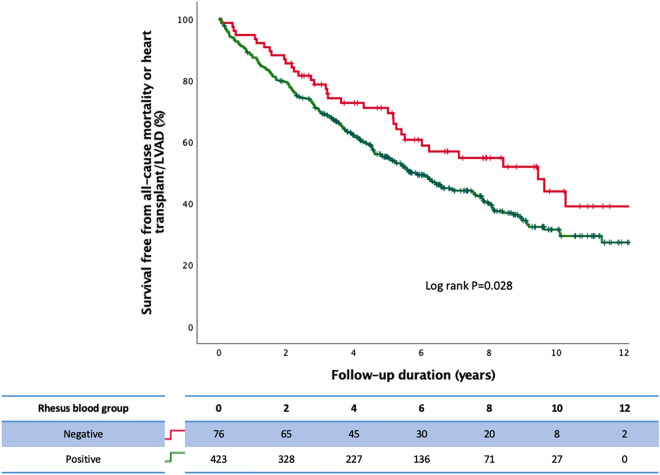 Figure 1
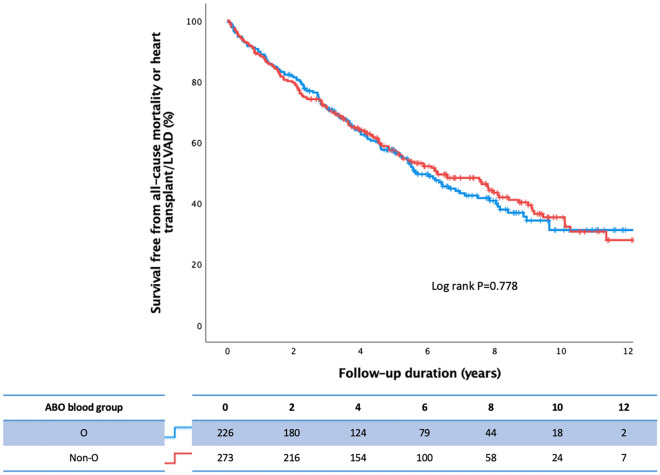 Figure 2
Peer Reviews
No public reviews on file for this paper yet. If you reviewed it on a platform where reviews are public (OpenReview, ICLR, NeurIPS, ICML), you can paste yours below so the community can read it here.
Videos
No videos yet. Explain this paper in a talk, walkthrough, or lecture? Add one.
Taxonomy
TopicsBlood groups and transfusion · Erythropoietin and Anemia Treatment · Hemoglobinopathies and Related Disorders