Anterolateral papillary muscle suction causing low flow in a COVID-19 patient without medical history: a case report of central extracorporeal life support with left ventricular apex decompression
Tomoaki Miyake, Kimito Minami, Masahiro Kazawa, Naoki Tadokoro, Kohei Tonai, Satsuki Fukushima

TL;DR
A 38-year-old woman with severe heart failure from COVID-19 had low blood flow while on a life support machine, which was solved by repositioning a cannula after identifying suction from a heart muscle.
Contribution
This case report highlights the use of transesophageal echocardiography to identify and resolve low flow in ECLS due to papillary muscle suction.
Findings
Low pump flow in a patient on ECLS was caused by suction of the anterolateral papillary muscle into the cannula.
Repositioning the cannula resolved the suction issue and allowed successful weaning from ECLS.
Transesophageal echocardiography was critical in diagnosing the cause of low flow.
Abstract
Left ventricular (LV) decompression is an essential strategy for improving early survival in patients with refractory cardiogenic shock. Low pump flow in patients on extracorporeal life support (ECLS) with LV apex decompression is a life-threatening issue. However, identifying the underlying causes of low flow can be challenging. A 38-year-old woman with COVID-19-related fulminant myocarditis was treated with central ECLS with LV apex decompression. The pump flow in the intensive care unit (ICU) was intermittently low, and low flow alerts were frequent. The initial evaluation based on pressure monitor waveforms and transthoracic echocardiography failed to identify the underlying cause. Prompt bedside transesophageal echocardiography (TEE) revealed that the anterolateral papillary muscle was suctioned into the vent cannula of the LV apex during systole. The patient underwent a repeat…
Genes, proteins, chemicals, diseases, species, mutations and cell lines named across the full text — each resolved to its canonical identifier and authoritative record.
Click any figure to enlarge with its caption.
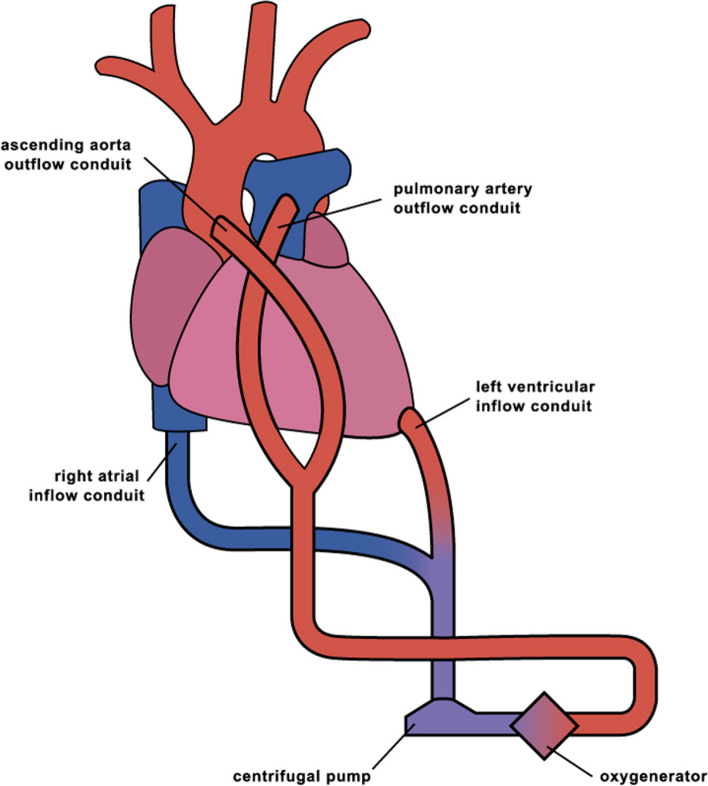 Figure 1
Peer Reviews
No public reviews on file for this paper yet. If you reviewed it on a platform where reviews are public (OpenReview, ICLR, NeurIPS, ICML), you can paste yours below so the community can read it here.
Videos
No videos yet. Explain this paper in a talk, walkthrough, or lecture? Add one.
Taxonomy
TopicsCardiac Structural Anomalies and Repair · Mechanical Circulatory Support Devices · Pericarditis and Cardiac Tamponade