Anesthesia management of laparoscopic right colectomy in an older patient with postoperative tetralogy of Fallot with residual anomaly
Satori Mori, Hisakatsu Ito, Sadamu Sugimoto, Daisuke Hibi, Akiyo Kameyama, Masaaki Kawakami, Tomonori Takazawa

TL;DR
This case report discusses the successful laparoscopic surgery in an older patient with a repaired tetralogy of Fallot and residual heart issues.
Contribution
The study provides a rare case report on anesthetic management for laparoscopic surgery in an adult with repaired tetralogy of Fallot and residual anomaly.
Findings
Laparoscopic surgery was well-tolerated in a patient with repaired tetralogy of Fallot and residual ventricular septal defect.
Positive pressure ventilation and insufflation reduced left-to-right ventricular shunting and normalized the Qp/Qs ratio.
Patients with preserved right ventricular function and low pulmonary vascular resistance may tolerate laparoscopic surgery.
Abstract
Diversity in hemodynamics of adult congenital heart disease necessitates a case-by-case selection of appropriate surgical and anesthetic options. However, previous case reports regarding the management of laparoscopic surgery in adult patients with congenital heart disease are limited. A 72-year-old man who underwent a laparoscopic right colectomy for colon cancer had a residual ventricular septal defect and right ventricular outflow tract obstruction despite post-repair of tetralogy of Fallot. Pulmonary hypertension or right ventricular dysfunction was not observed. The preoperative pulmonary to systemic blood flow ratio (Qp/Qs) was 2.3. After positive pressure ventilation and insufflation, the amount of left-to-right ventricular shunting decreased, and the Qp/Qs approached 1.0, as calculated from pulmonary arterial and systemic arterial blood gas analysis. Laparoscopic surgery might…
Genes, proteins, chemicals, diseases, species, mutations and cell lines named across the full text — each resolved to its canonical identifier and authoritative record.
Click any figure to enlarge with its caption.
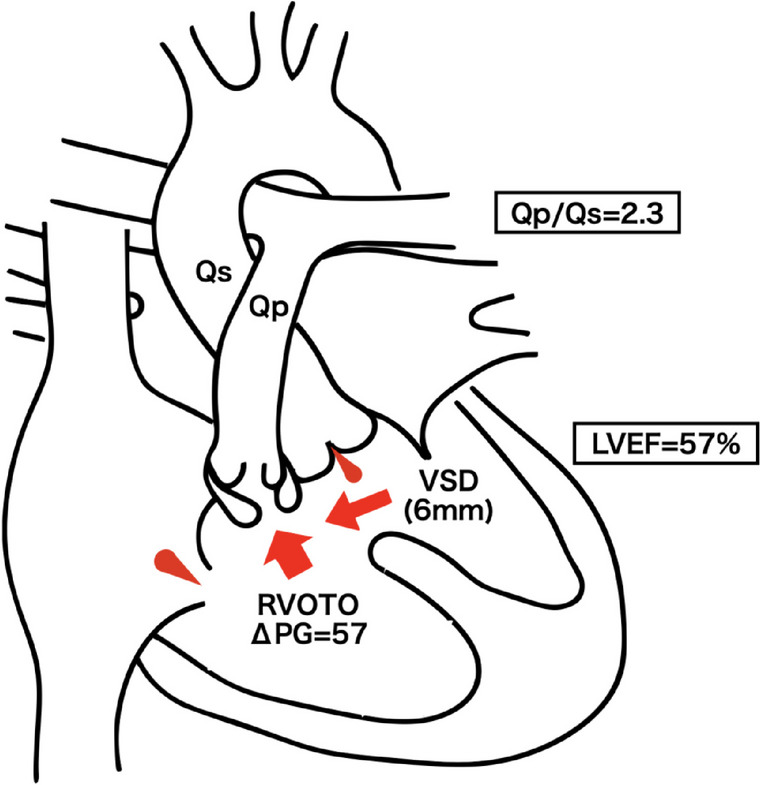 Figure 1
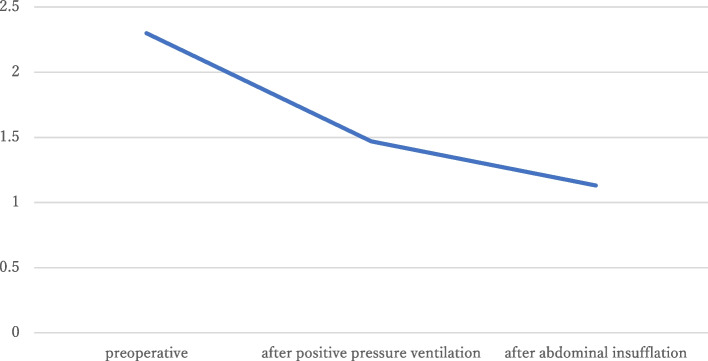 Figure 2
Peer Reviews
No public reviews on file for this paper yet. If you reviewed it on a platform where reviews are public (OpenReview, ICLR, NeurIPS, ICML), you can paste yours below so the community can read it here.
Videos
No videos yet. Explain this paper in a talk, walkthrough, or lecture? Add one.
Taxonomy
TopicsCongenital Heart Disease Studies · Vascular anomalies and interventions · Pulmonary Hypertension Research and Treatments