Empowering precise advertising with Fed-GANCC: A novel federated learning approach leveraging Generative Adversarial Networks and group clustering
Caiyu Su, Jinri Wei, Yuan Lei, Hongkun Xuan, Jiahui Li

TL;DR
Fed-GANCC is a new federated learning framework that improves targeted advertising by addressing data privacy and non-uniform data challenges using GANs and clustering.
Contribution
Fed-GANCC introduces a novel federated learning framework combining GANs and group clustering to enhance targeted advertising.
Findings
Fed-GANCC outperforms FED-AVG and FED-SGD in accuracy, loss value, and ROC metrics.
The framework effectively tackles isolated data islands, non-IID data, and concept drift.
User data augmentation via adversarial generative networks enriches behavior data and improves global model applicability.
Abstract
In the realm of targeted advertising, the demand for precision is paramount, and the traditional centralized machine learning paradigm fails to address this necessity effectively. Two critical challenges persist in the current advertising ecosystem: the data privacy concerns leading to isolated data islands and the complexity in handling non-Independent and Identically Distributed (non-IID) data and concept drift due to the specificity and diversity in user behavior data. Current federated learning frameworks struggle to overcome these hurdles satisfactorily. This paper introduces Fed-GANCC, an innovative federated learning framework that synergizes Generative Adversarial Networks (GANs) and Group Clustering. The framework incorporates a user data augmentation algorithm predicated on adversarial generative networks to enrich user behavior data, curtail the impact of non-uniform data…
Genes, proteins, chemicals, diseases, species, mutations and cell lines named across the full text — each resolved to its canonical identifier and authoritative record.
Click any figure to enlarge with its caption.
 Figure 1
 Figure 2
 Figure 3
 Figure 4
 Figure 5
 Figure 6
 Figure 7
 Figure 8
 Figure 9
 Figure 10
 Figure 11
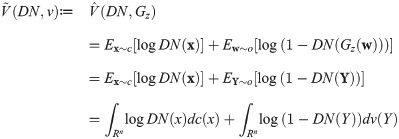 Figure 12
 Figure 13
 Figure 14
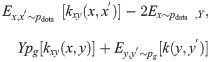 Figure 15
 Figure 16
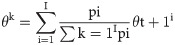 Figure 17
 Figure 18
 Figure 19
 Figure 20
 Figure 21
 Figure 22
 Figure 23
 Figure 24
 Figure 25
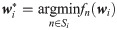 Figure 26
 Figure 27
 Figure 28
 Figure 29
 Figure 30
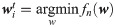 Figure 31
 Figure 32
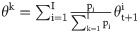 Figure 33
 Figure 34
 Figure 35
 Figure 36
 Figure 37
 Figure 38
 Figure 39
 Figure 40
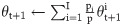 Figure 41
 Figure 42
 Figure 43
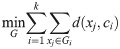 Figure 44
 Figure 45
 Figure 46
 Figure 47
 Figure 48
 Figure 49
 Figure 50
Peer Reviews
No public reviews on file for this paper yet. If you reviewed it on a platform where reviews are public (OpenReview, ICLR, NeurIPS, ICML), you can paste yours below so the community can read it here.
Videos
No videos yet. Explain this paper in a talk, walkthrough, or lecture? Add one.
Taxonomy
TopicsData Stream Mining Techniques · Privacy-Preserving Technologies in Data · Advanced Bandit Algorithms Research