Outcomes of 6‐mm diameter fully covered self‐expandable metal stents for preoperative biliary drainage in pancreatic cancer
Hiroki Nakagawa, Tsuyoshi Takeda, Takeshi Okamoto, Takafumi Mie, Akiyoshi Kasuga, Takashi Sasaki, Masato Ozaka, Takahisa Matsuda, Yoshinori Igarashi, Naoki Sasahira

TL;DR
The study compares 6-mm and 10-mm metal stents for biliary drainage in pancreatic cancer patients and finds no significant difference in outcomes.
Contribution
This is the first study to evaluate 6-mm fully covered self-expandable metal stents for preoperative biliary drainage in borderline resectable pancreatic cancer.
Findings
Stent-related non-event rates were similar between 6-mm and 10-mm stents.
6-mm stents did not increase the risk of recurrent biliary obstruction or stent migration.
Tumor involvement of the pancreatic duct reduced the risk of pancreatitis.
Abstract
10‐mm self‐expandable metal stents (SEMSs) are commonly used for preoperative biliary drainage in pancreatic cancer. However, smaller diameter SEMSs have attracted attention with the attempt to reduce stent‐related adverse events (AEs). We retrospectively analyzed consecutive borderline resectable pancreatic cancer patients who underwent neoadjuvant therapy and fully covered SEMS (FCSEMS) placement from April 2015 to May 2023. The primary outcome was stent‐related non‐event rate (NER), which was defined as the rate of completion of surgery without developing any preoperative events (recurrent biliary obstruction [RBO] or stent‐related AEs). Secondary outcomes included stent‐related AEs, causes of RBO, and cumulative incidence of RBO. Risk factors for pancreatitis, RBO, and stent migration were also examined. A total of 76 patients were included (6‐mm group: 23; 10‐mm group: 53).…
Genes, proteins, chemicals, diseases, species, mutations and cell lines named across the full text — each resolved to its canonical identifier and authoritative record.
Click any figure to enlarge with its caption.
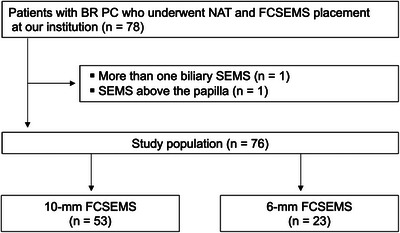 Figure 1
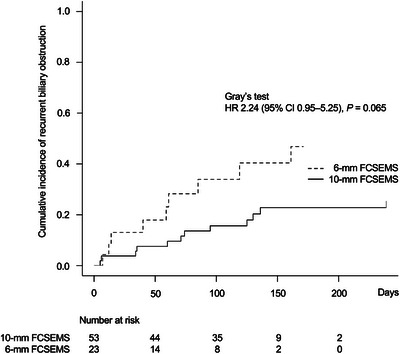 Figure 2
Peer Reviews
No public reviews on file for this paper yet. If you reviewed it on a platform where reviews are public (OpenReview, ICLR, NeurIPS, ICML), you can paste yours below so the community can read it here.
Videos
No videos yet. Explain this paper in a talk, walkthrough, or lecture? Add one.
Taxonomy
TopicsCrystallography and Radiation Phenomena · Radiation Detection and Scintillator Technologies · Geophysics and Sensor Technology