Pore-forming peptide C14R exhibits potent antifungal activity against clinical isolates of Candida albicans and Candida auris
Norida Vélez, Andreys Argel, Ann-Kathrin Kissmann, Daniel Alpízar-Pedraza, Patricia Escandón, Frank Rosenau, Ludger Ständker, Carolina Firacative

TL;DR
The study shows that the peptide C14R effectively kills two dangerous fungi, including drug-resistant strains, by forming pores in their cell membranes.
Contribution
C14R is a new pore-forming peptide with potent antifungal activity against drug-resistant Candida species.
Findings
C14R exhibited strong antifungal activity against 99 C. albicans and 105 C. auris isolates.
C14R synergized with fluconazole and disrupted fungal biofilms and cell membranes.
C14R formed pores in C. albicans membranes and was effective against fluconazole-resistant strains.
Abstract
Invasive candidiasis is a global public health problem as it poses a significant threat in hospital-settings. The aim of this study was to evaluate C14R, an analog derived from peptide BP100, as a potential antimicrobial peptide against the prevalent opportunistic yeast Candida albicans and the emergent multidrug-resistant yeast Candida auris. Antifungal susceptibility testing of C14R against 99 C. albicans and 105 C. auris clinical isolates from Colombia, was determined by broth microdilution. Fluconazole was used as a control antifungal. The synergy between C14R and fluconazole was assessed in resistant isolates. Assays against fungal biofilm and growth curves were also carried out. Morphological alterations of yeast cell surface were evaluated by scanning electron microscopy. A permeability assay verified the pore-forming ability of C14R. C. albicans and C. auris isolates had a…
Genes, proteins, chemicals, diseases, species, mutations and cell lines named across the full text — each resolved to its canonical identifier and authoritative record.
Click any figure to enlarge with its caption.
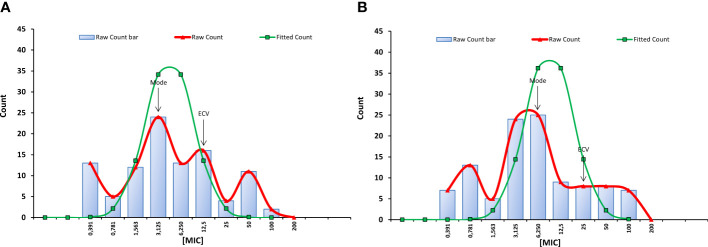 Figure 1
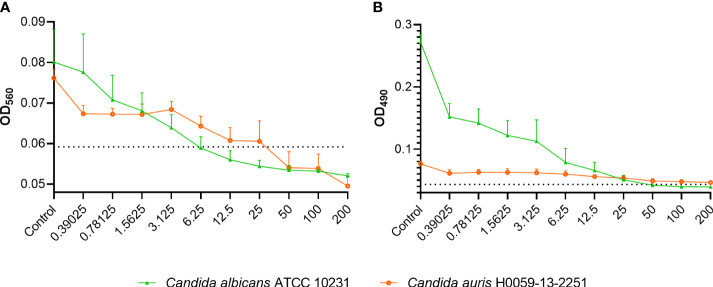 Figure 2
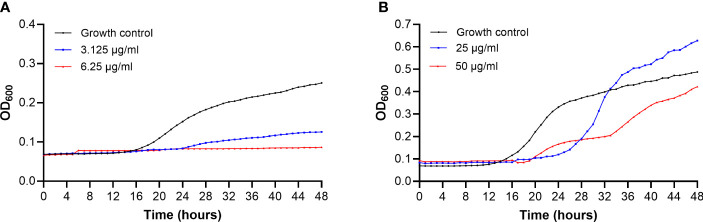 Figure 3
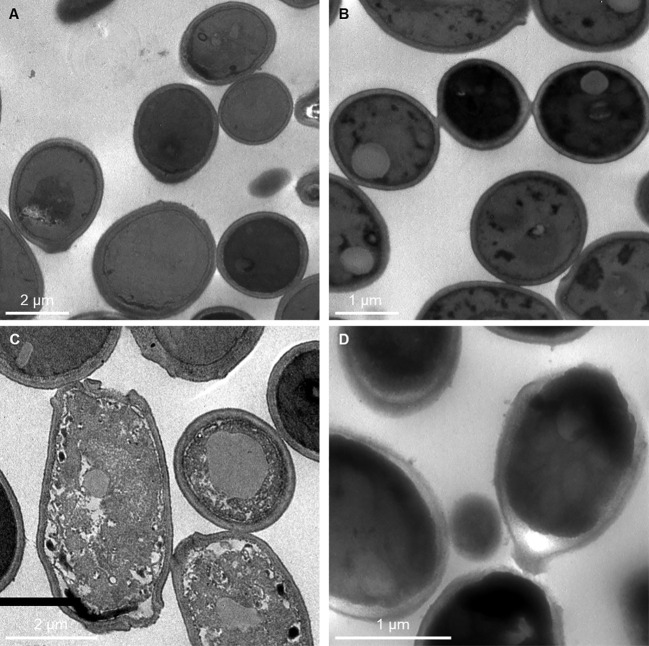 Figure 4
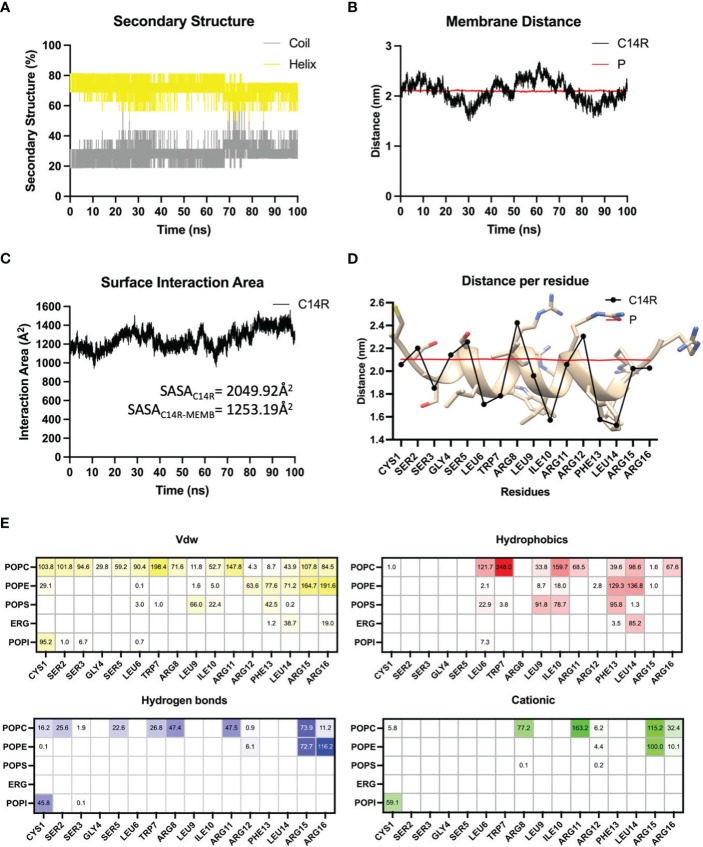 Figure 5
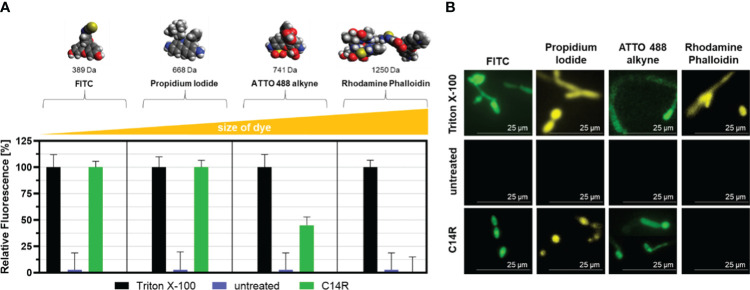 Figure 6
Peer Reviews
No public reviews on file for this paper yet. If you reviewed it on a platform where reviews are public (OpenReview, ICLR, NeurIPS, ICML), you can paste yours below so the community can read it here.
Videos
No videos yet. Explain this paper in a talk, walkthrough, or lecture? Add one.
Taxonomy
TopicsAntimicrobial Peptides and Activities · Peptidase Inhibition and Analysis · Immune Response and Inflammation