Striatal insights: a cellular and molecular perspective on repetitive behaviors in pathology
Charlotte Lauren Burton, Alessandra Longaretti, Andjela Zlatanovic, Guilherme Monteiro Gomes, Raffaella Tonini

TL;DR
This paper explores how the striatum in the brain regulates repetitive behaviors and how these behaviors can become pathological in certain disorders.
Contribution
The paper provides a comprehensive review of striatal mechanisms across multiple scales, linking behavior to molecular and circuit-level changes.
Findings
The striatum acts as a master regulator of repetitive behaviors through its connections with cortical areas.
Repetitive behaviors can become pathological in disorders like OCD, autism, and Huntington’s disease.
Transcriptional and epigenetic changes in the striatum are closely linked to behavioral output and circuit alterations.
Abstract
Animals often behave repetitively and predictably. These repetitive behaviors can have a component that is learned and ingrained as habits, which can be evolutionarily advantageous as they reduce cognitive load and the expenditure of attentional resources. Repetitive behaviors can also be conscious and deliberate, and may occur in the absence of habit formation, typically when they are a feature of normal development in children, or neuropsychiatric disorders. They can be considered pathological when they interfere with social relationships and daily activities. For instance, people affected by obsessive-compulsive disorder, autism spectrum disorder, Huntington’s disease and Gilles de la Tourette syndrome can display a wide range of symptoms like compulsive, stereotyped and ritualistic behaviors. The striatum nucleus of the basal ganglia is proposed to act as a master regulator of these…
Genes, proteins, chemicals, diseases, species, mutations and cell lines named across the full text — each resolved to its canonical identifier and authoritative record.
Click any figure to enlarge with its caption.
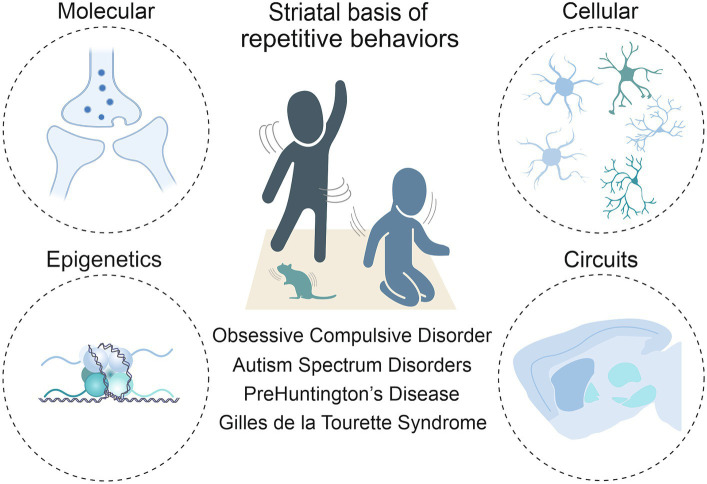 Figure 1
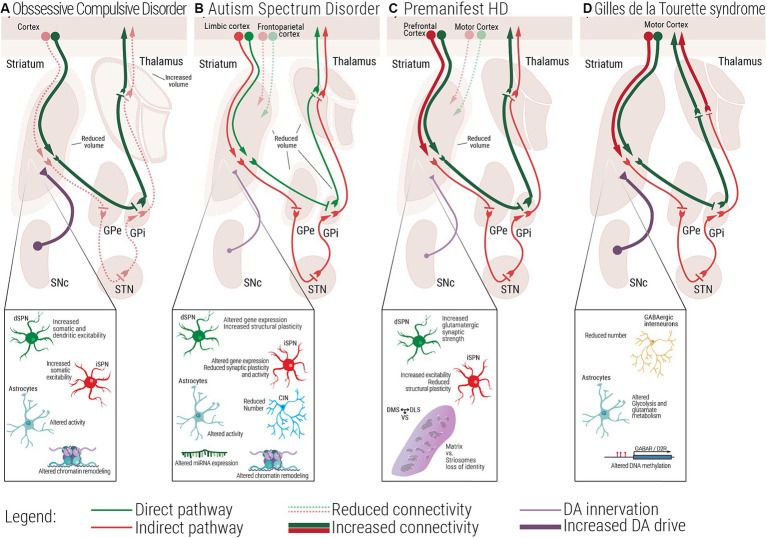 Figure 2
Peer Reviews
No public reviews on file for this paper yet. If you reviewed it on a platform where reviews are public (OpenReview, ICLR, NeurIPS, ICML), you can paste yours below so the community can read it here.
Videos
No videos yet. Explain this paper in a talk, walkthrough, or lecture? Add one.
Taxonomy
TopicsSynthesis and properties of polymers · biodegradable polymer synthesis and properties · Silicone and Siloxane Chemistry